Industrial property market to hold firm in 2019, business parks seen as bright spot

Singapore
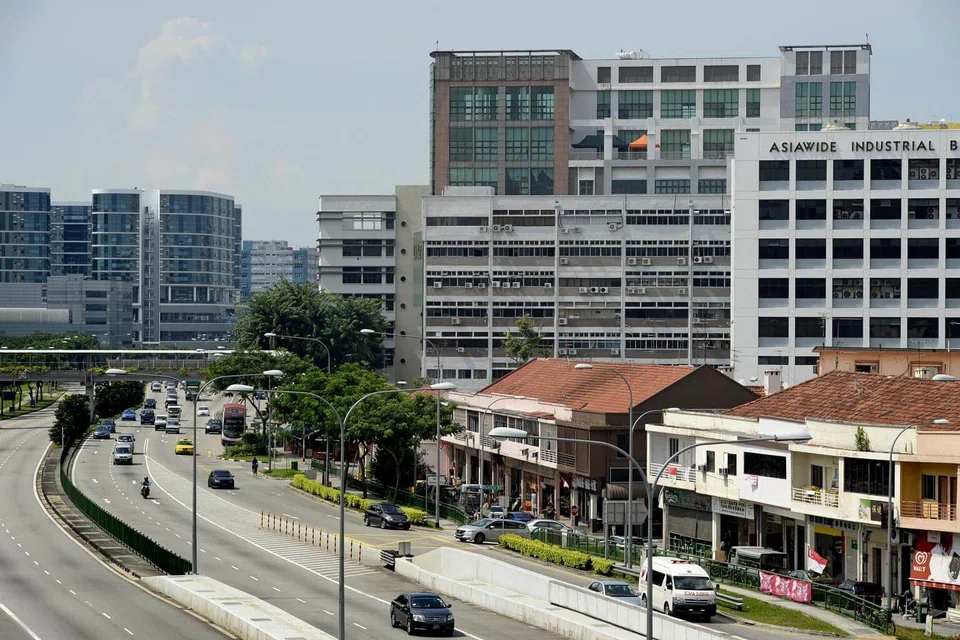
THE industrial property market appears to have bottomed out, with analysts projecting a stable market outlook for this year and citing business parks as a likely outperformer.
Rentals and prices of industrial space in Singapore were relatively stable in the first quarter of 2019 compared with the preceeding quarter, according to the latest data from industrial land and infrastructure agency JTC Corp.
The price index edged down 0.1 per cent, while the rental index was flat. Compared with a year ago, the price index was unchanged while the rental index eased 0.2 per cent.
Meanwhile, the occupancy rate of the overall industrial property market for the first quarter was flat over the previous quarter, but rose 0.3 percentage point year on year to 89.3 per cent owing to improved occupancy in single-user factories, business parks and warehouse spaces.
Still, "the factory submarket continued to exhibit some weakness", pointed out Brenda Ong, executive director (industrial and logistics services) at CBRE. "The single-user factory rental index registered a 0.6 per cent quarter-on-quarter decline, while the multiple-user factory rental index eased by 0.1 per cent quarter-on-quarter in Q1 2019."
On the other hand, business parks was the best performer of all the segments, eking out a rental increase of 0.9 per cent quarter on quarter, while occupancy edged up 0.7 percentage point to 85.6 per cent.
Tay Huey Ying, JLL's head of research and consultancy (Singapore), expects the business park segment to outperform the rest of the market. She said: "With Ascent 5 already fully leased and with no other multiple-user facility completing for the rest of the year, the availability of quality business park space for lease is expected to be tight in 2019. This should underpin a faster pace of rental growth in 2019, possibly by up to 5 per cent, barring any unforeseen external shocks."
Tricia Song, head of research for Singapore at Colliers International, noted that while the first quarter statistics showed that industrial rents in general have bottomed, it may be too early to expect significant rental recovery. She added: "New business park properties and high-spec spaces should continue to enjoy rental improvements due to limited stock and tighter new supply. Business parks may also benefit from potential decentralisation of qualifying businesses, driven by the recent URA Draft Master Plan's incentive schemes to promote more mixed developments within the central business district (CBD), and as CBD and business rental differential continue to widen."
For the rest of 2019, another 1.2 million sq m of industrial space is estimated to come on stream, representing 3 per cent of current industrial stock. Of the 1.2 million sq m, 80 per cent is single-user factory space.
In comparison, the average annual supply and demand of industrial space in the past three years was around 1.4 million and 1.1 million sq m respectively. "The supply coming on stream will continue to support the expansion plans of industrialists," JTC said.
JTC also said that based on the number of caveats lodged for industrial properties, there was an uptick in the transaction volume in the first quarter, with volume rising 7 per cent from a quarter ago and jumping 41 per cent from a year ago.
Looking ahead, analysts expect the industrial property market to hold steady this year. Knight Frank Singapore's head of industrial, Tan Boon Leong, reckoned that prices and rents are unlikely to see any drastic changes this year, barring any economic shocks. He added: "Amid an uncertain external environment, firms are unlikely to be willing to pay rents above prevailing market rates, and with sufficient supply in the pipeline, industrialists need not commit too much space for future expansion."
However, analysts also highlighted that some risks and challenges remain, such as an anticipated easing in manufacturing output growth this year, as well as the global trade crisis, which could prompt firms to shelve expansion plans. According to advanced estimates from Ministry of Trade and Industry (MTI), Singapore's gross domestic product (GDP) growth eased to 1.3 per cent year on year in Q1 2019, largely due to the manufacturing sector which shrank 1.9 per cent.
Ms Ong said: "With a lean pipeline ahead and limited speculative supply, occupancy rate is expected to improve. That said, it is still subject to the global trade uncertainties between the US and China, as the heightened trade volatility continues to weigh on manufacturers' sentiments.
Meanwhile, Christine Li, Cushman & Wakefield's head of research for Singapore and South East Asia, pointed to trouble brewing in the logistics segment. Creditors have seized control of CWT International's assets, including in Singapore, after the debt-laden group failed to stump up interest payments for a HK$1.4 billion (S$243.4 million) loan.
While CWT International said that CWT Pte Ltd is still conducting normal business operations . . ."it remains to be seen if creditors will divest or liquidate CWT Pte Ltd to recoup the outstanding loan amount, which may impact CWT Pte Ltd's leases on multiple warehouses across the country", Ms Li added.