

Asia’s wealth boom is making every strategy look right
The fundamental question is whether to keep a human adviser in front of every customer, not just the richest
EVERY bank in Asia, mine included, tells the same story about the region.
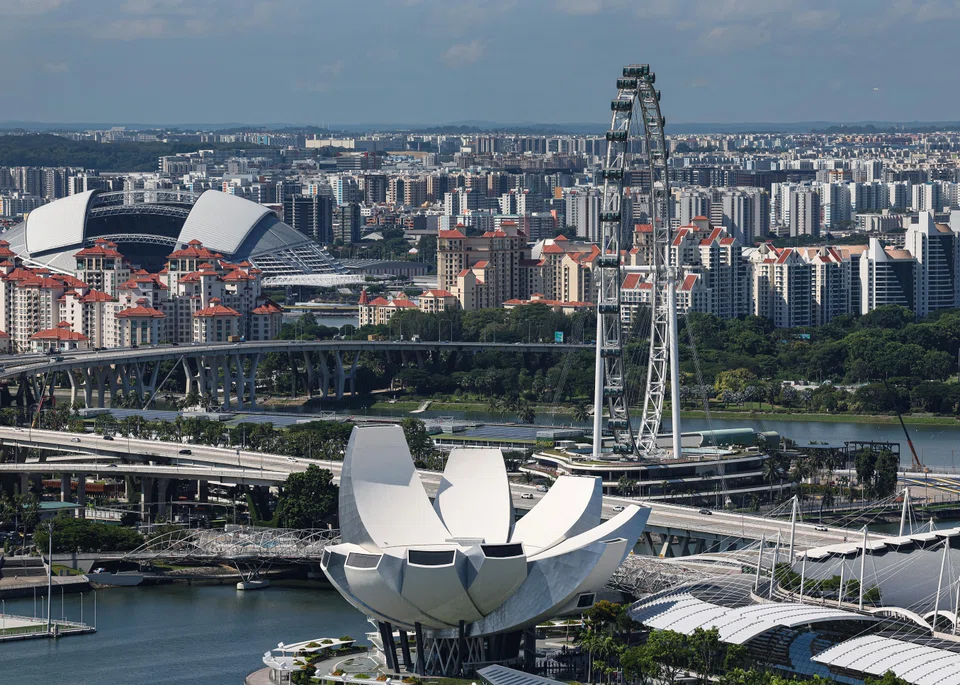
Wealth is moving to the East, millionaires are being made faster here than anywhere else, and Singapore and Hong Kong are where the money lands. All of it is true.
Amid the optimism of geographic and demographic tailwinds drawing more inflows, two questions shape a person’s investment decision: Will my money be safe here? And will anyone help me do something with it?
The moment we are in is not making these decisions any easier.
The boom is a tailwind that is blowing through rough weather. The US Federal Reserve is split. Markets cannot tell whether the next move is a cut or a hike. The prolonged conflict in the Gulf is keeping oil prices high, and the July sell-off gave everyone a scare.
In such circumstances, the client’s money does two things. It looks for safety, and then it waits.
A bank’s job is to provide the first and end the second. Judging from the record-high earnings reported this year, the banking industry seems to be getting it right.
But in a boom, one cannot differentiate a good strategy from a purely lucky one. The difference only shows when the wind drops. What matters is how banks have built up franchises that can thrive in both good and tough times.
The first thing is the trust that brings money in. The second is a platform that puts it to work. The third is the decision to keep a human adviser in front of every customer, and how we want that relationship to work with artificial intelligence.
SEE ALSO









That third one is what the industry is still debating on as there are divergent views, and it is the one worth talking about.
Capital chooses a trusted institution, not a city
The numbers behind the boom are real. Assets under management (AUM) in Singapore rose 10.1 per cent to S$6.7 trillion in 2025, and all three locally headquartered banks reported record wealth income in the last results season.
But capital is not choosing a city. It is choosing trust, a jurisdiction that stays neutral, and institutions it believes will still be standing when the cycle turns.
Families now hold structures in more than one hub, and they weigh custody risk and geography before returns on capital.
So connecting customers to markets beyond Singapore matters as much as the harbour itself. The banks that grew the fastest through this cycle could offer both.
Count what is invested, not what is parked
The industry measures itself by AUM, which really measures what is parked.
I’d argue that it is not the be-all and end-all. Another number that matters, to both the customer and the bank, is what gets invested, diversified and kept invested through a period like this.
More importantly, investment solutions should always be tailored to suit the evolving needs of an ultra-high-net-worth client or a family whose wealth and businesses are increasingly intertwined.
Idle cash is the risk in every cycle like this one.
In 2022 and 2023, money poured into Singapore’s banks and sat in deposits. This year has been different.
Fee income across the industry hit records even as interest income fell, and at my own bank, a record 58 per cent of wealth assets are now invested rather than parked.
The entrepreneurs, families and global investors are seeking strategic wealth planning advisory and actively deploying their capital in multi-asset investments across geographies and jurisdictions, from one generation to the next.
That is what putting money to work means, and the banks that did more of it this year did it with two things: a platform that makes it easy to stay invested, and a person for clients to talk to.
Going across the continuum
Wealth is never static, which is why since I took over the wealth franchise in 2023, my team and I have been doubling down on longstanding efforts to bring the best of our advisory and solutions to customers at different life stages.
We decided on one platform and a unified operating model for the whole continuum, from the first-jobber putting aside S$100 a month to the private bank client with a multimillion-dollar portfolio.
Customers are not homogeneous, but they do not need separate plumbing either. It took years of unglamorous work on the deep plumbing, and it is not finished.
The region’s banks and wealth managers, too, are sparing no effort to build their wealth continuum.
This collective commitment reinforces the fact that the wealth of Asia’s next decade is being created by first-generation earners, professionals and business owners who are affluent today and private banking clients in the next five to 10 years.
The pressure comes from elsewhere. A recent wave of global wealth reports suggests that the way forward is to serve the affluent digitally, keep the human touch for the richest, and use AI to scale without adding people.
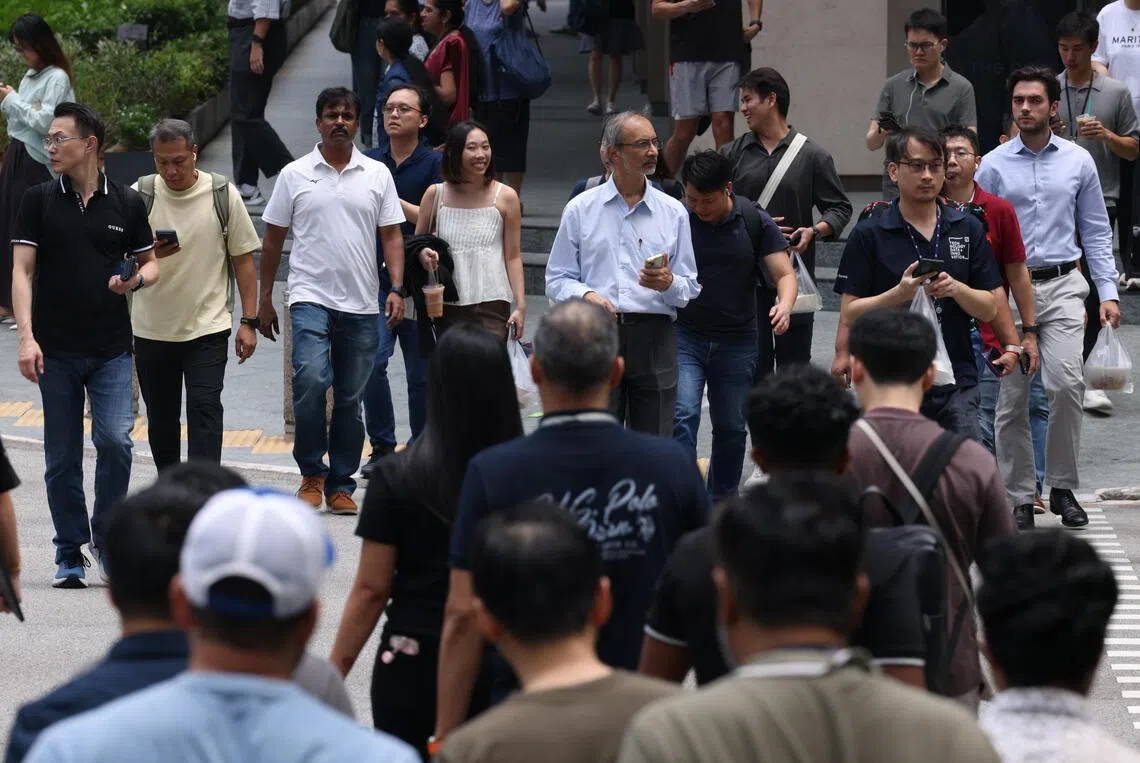
One study has even suggested a client with a million dollars in liquid assets may no longer be worth an adviser’s hours. I have yet to meet a customer who agrees.
Indeed, AI has made it more efficient to scale advice to more people. Across the industry, onboarding that took days and months now takes half the time, freeing up relationship managers from mundane administrative tasks so they can spend more time with customers.
The upshot is that more people can be served and the meaningful advice they get today will enable them to create wealth tomorrow.
Analysts have asked me: Why hire when others use AI to avoid it?
In Asia, banks, including offshore ones, are hiring advisers. We see reports of how banks and fintech companies are on a hiring spree, from front-line relationship managers to platform engineers.
But boosting headcount is just part of the story. At DBS, wealth fee income has grown about sixfold since 2015 while adviser headcount has grown at a single-digit rate annually.
That is what happens when the platform does the routine work and the adviser does the advising. Customers like that.
A recent survey of affluent and high-net-worth investors found that when it came to committing money, a human professional was three times more influential than any AI tool, and half wanted both working together.
Write the rules for working with AI
The tools are no longer the hard part. AI is not a monopoly; any bank can build or buy it, and most of us have.
Banks now have their own models and AI-powered advisory tools. My own bank runs virtual assistants we built in-house to service customers.
These advancements are table stakes now. The harder work is the “with”. Admittedly, most of us in the industry are still assessing the tasks that AI models should automate and what responsibilities should remain in the remit of humans.
I keep telling colleagues we should spend less time worrying about what AI will do to us, and more time deciding what we want it to do for us and with us.
That means combining our domain expertise with AI governance. A person must stay in the loop in the moments that matter; someone must own each recommendation and what the machine did must be recorded, so the advice can be checked later.
The regulator’s AI guidelines have made that an expectation and in the industry forums I sit in, the question has moved from whether to use AI to how to govern it.
Those forums could agree on what good looks like, so that the industry earns the people’s trust in AI-enabled advice. Firms that write the rules down will scale AI with confidence.
Two things to watch: Market gyrations and the uncertain macro environment mean that the wider set of investors should continue to stay diversified, and access without discipline will end badly for some of them.
The cost of running generative or agentic AI at scale, meanwhile, is becoming a real budget line. For many firms, they are racking up the costs without reaping the dividends just yet.
However, firms that built their own foundations are optimising their in-house AI models to generate more bang for their buck and pay less for each new use case. Gartner expects more than 40 per cent of agentic-related projects to be scrapped by 2027.
Tailwinds are real, but they are not a strategy. They amplify what a bank has already built, and everything a bank builds comes back to one decision: who it is for.
Get that right and the wind does the rest. Get it wrong and the wind is all you have. As we all know, no wind lasts.
The writer is the group executive and group head of consumer banking and wealth management at DBS Bank. He is also the co-chair of the Private Banking Industry Group in Singapore.
Decoding Asia newsletter: your guide to navigating Asia in a new global order. Sign up here to get Decoding Asia newsletter. Delivered to your inbox. Free.
Share with us your feedback on BT's products and services






