



How will a rising Asia lead the way?

Mindy Tan
Singapore
ONLY 18 per cent of today's goods trade involves exports from low-wage, traditionally Asian countries, into high-wage countries. This figure is not only far smaller than most people assume, but it is declining across many industries.
The question is no longer how quickly Asia will rise, but how Asia will lead, says Oliver Tonby, chairman of McKinsey & Company Asia and one of the authors for the report, "Asia's future is now".
Over the past decade, global output has continued to rise but the share of goods traded across borders has fallen by 5.6 percentage points. This is driven by healthy economic development in China, India, and the rest of emerging Asia.
As the region's emerging economies develop new industrial capabilities and begin making more sophisticated products, they are becoming less reliant on foreign imports of both intermediate inputs and final goods.
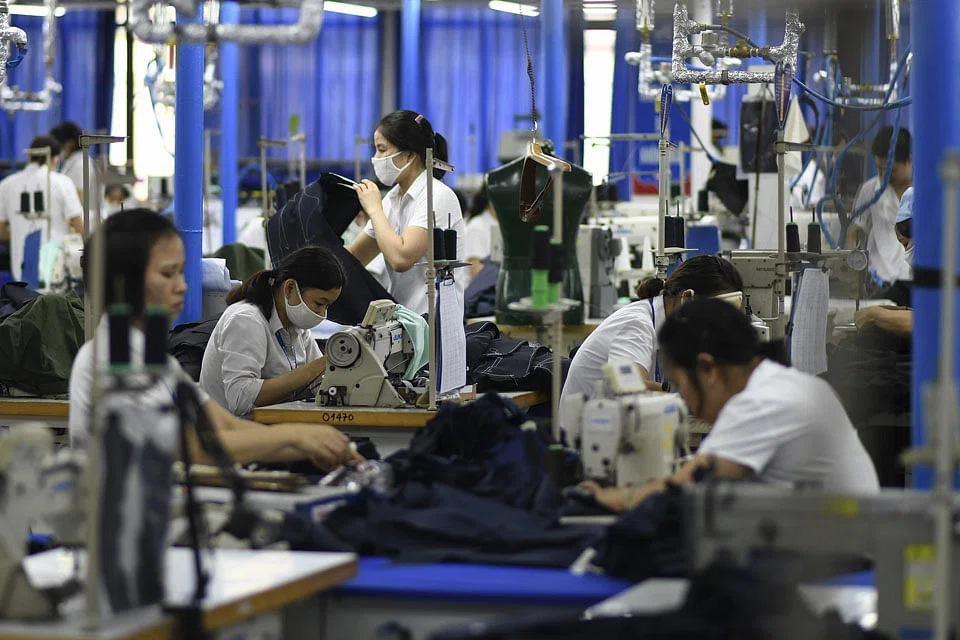
As countries like China move into higher-value activities, Vietnam, India and Bangladesh have managed to grow their exports of labour-intensive manufactured goods (particularly textiles) by annual rates of 15 per cent, 8 per cent, and 7 per cent respectively in the past decade.
Vietnam, in particular, has become a hub of labour-intensive manufacturing for export, attracting greenfield investment into cities such as Hai Phong. Ho Chi Minh City (Vietnam), Mundra (India) and Xi'an (China) are other rising makers of electronics.
That being said, the report pointed out that low-cost labour alone is no longer enough as industry value chains increasingly rely on R&D and innovation.
Specifically, companies in Asia will need to invest more in the latest equipment and machinery, and the use of data and artificial intelligence, said Mr Tonby in a phone interview.
Investment in reskilling and upskilling is also paramount as some jobs disappear and more change in their nature in the face of AI.
The region's share of top-performing firms, defined as the top quintile measured by economic profit, has grown from 19 to 31 per cent over the past two decades. According to the 2018 Fortune Global 500 ranking, 210 of the world's 500 biggest companies by revenue were Asian.
Manufacturing of capital goods is now a smaller share of the economy, while infrastructure and financial services have grown.
One way in which Asian corporates are similar to their Western counterparts is in that the distribution of economic profit and loss is skewed.
But while firms in the top decile of performance are generating higher profits, losses are growing among the worst-performing firms.
This phenomenon is particularly pronounced in Asia. In the decade since 2005-2007, the economic profit produced by top-quintile Asian firms increased by 57 per cent (versus 33 per cent in North America).
Meanwhile, the economic profit destroyed by bottom-quintile Asian firms increased sevenfold (versus 2.5 times in North America).
"The nature of economies are changing even faster here than in the West . . . it is a function of growth, a function of innovation in Asia. That's why there's a higher rate of churn among Asian outperformers," said Mr Tonby.
"On the other hand, if you don't move in Asia, you lose even more quickly," he added.
Asia is also producing unicorns much faster than the West. On average, it took 10 years for firms in the EMEA (Europe, the Middle East and Africa) region, nine years for firms in North America, and only six years for firms in Asia.
According to the report, Asia is home to more than one third (119) of the world's 331 "unicorns". Ninety-one of these companies are in China.
On the consumption front, McKinsey projects that the region will fuel half of all consumption growth expected worldwide over the course of the next decade.
By 2030, it is projected to account for more than half of global consumption growth.
TRENDING NOW

One-third of Singapore-listed firms at risk in severe AI downturn: MAS
‘Not done’: Keppel CEO Loh Chin Hua transformed the group, but says there’s ‘still a lot to do’

He built the Vingroup empire. Now South-east Asia’s richest man is handing some key roles to his sons
‘We don’t want to stay as we are’: CEO Patrick Ng builds a more resilient Huationg

