

Private healthcare providers brace for higher costs amid global shortage of nurses

Megan Cheah

OPERATING expenditures for private healthcare players in Singapore are expected to rise as they reassess their compensation for nurses, although the costs to retain staff could still be lower than training new nurses from scratch, say analysts.
The potential increase in wage costs comes as a knock-on effect of the upcoming retention scheme by the government to offer monetary payouts to nurses in the public healthcare sector.
About 29,000 nurses are set to receive up to S$100,000 in payouts over the next 20 years from September, under the Award for Nurses’ Grace, Excellence and Loyalty (Angel) scheme.
All new and in-service nurses aged below 46 years old who are working in the public healthcare institutions will receive payouts ranging from S$20,000 to S$30,000 every four to six years.
In response, private players may have to up the ante to keep their headcount, noted analysts who spoke to The Business Times. Maybank Securities analyst Eric Ong said these players will likely have to offer a more attractive salary to their existing pool of nurses, which could lead to higher operating expenses and margin pressure.
“We believe the latest scheme will impact private healthcare operators in terms of attracting and retaining its staff, thus exacerbating the manpower shortage issue in the industry,” he said.
CGS International Securities analyst Tay Wee Kuang agreed. However, he noted that the impact of these staggered payouts may be greater in the near term, as most nurses are likely to stay for the first tranche of payments before re-evaluating their options.
In a speech announcing the scheme, Health Minister Ong Ye Kung said there had been a higher-than-usual attrition of foreign nurses during the Covid-19 pandemic, although the government has since made up for the lower numbers through recruitment efforts.
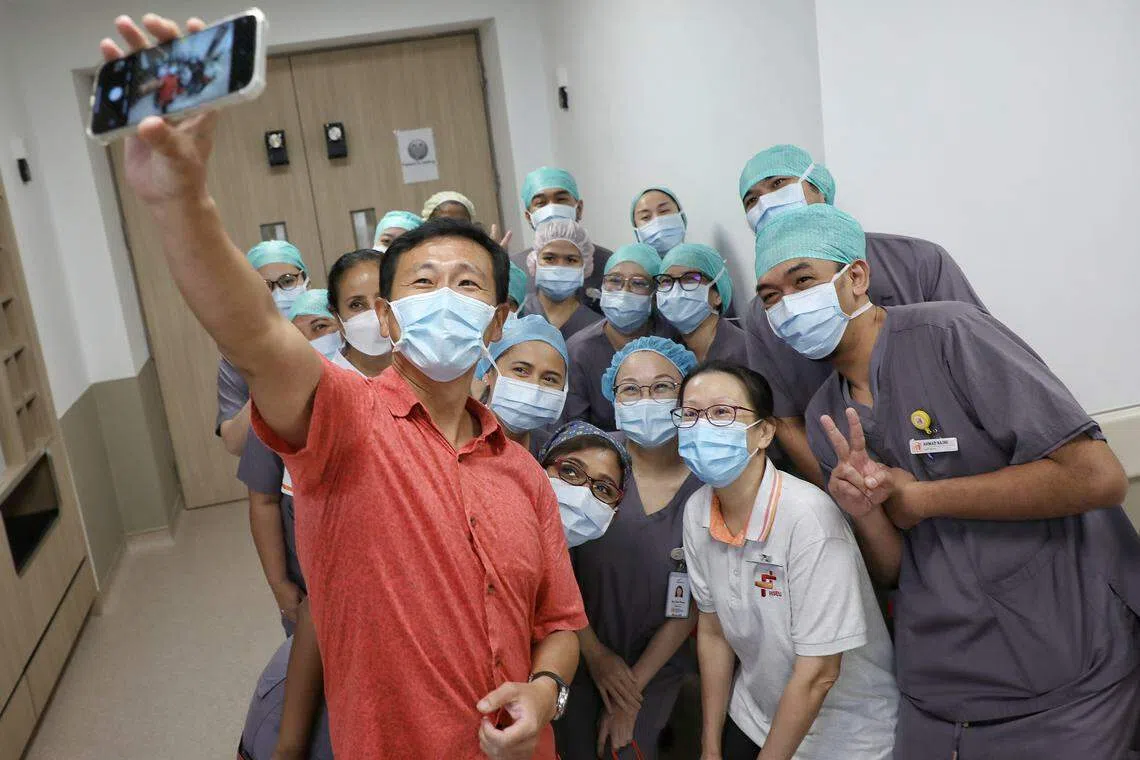
The scheme will also reward foreign nurses who have been in continuous service for at least four years as at or after September this year, with the payouts at the same quantum and frequency as local nurses.
Better perks on the cards
DBS Group Research analyst Rachel Tan said the shortage of nurses will drive healthcare institutions across the board to “up their game”.
“The impact will be rising staff costs for the healthcare sector, both in the public and private sector,” she said.
CGS’ Tay said private players may introduce similar reward schemes to keep their nurse headcounts.
However, he believes that even if staff costs increase on higher compensation, it “could outweigh the costs involved to bring in new nurses and provide them with the relevant training”.
Besides monetary compensation, DBS’ Tan noted that there are other ways that private healthcare providers can incentivise its nurses, such as through benefits or perks.
In response to queries from BT, Singapore-listed private healthcare group Raffles Medical Group said it incentivises its nurses in several ways, including competitive salaries, staff benefits, work environment flexibility and other bonuses.
A spokesperson said that the company has increased its overall nursing headcount by about 15 per cent, compared with before the pandemic.
The spokesperson added that the group had been awarded accreditation with distinction by the American Nurses Credentialing Centre, underscoring its “commitment to the growth and development” of its nurses.
Another listed player, Thomson Medical Group , which operates specialist medical clinics as well as maternity hospital Thomson Medical Centre, has more than 240 nurses across its Singapore facilities.
A Thomson Medical spokesperson told BT that hiring has been “stable” both pre- and post-Covid.
“We expect the numbers to remain stable and will continue to monitor the manpower situation closely for any changes,” the spokesperson added.
Meanwhile, integrated healthcare provider IHH Healthcare noted in a recent earnings briefing that its nurse capacity in Singapore is now full, after hiring “a lot of nurses” post-Covid.
The intensified hiring had led to a one-percentage-point slip in its Singapore market’s full-year Ebitda (earnings before interest, taxes, depreciation and amortisation) margin.
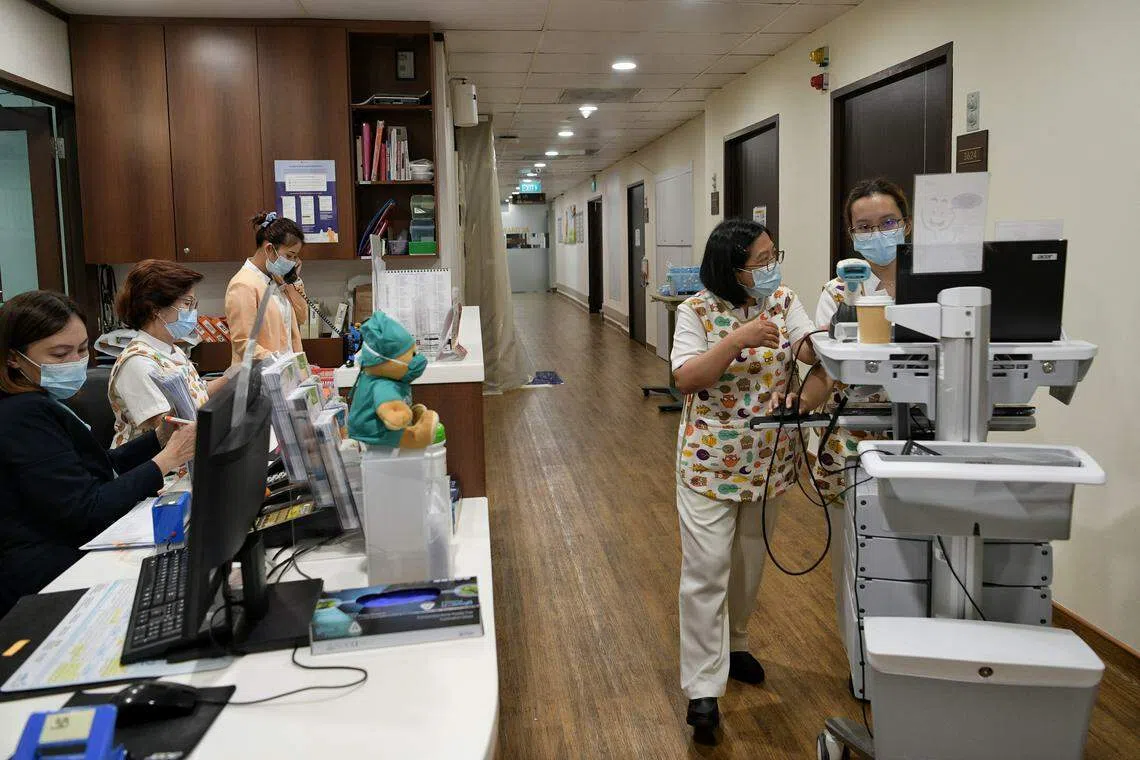
Group chief executive Dr Prem Nair said the group would likely have to respond to the government’s nurse retention scheme to keep its headcount of nurses amid a “global shortage of nurses”.
“A lot of nurses are now moving… in the past, they used to move to the Middle East. Today, they are moving to Australia and New Zealand,” he said, calling the situation “fluid”.
The group – which has operations in Malaysia, Singapore, Turkey, Hong Kong and Europe – hires nurses from surrounding countries such as India, the Philippines and Myanmar, he said.
For Singapore in particular, there is “strong competition” for nurses and the group “will have to react”, said Dr Nair.
However, there is no “specific pressure” at the moment to increase the number of nurses, although the group will continue to keep an eye on this area, he said.
Despite this, CGS’ Tay reckons that the private and public sectors will work together to make compensation packages more transparent.
He said: “Ultimately, (the scheme) is part of the government’s plan to attract more nursing talent in Singapore, and there will definitely be discussions between the public and private healthcare sectors, should it become increasingly difficult for private healthcare players to staff their operations.”
TRENDING NOW

If Europe goes to war, the fallout will be felt in East Asia

Singapore government slaps loan curbs on individual private-hire car buyers

Wider talent pools, smoother operations: What these S’pore firms gain from inclusive hiring

Philippines’ FDI slowdown exposes uneven investment prospects across S-E Asia

