

Sanli Environmental eyes opportunities in local coastal protection, climate change efforts
Singapore’s S$100 billion coastal protection plan, which was first announced in 2019, will be one new area of focus for the company.

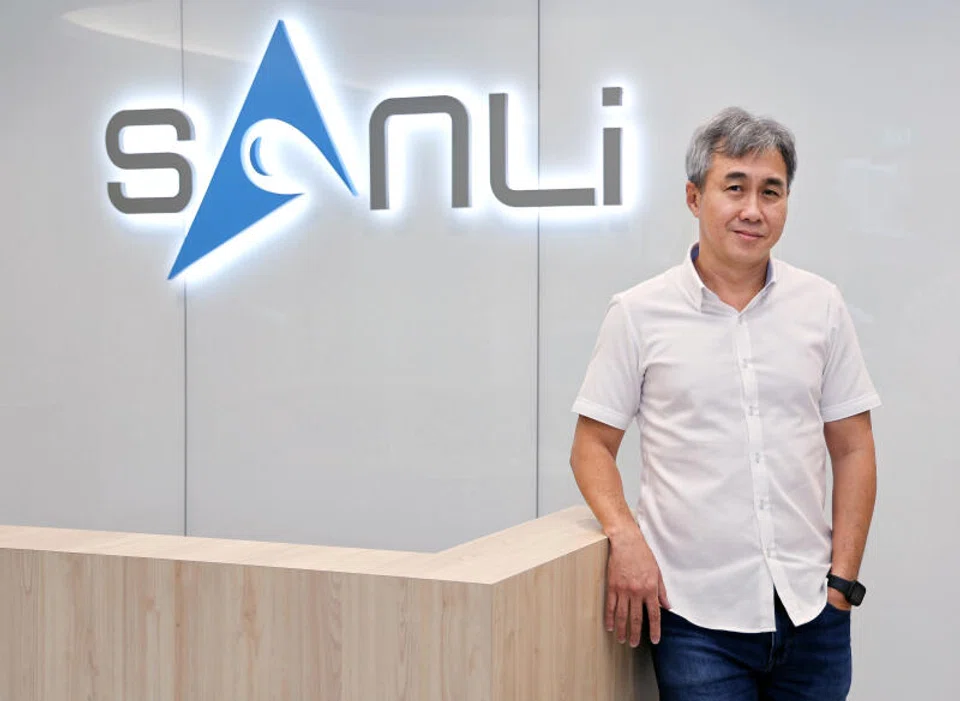
OVER the past 15 years, environmental engineering company Sanli Environmental has focused mainly on potable water production as well as the construction and maintenance of wastewater plants.
“The business (for these two areas) will always be there,” Sanli’s chief executive Sim Hock Heng said in an interview with The Business Times, noting that countries in South-east Asia and around the world have been “pumping a lot of funds” into the development of such infrastructure.
But, as governments around the world step up climate change, environmental protection and renewables efforts, Sim believes that Sanli is in a sweet spot to tap the opportunities arising from these changes.
As concerns swell over the rise of seawater levels, the company is now looking into coastal protection projects. In particular, it has its eye on Singapore’s S$100 billion coastal protection plan, first announced in 2019.
“I think we are really in the right position at the right time, where people are starting to become more aware of environmental (protection). So, we have positioned ourselves well to capture these (opportunities),” Sim said.
Small but adaptive
Competition is expected to be fierce, as more companies fight for a slice of the pie amid the global push for more environmentally friendly business models.
While Sanli is relatively small – it has a market capitalisation of just S$27.1 million as at Feb 9 – Sim believes that it can hold its own.
Small and medium-sized enterprises such as Sanli often encounter problems because the leaders of these companies are unable to “run their companies in a different manner”, Sim noted.
Managing Sanli prior to its listing on the Catalist board of the Singapore Exchange in 2017, he said, was a “very different ball game”. The company grew its headcount from around 70 prior to listing, to about 500 employees in Singapore presently.
The coronavirus pandemic, high inflation levels and geopolitical tensions are some of the factors that have made the past three years challenging, he said. “It’s all about adapting... we cannot run the business as and when we want it.”
Sanli is headquartered in Singapore, and has offices in Malaysia and Myanmar. Its key customer in Singapore is PUB, the city-state’s national water agency. The company also handles works for PUB’s water plant in Malaysia.
In Myanmar, Sanli has contracts in cities such as Yangon, Mawlamyine and Mandalay.
Although Sanli has grown its presence over the years in South-east Asia, Sim stressed that the company will remain focused on its core businesses.
“How Sanli operates is that we don’t believe that we should be running everywhere and not being focused on what the company is doing,” he said.
“We are in the process of setting up teams to go into other industries, other sectors... while keeping the core team still intact.”
Cleaner, greener projects
Sanli is looking to “step up” and expand its areas of operations. In its financial results for the fiscal year 2023 ended March last year, it said that it is looking at opportunities in green technologies as part of diversification efforts to enlarge revenue base.
In FY2023, the company garnered approval from its shareholders to manufacture magnesium hydroxide slurry that can be used in a range of industrial projects under its wholly owned unit Mag Chemical.
Sanli has set up and commissioned a magnesium hydroxide slurry manufacturing plant, and has started to engage customers for this business.
In that fiscal year, the group also began to provide environmental engineering solutions for water and wastewater treatment, as well as air pollution control and solid waste management, to the industrial sector in Singapore and South-east Asia through another wholly owned unit. The company noted an “increasing interest” among customers for its solutions.
Sim said that the group also intends to go into the solar business in Thailand’s electricity market and will scour other markets in South-east Asia for similar opportunities.
While acknowledging that it may be challenging for Sanli to embark on a new business such as solar, he said that the company plans to ease its entry by tying up with local partners in the potential markets.
For Thailand, Sanli entered into a joint venture to invest in and undertake commercial and industrial water and wastewater treatment projects, as well as renewable energy projects. Sanli’s unit Sanli M&E Engineering holds a 49 per cent stake in the share capital of the joint venture firm.
For a company that used to derive most of its revenue from a single customer, Sim said that Sanli has also been making efforts to diversify its revenue streams to prevent lumpy earnings and mitigate risks given the cyclical nature of the businesses.
In January, Sanli announced that it had clinched local contracts worth a total of S$35 million for a range of services. These contracts, the group said, signified the expansion of its client base with the addition of customers such as Tuas Power, Gardens by the Bay and the Urban Redevelopment Authority.
These new contracts also brought the group’s order book to S$335.9 million. A majority of these contracts will be fulfilled over the next three years.
Stronger earnings, growth potential
For FY24’s first half ended September 2023, Sanli posted a 9.3 per cent increase in net profit to S$1.6 million from S$1.5 million in the corresponding year-ago period.
The stronger bottom line was due chiefly to a 29.8 per cent increase in revenue to S$50.7 million, but was partially offset by a 28.7 per cent increase in its cost of contract works to S$43.5 million.
Diversifying from a single primary sector will provide a buffer from top-line fluctuations and more stability, explained Sim. Certain sectors that Sanli operates in have a lumpy structure for recognising revenues, and is cyclical in nature; so, diversification could offer investors some reprieve.
Looking ahead, Sim said that Sanli will be looking for opportunities in the South-east Asia region without closing its doors on any particular country.
For instance, he said developing countries are on Sanli’s radar. “When the countries start to develop, we can seize the opportunities,” he said, citing Cambodia, Indonesia and the Philippines as examples.
“When there are good deals, we will be there,” he added.
TRENDING NOW
High Court rules against Julius Baer’s Singapore trust arm in US$50 million family trust dispute

MSCI proposes standalone status for Indonesia; Jakarta stocks plunge 8%

Once staunchly pro-China, Malaysian Chinese businesses are now distancing themselves from Beijing
No chicken feed: How Malayan Flour Mills built an empire from flour to fowl

