

Asean key to Singapore's future amid US-China tensions, say economists

Janice Heng
Singapore
THE Asean market is crucial for Singapore's future growth, not least against the backdrop of United States-China trade tensions, said panellists at the 11th Singapore Economic Policy Forum on Thursday.
Singapore's long-term growth story has been one of slowing growth and rising volatility, said Nanyang Technological University (NTU) professor of economics Tan Kong Yam. Trade tensions might increase turbulence, but Asean and Singapore could benefit from this, he added, as manufacturers consider moving capacity out of China and into South-east Asia.
He sees Singapore as a regional centre for logistics, business services, infrastructure finance and project development, among other areas. "Rising services, focusing on Asean, can be a strong engine of growth with lower volatility," he said, unlike electronics and pharmaceuticals manufacturing, which are more volatile growth drivers.
Another speaker on the panel discussing the future of growth, Economic Development Board chairman Beh Swan Gin, said during the question-and-answer session that businesses "need to think pan-region from day one".
And it is not just a matter of local firms expanding into the region, he said: "When South-east Asian companies start to reach a scale, they also have needs that cannot be met in their own capitals." This s where Singapore can come in, he added.
On the future of international relations, ISEAS-Yusof Ishak Institute director Choi Shing Kwok said moving out to South-east Asia may not be easy, but Singapore firms have "little or no choice" but to do so as the region grows increasingly important.
The annual forum is jointly organised by the Economic Society of Singapore with NTU, the National University of Singapore and Singapore Management University in rotation. This year's edition was held with NTU.
Beyond Asean, the broader rise of Asia is a key feature of the future, said the panellists. Rising middle-class consumption in Asia presents opportunities for innovative products, services and solutions that address the region's unmet needs, said Dr Beh, who named the shift to an innovation-led approach as a priority for Singapore.
Other priorities include working with the "large installed base" of firms here to make more productive use of assets, and staying open to knowledge, capital, companies and talent.
China loomed large in a session on the future of business, with Surbana Jurong chief executive (International) Teo Eng Cheong citing it as a major factor to reckon with, alongside technology and climate change.
Asked how Singapore can participate in the internationalisation of companies from China, Singapore University of Social Sciences professor David Lee highlighted Singapore's reputation for good governance and its pool of "good project managers".
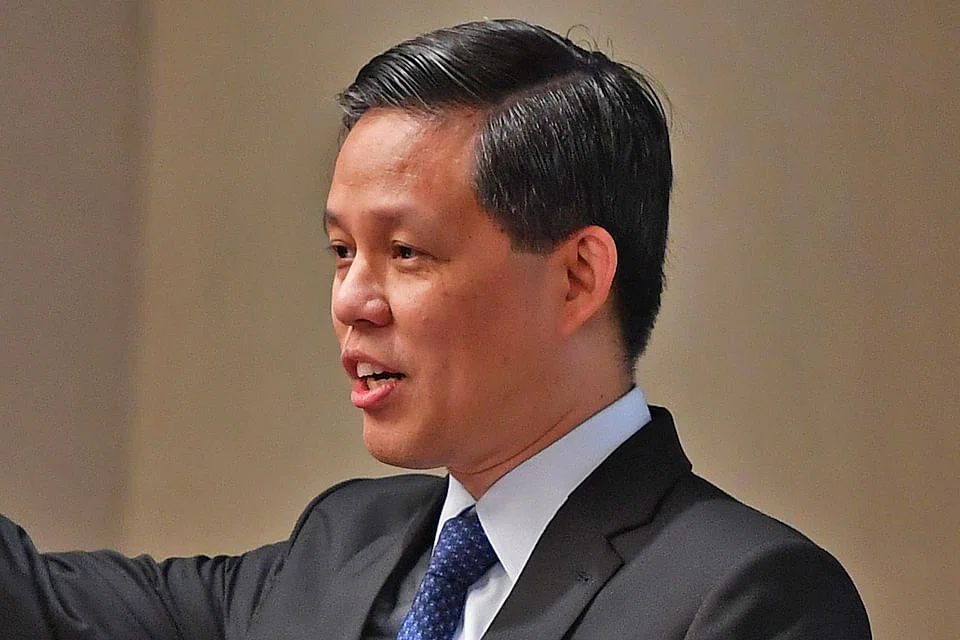
Trade tensions were among five challenges and a rising Asia among five opportunities identified by Minister for Trade and Industry Chan Chun Sing, who set out eight strategies that Singapore should pursue in his keynote speech at the event.
Other challenges are shifts in global value chains, digital disruption, varied sectoral growth trajectories and labour and land constraints.
The opportunities include the diminished importance of size and geography due to technology, connectivity enabling growth beyond physical constraints, Singapore's reputation for trustworthiness and its predictable, pro-business environment.
Singapore's strategies for the future, said Mr Chan, should include building connectivity, updating international rules, adopting Industry 4.0, growing global talent, innovation, capability-building, agile regulations, and continuous learning.
TRENDING NOW
VietJet hit with global asset freeze in FitzWalter dispute

FCT, NLB to turn Causeway Point’s former cinema space into reading hub in mall revamp
Family offices ‘kept captive’ by relationship managers turn to independent advisers, direct deals

Olivia Lum, ex-CFO not giving evidence in their Hyflux trial

