



From tobacco to banking, how Indonesia’s Hartono brothers amassed a US$48 billion fortune

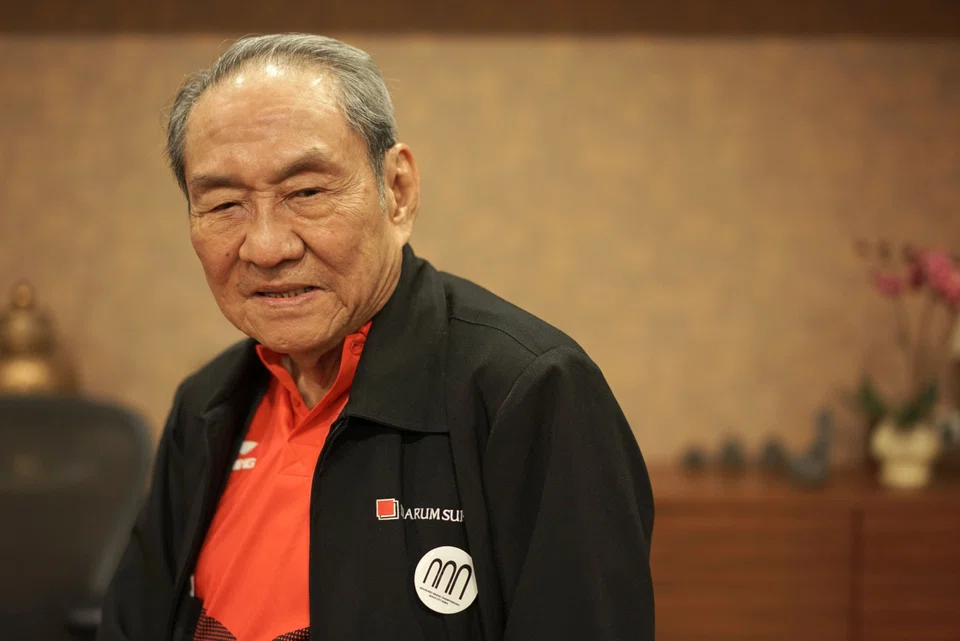
[JAKARTA] In Indonesia, there is the rich and the insanely super-rich. Tycoon siblings Michael Bambang Hartono, 84, and Robert Budi Hartono, 82, certainly fall into the latter category, with a staggering combined net worth of US$48 billion and counting.
The octogenarian brothers have, for many years, featured prominently at the top of Forbes’ annual list of the wealthiest people in South-east Asia’s largest economy.
They are the owners of Indonesia’s Djarum Group, which produces roughly a sixth of the cigarettes manufactured in the country and is now run by Robert’s 51-year-old son Victor Hartono.
The brothers are also the largest shareholders in Bank Central Asia, the largest bank in Indonesia which reported revenue of 87.5 trillion rupiah (S$7.5 billion) in 2022. Also that year, the pair listed Global Digital Niaga – the parent company of e-commerce giant Blibli – and raised eight trillion rupiah in one of Indonesia’s largest initial public offerings (IPOs) of all time.
A smoking success
Born and raised in Kudus in Central Java, the wealth of the brothers and their larger Chinese-descent family is deeply rooted in their success in the tobacco industry.
The family’s venture in the tobacco business began when the brothers’ late father Oei Wie Gwan acquired a bankrupt cigarette company in 1950 and rebranded it as Djarum, which is interestingly named after the needle of a gramophone.
Michael and Robert inherited the business after their father’s death in 1963. The pair expanded the company by producing a blend of tobacco, cloves and flavoured cigarettes known as kretek, with the manually-rolled type popular among lower-income earners in Indonesia.
In the early-1970s, even as they realised the domestic market for kretek was immense, the brothers decided to export the hand-rolled kretek to tobacco retailers around the world, with the UK and Australia among the top markets.
According to latest available figures, Djarum has roughly 60,000 workers at their factories in Kudus. Daily production stands at around 200 million cigarettes, putting Djarum firmly in the same league as their Indonesian rival Gudang Garam and US giant Philip Morris.
Over the years, Djarum expanded beyond tobacco to fields such as electronics, banking and real estate, which have all helped to fatten the brothers’ wallets even further.
They founded the Polytron electronics brand in 1975, and it’s common to see many households have at least one of their products, be it televisions, refrigerators or air-conditioners.
When the Asian financial crisis hit Indonesia especially hard in 1997, the brothers were quick to capitalise on diversifying their investments and watch out for opportunities in the imploding market.
In 1998, Djarum was part of a consortium that purchased Bank Central Asia, with the former holding a majority stake of 51 per cent. The brothers forked out 5.3 trillion rupiah to the Salim family, the Indonesian billionaires who were compelled to sell their shares because of the banking sector meltdown.
Today, Bank Central Asia is the largest private bank in Indonesia with total assets worth 1,357 trillion rupiah and a market capitalisation of 1,113 trillion rupiah. In 2023, the bank posted net profit of 48.6 trillion rupiah, a 19.3 per cent increase from the previous year.
The Hartonos are also prominent players in Indonesia’s real estate sector. The family owns Grand Indonesia, one of the largest malls in Jakarta, and operates the luxury Kempinski Hotel Indonesia in Jakarta and Bali.
The siblings have also done their part to give back to society, with the family setting up the Djarum Foundation in 1986 with a focus on supporting education and popular sports such as badminton by giving scholarships to students. The foundation played its part by scouting for talented badminton players across the country, with many of these young players going on to play at the Olympics and international tournaments like the Thomas Cup.
In 2019, however, Djarum lost a two-year legal battle and was forced to remove its logo from players’ uniforms as part of a wider move by the authorities to limit the presence of the tobacco industry in sports.
Digital pivot
Indonesia’s burgeoning young population and the rapid growth of the digital economy helped convince the Hartono siblings to venture into business in the digital sector.
They established a venture capital firm in 2010 called GDP Venture, which Robert’s son Martin runs as its chief executive.
With initial capital reported to be around US$100 million, GDP Venture has supported and financed digital transformation initiatives within the Djarum Group’s portfolio of companies. In 2017, the firm acquired a majority stake in Indonesian online travel agent Tiket.com.
In 2022, the family listed Global Digital Niaga on the Indonesia Stock Exchange. The IPO was the second-largest in Indonesia that year.
Analysts have said that Djarum’s digital pivot was part of a broader strategy to keep its business empire strong for the longer term, given how Indonesia’s heavily regulated tobacco industry continues to downsize due to increasing taxes and health restrictions.
This is the final piece of a five-part series in BT on the wealthiest people in South-east Asia
TRENDING NOW

From AI financing to Indonesia outlook: 4 takeaways from Singapore banks’ Q3 results

VinFast, Mitsubishi weigh Philippine EV production as state incentives near

Analysts cut DBS target price on lower 2027 earnings, but see buying opportunity after share price slide

Could Japan trigger the next global financial crisis?

