‘Greenlash’ reshapes EU’s flagship sustainability deal
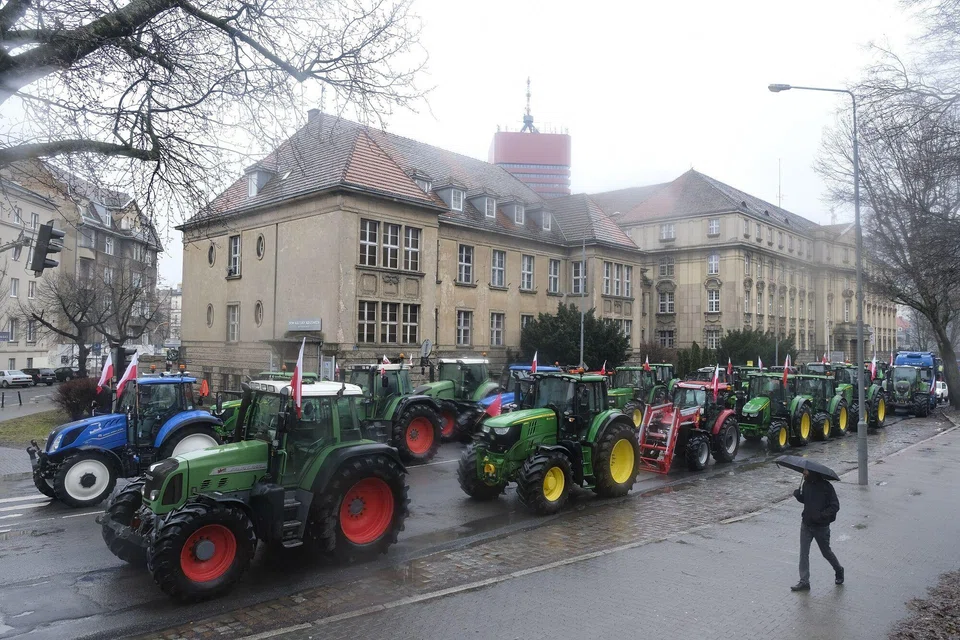
THE European Union’s Green New Deal has been one of the signature features of European Commission President Ursula von der Leyen’s term in office since 2019. However, there are increasingly signs that this flagship policy may now transition to a new phase in 2024 with strong emphasis on decarbonisation, and less on biodiversity and nature conservation.
A key driver for this potential evolution is a growing “greenlash” (backlash against green policies) across much of Europe.
Recent weeks, for instance, have seen significant farmer protests across much of Europe including France, Italy, Spain, Romania, Poland, Greece, Germany, Portugal and the Netherlands.
Some of this discontent relates to local agricultural grievances in individual nations, but there is also broad-based anger over cross-cutting economic, regulatory and green policies.
Farmers across the continent highlight how costs of energy, fertiliser and transport have grown, while governments have been trying to reduce rising food prices after the inflation spike since the pandemic. Remarkably, it is estimated that around 40 per cent of farmers across the 27-member bloc (mainly small and medium-sized farms) have gone out of business or been acquired in the last decade and a half.
This farmer discontent is widely seen as part of a broader political backlash, driven by conservatives, against key elements of the Green New Deal.
Even the moderate right-of-centre European People’s Party has recently partnered with the far-right European Conservatives and Reformists (ECR) to oppose elements of the commission’s Green Deal legislation. This includes the Nature Restoration Law, which will see the EU restoring at least 20 per cent of the bloc’s degraded areas by the end of the decade, and all sites in need of restoration by 2050.
This political backlash may grow significantly in 2024 in the context of the European Parliament elections. As opinion polls in February show, the most likely election headline in June will be a surge in support for right-wing and eurosceptic parties wary of the Green New Deal.
This was recently highlighted by the strong support for the Party for Freedom in last November’s Dutch election. Indeed, the rightist ECR may become the third-biggest group in the European Parliament. The ECR includes Prime Minister Giorgia Meloni’s far-right Brothers of Italy. The far-right Identity and Democracy group, which includes Alternative for Germany, may also make sizeable gains.
The biggest election losers might be the European Greens.
One of the potential consequences might therefore be an “anti-environmental” majority in the parliament, for the first time. This further indicates that the next stage of the Green New Deal could see a strong emphasis on decarbonisation targets, for which there is significant corporate support, with less political emphasis on sustainability issues around biodiversity and nature conservation.
Only recently, there have been new signals of this potential bifurcation in the Green New Deal, which has seen more than 50 major sustainability initiatives announced by Brussels by the von der Leyen-led commission since 2019. This has helped the EU refashion itself as a global green superpower, which, the bloc hopes, can help it secure a renewed political lease of life to boot. This after several difficult decades that saw the rise of challenges such as growing euroscepticism and multiple financial crises.
Successful, however, as some of this Green New Deal agenda has been, the greenlash may well mean that a different approach is coming on sustainability issues around biodiversity and nature conservation, especially if they continue to grow in controversy.
The latest signal of this came last week (Feb 6), when Dr von der Leyen announced the withdrawal of a contentious pesticide law, the Sustainable Use Regulation (SUR).
SUR had the ambitious goal of slashing the use of pesticides in half by 2030, and also envisioned total prohibition of these products in sensitive areas, promoting the uptake of low-risk alternatives. Laudable as this might be seen to be by many, however, Dr von der Leyen noted last week that “the SUR proposal has become a symbol of polarisation”.
This SUR reversal is far from a one-off. The European Commission has also said that it will recommend a one-year delay to the introduction of rules that require farmers to keep a certain amount of land fallow or non-productive.
Opposition to these so-called set-aside rules has helped fuel farmer protests across Europe showing the power of the agricultural lobby at a time when Christiane Lambert, president of the EU farmers association Copa-Cogeca, urged Brussels to “take stock of what has been done since the Green Deal”, and slow down the pace of change.
Yet another example is the commission’s decision last year not to proceed with the Sustainable Food Systems Law, meant to be the backbone of the bloc’s flagship food policy.
Instead, the von der Leyen team decided to launch a strategic dialogue on agriculture in a bid to try to decrease a growing polarisation in the sector.
The European Commission is flipping the focus to the decarbonisation agenda, however; and there was clear, further evidence last week that it is doubling down on this policy for which there is strong corporate interest. Part of the reason for this private sector attraction is the huge array of investment opportunities.
The European Commission, for instance, estimates that reaching net-zero emissions by 2050 will require some 700 billion euros (S$1 trillion) in additional investment by the bloc each year. That is a staggering sum.
As Europe therefore seeks to become the first continent in the world to be climate-neutral by 2050, its positioning at the forefront of this agenda is helping to create the pathway for policy innovation, especially around the growing urgency of energy transition. This is creating new incentives to transform the continent into a more resource-efficient and competitive economy.
Last Wednesday, just a day after the SUR reversal, the commission announced proposals for a massive 90 per cent cut in greenhouse gas emissions by 2040, compared with 1990 levels. This will require a huge deployment of renewable systems, the cessation of the use of coal, and almost end the use of gas in the bloc’s energy system. The recommended 2040 climate target also entails an earlier deployment of carbon capture, which will generate industrial carbon removals, complementing land-based removals sequestering carbon in biomass and soils, and natural carbon removals.
At this stage, these 2040 plans are recommendations, not legally binding obligations, for the 27 member states with a goal of stimulating multi-year dialogue to reach the targets. However, the direction of travel seems clear. Taken together, the EU may therefore be at a key tipping point with its Green New Deal. Much could now depend upon the outcome of the European Parliament elections which may yet see the election of an anti-environmental majority, fuelling the greenlash.
The writer is an associate at LSE IDEAS at the London School of Economics