Three seasons in 24 hours stump climate change deniers
A freaky February makes it much harder for sceptics to dismiss global warming
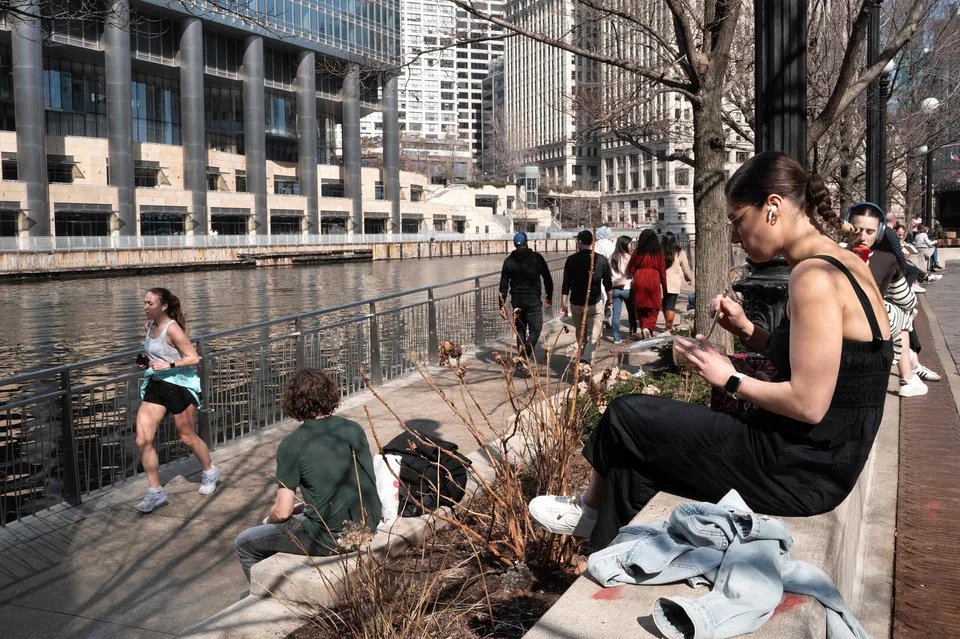
SPRING doesn’t officially begin for more than three weeks, but it came early to Chicago this week, with temperatures hitting a pleasant 74 degrees Fahrenheit (23 degrees Celcius) on Tuesday (Feb 27) afternoon.
Spring then quickly turned to summer, with severe thunderstorms slamming the area Tuesday night, bringing hail and reported tornadoes. Then winter returned on Wednesday morning, skipping fall, as the mercury plunged into the 20s, with icy winds and snow flurries.
Just a totally normal 24 hours in February.
Actually, the weather around the world has been anything but normal this winter. More to the point, it has forced us to reconsider what “normal” even means anymore when global warming is making the climate increasingly chaotic.
“If the climate were changing more slowly, it would be harder to see,” Berkeley Earth climate scientist Zeke Hausfather said. “But it’s hard to ignore a 70-degree day in February.”
The United States is in the grips of a snow drought, with more ground bare of the white stuff in late February than in any other year since National Oceanic and Atmospheric Administration (NOAA) records began in 2004.
Ski resorts are shutting down from Indiana to the Alps. Dog-sled races have been cancelled. Wisconsin golf courses opened early. Just 2.7 per cent of the Great Lakes was covered in ice in mid-February, according to the NOAA, the lowest since records began in 1973.
This January was the world’s warmest since at least 1850, and this February is on track to follow suit, according to Hausfather. Global average sea-surface temperature blew away the record for the hottest January ever and came close to being the hottest month ever, according to the European Union’s Copernicus Climate Change Service.
Hundreds of records fell across the US this week in a bizarre winter heatwave that elevated temperatures to 38 deg C in Texas and 27 deg C in St Louis and sparked a handful of wildfires. Smoke from those fires gave New York City an unwelcome whiff of last summer’s Canadian haze. That was swiftly followed by a whiplash-inducing temperature drop of 15 deg C in some parts of the Midwest.
Some of this freakish weather is due to strong El Nino conditions in the Eastern Pacific, which tend to raise temperatures and wreak havoc around the world. Snow cover was also low in the US in 2016, the last strong El Nino winter.
But this El Nino comes in the context of a long-term heating trend. Average global surface temperatures have risen 1.2 deg C from pre-industrial averages, thanks mainly to the greenhouse gases released by burning fossil fuels. El Nino is giving that long-term trend a little extra kick.
It’s tricky to ascribe any one weather event to global warming, but a massive heatwave in February has climate change’s fingerprints all over it. The non-profit research group Climate Central estimates it made Chicago’s high temperature on Tuesday four times likelier.
This winter is also a taste of what’s to come as temperatures keep rising. For example, this week’s heatwave was due in part to the aforementioned lack of snow cover, which makes the ground hotter and drier. Add strong, dry winds from Mexico, and we got rising temperatures and wildfire risks. Future winter storms may be wetter and dump more snow all at once because warmer air holds more moisture. But a warmer climate could also mean fewer snowstorms in some places and in spring and fall, and snowpack tends to melt quickly in 21-deg C weather.
Winter is warming faster than other seasons, and colder parts of the country are warming faster than hotter ones. All of this will spell a future of iffy snowfall and more torrential rainstorms, including the “atmospheric rivers” that have pounded California for much of this winter.
If not managed properly, that could lead to longer wildfire seasons – Canada’s has already begun – and less-reliable water supply for states that depend on snowmelt. There’s also a theory that, by upsetting the jet stream, global warming might paradoxically make polar vortexes more frequent, bringing deadly cold to places that aren’t used to it.
If there’s a silver lining, a freaky February makes it much harder for sceptics to deny the reality of a changing climate. That could build support to hasten the changes needed to stop burning the fossil fuels that are warming the planet.
While we wait for that, we’ll need to prepare for the consequences of more wild winter weather to come.