BT Explains: Has MAS policy tightening hurt Singapore exports?

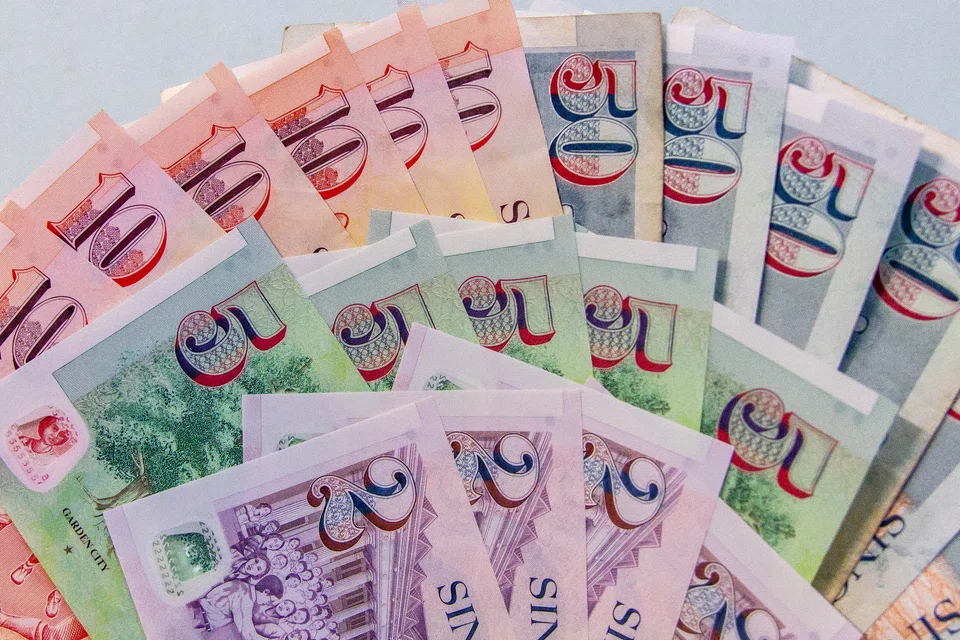
HAS Singapore’s export competitiveness been hurt by the strong Singapore dollar appreciation in recent years, and was this enabled by the tightening of monetary policy?
In response to such concerns, the Monetary Authority of Singapore’s (MAS) stance is that export weakness has other causes – and even if it had not raised the nominal exchange rate, the Singapore dollar would effectively still have appreciated in real terms.
The difference is that this would have been driven by “increases in relative prices”, with domestic prices rising further than foreign prices. This would have meant a “significant cost” to businesses and households, MAS chief economist Edward Robinson said at the JPMorgan Asia Macro Conference on Wednesday (Mar 6).
The Business Times breaks down what this means.
How does Singapore’s monetary policy work?
While most economies guide monetary policy by adjusting interest rates, Singapore’s central bank does so by managing its exchange rate – through tweaking the settings of the Singapore dollar nominal effective exchange rate (S$NEER) policy band.
There are three policy levers that MAS uses: adjusting the slope, width and level of the policy band.
These policy decisions used to be made twice a year. Last October, MAS announced that it was switching to a quarterly schedule from this year to “enhance monetary policy communications”.
What has MAS done to tackle the most recent inflation cycle?
The first phase of the current global inflation surge began in late 2020, with labour market tightness and surging demand as economies began to emerge from the pandemic.
MAS began tightening monetary policy relatively early in the post-pandemic global inflation cycle in 2021 and continued doing so into the second phase, during Russia’s invasion of Ukraine the following year.
In all, the central bank tightened policy settings five consecutive times – including two off-cycle tweaks – within the span of a year from October 2021. The moves included three consecutive upward re-centrings of the policy band.
“The key advantage of acting early and aggressively was that it allowed us to exploit the exchange rate’s role in filtering imported inflation.
“Our econometric simulations show that imported inflation would have been almost 6 per cent on average each year over the past two years (without these moves), compared to about 2.5 per cent under the actual policy path,” said Robinson.
What is the current MAS policy setting?
At the most recent policy review in January, MAS kept the S$NEER on its current appreciating path. It deemed the current settings appropriate in continuing to “dampen imported inflation and curb domestic cost pressures, thus ensuring medium-term price stability”.
“Even without further changes to monetary policy settings, the S$NEER will likely continue to appreciate gradually within the unchanged policy band,” Robinson said at the conference.
Does a stronger Singdollar hurt export competitiveness?
Economic theory suggests that a stronger currency makes exports less competitive, because they become pricier for importers overseas.
Yet this may not necessarily be the case for Singapore. Responding to such concerns in Parliament in May 2022, Minister of State for Trade and Industry Alvin Tan said the strong Singdollar was not expected to hit exports significantly.
“Singapore’s exports are generally high value-added products and services, where demand is less sensitive to price, and therefore exchange rate changes,” said Tan. He cited an official business expectations survey which found that the exchange rate is not a key limiting factor for manufacturers’ export orders.
On Wednesday, Robinson noted that while Singapore has seen weak export figures from late 2022 into 2023, MAS’ empirical work suggests that these were “driven mainly by lacklustre external demand, rather than by a loss of external competitiveness”.
This is because the global electronics industry entered a cyclical downturn last year, on the back of a boom in 2022, he said.
“Given tepid external demand, a weaker Singapore dollar would not have provided much of a boost to exports.”
What if MAS had not tightened policy?
Firstly, without policy tightening, “domestic overheating and the passthrough of higher global prices would have kept inflation in Singapore higher for much longer”, said Robinson. “This would have come at a significant cost to households and firms.”
“MAS’ model simulations show that without the filtering effect of a higher nominal exchange rate, import prices would have risen at a faster pace,” he said. Singaporean consumers and businesses would have had to pay more for imported goods and services.
Stronger aggregate demand would also have put upward pressure on wages, he added.
As a result, Singapore would have faced persistently high inflation, with headline inflation reaching 8 per cent year on year in some quarters, compared with the actual peak of 7.3 per cent in Q3 2022.
“Sharply higher wages and costs, as the economy is pushed well beyond its absorptive limits, would eventually have led to substantially lower real gross domestic product growth,” said Robinson. There would also be a higher risk of a wage-price spiral arising from persistently elevated inflation.
In 2023, GDP grew 1.1 per cent, with headline inflation averaging 4.8 per cent and core inflation, 4.2 per cent.
Secondly, even if MAS had not tightened policy, the Singdollar would have appreciated similarly in real terms, said Robinson.
According to MAS’ model simulations, in a counterfactual scenario where S$NEER policy band settings were not changed, the real effective exchange rate (S$REER) would still have appreciated as much as it actually did from MAS tightening.
This would have happened with a lag, and been driven mainly by increases in relative prices, said Robinson.
The S$REER is defined as the cost of a unit of goods and services in Singapore relative to a similar unit in other countries. It is computed by adjusting the S$NEER for the price level in Singapore relative to that in its major trading partners.
In other words, if inflation is higher in Singapore than in major trading partners, then the prices of Singapore exports will still rise – even if the nominal exchange rate remains the same. The S$REER would thus appreciate.
But because this involves higher domestic prices, it would be clearly “sub-optimal”, said Robinson. “Accordingly, the contribution of monetary policy was to manage the S$REER appreciation in an optimal manner.”