Further curbs on money lending to foreigners
Singapore
BUILDING on measures implemented in November last year, the Ministry of Law (MinLaw) has further tightened caps on loans to foreigners and low-income foreigners in particular.
A self-exclusion mechanism for borrowers to opt out of licensed moneylender loans that had been announced in October was also launched on Monday, via SingPass.
All but one of the measures take effect immediately.
Under the new restrictions, foreigners earning less than S$10,000 per annum will only be able to borrow up to S$500 from all licensed moneylenders combined, down from the S$1,500 cap implemented in November.
The maximum interest and fees payable remains capped at 100 per cent of the principal, limiting the total amount repayable for such low-income borrowers to S$1,000.
One of Singapore's 159 licensed moneylenders told BT that he expected that the entirety of his foreigner borrowing base would be rendered ineligible for any additional loans, as they have already exceeded the S$500 cap.
Foreign borrowers make up 20 per cent of his sales, and in his estimation, almost all of them were borrowing to remit towards a problem at home, and not for discretionary spending.
Unlike previous iterations of moneylending protections, Monday's measures also restrict licensed moneylenders, and not just borrowers.
Licensed moneylenders will not be allowed to have more than 300 foreigners or more than S$150,000 in outstanding principal extended to foreigners on their books at any one point in time.
They will also be limited to 15 loans to foreigners per month, and 50 per year.
The collective supply-side restriction also applies to lenders' existing loan books, and is the only new measure to have a delayed implementation date of Aug 15.
The Credit Association of Singapore, which represents moneylenders here, believes the supply restrictions will be "devastating" for the industry, said campaign executive Julian Tan. Because these specific measures are not isolated to low-income borrowers, the association expects that "most if not all foreigners may not be able to borrow from licensed lenders by Aug 15."
This second round of regulations comes after a sustained rise in foreigners borrowing from licensed moneylenders, despite the implementation of restrictions in November.
In the first half of 2019, 53,000 foreign borrowers took loans from licensed moneylenders. In the 2018 full year, there were 55,000 borrowers, up from 19,000 in 2017 and 7,500 in 2016.
Foreigners will also no longer be allowed to function as guarantors for other foreign borrowers.
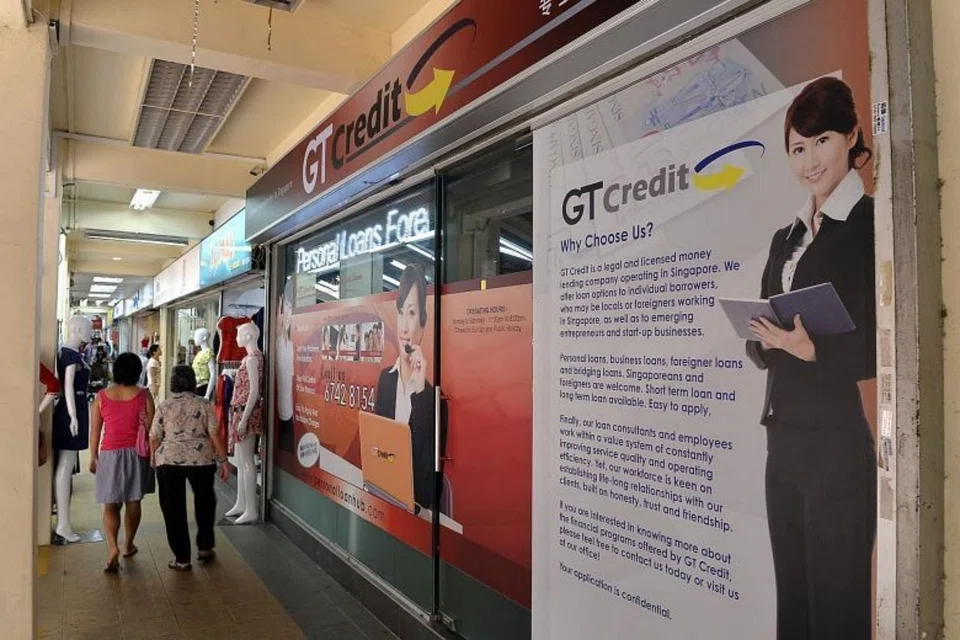
Further, all moneylender advertising explicitly targeting "vulnerable groups" - advertising that "Domestic Workers Are Welcome," for example - will be prohibited, said MinLaw.
The Ministry said the past year has seen a proliferation of such shopfront advertisements.
Licensed moneylenders will not be allowed to grant loans facilitated or brokered by unauthorised third parties working without the requisite work authorisation.
Additionally, the Ministry of Manpower will take action against work pass holders who broker or facilitate loans for gains.
In an effort to "reduce the visibility of credit to vulnerable borrowers, and pre-empt the possibility of licensees... circumvent(ing) the new supply caps," licensed moneylenders will be prohibited from referring borrowers to other moneylenders.
To support the new restrictions, borrowers will be able to restructure their debt through voluntary welfare organisations like the Association of Muslim Professionals and Adullam Life Counselling.