Grab eyes the unsung SMEs behind Fortune 500 heavyweights
The unicorn revs up its data engine to close finance gap for smaller Asean distributors of retail giants
Singapore
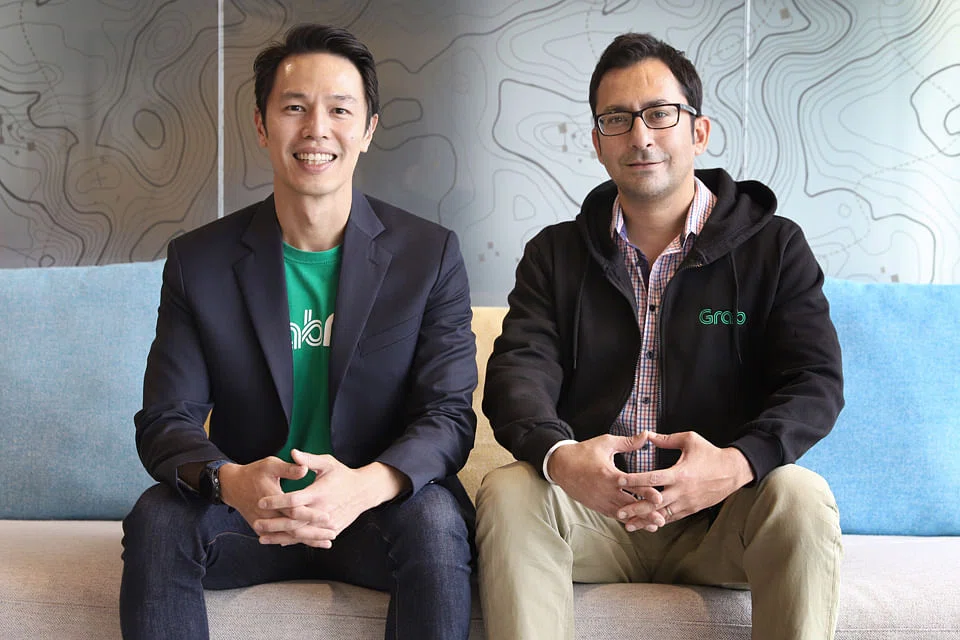
GRAB is targeting the underserved segment in the middle-income economy of this region - the small and medium-sized enterprises (SMEs) that are the forgotten links in a supply chain that trace back to a Fortune 500 giant, top Grab executives told The Business Times.
The sprawling fintech has rolled out loans to several SMEs in Singapore alone via its joint venture with Japanese financial services group Credit Saison.
Grab Financial Services' head Ankur Mehrotra said that most of the SMEs it is working with are from the food & beverage (F&B) and retail segment as it taps into its 600,000-strong merchant base across South-east Asia that swelled from having GrabFood in its network.
Grab will rev its SME financing up from next year, piloting this with "hundreds" of SMEs in the Philippines and Thailand, a large number of which are expected to be distributors of Fortune 500 retailers that have operations all across South-east Asia.
"They have thousands of distributors, and each of these distributors will have smaller distributors three or four layers below. Fortune 500 companies have very little visibility after the third layer, and none of these guys are getting the supply chain financing that the Fortune 500 companies would have," said Mr Mehrotra.
"Supply chain financing is a massive opportunity in South-east Asia. There are multiple parties looking to crack it, including the banks. It's a challenging space as well for multiple reasons from fraud to how fragmented it is. That's something we are looking at very closely to try to solve."
The fintech declined to disclose the size of its SME loanbook in Singapore, or a target size for its SME financing business.
In Singapore, half of its borrowers have been operating for five years or less, and about half were granted loans of no more than S$30,000. Six in 10 have an annual revenue of under S$1 million.
Grab has said that customers can borrow up to S$100,000, with interest rates beginning from 0.7 per cent a month.
A fresh report issued by the Singapore Fintech Association (SFA) and Ernst & Young (EY) showed that while bank loans are the top source of funding for local SMEs across all vintages, just about half of the SMEs with a credit history of less than three years have access to bank loans. Once they cross the three-year mark, nearly 80 per cent of such SMEs report success in accessing bank loans.
Small and young firms also do not want that much debt - 55 per cent of firms with annual sales of under S$1 million want no more than S$3 million on average, the report said.
Reuben Lai, senior managing director of Grab Financial Group, noted that banks are still looking to give SMEs a loan facility for a minimum of two years, when they just want working capital to tide over two weeks.
These are typically firms with weak survival rates, but Mr Mehrotra is betting that Grab's approach of monitoring the F&B merchants' cashflow more thoroughly using data can give these F&B firms and retailers a fighting chance, especially as banks tend to find such smaller firms too costly and risky to serve.
There is a quick feedback loop on using funding to drive more revenue to merchants. For example, a GrabFood merchant - Unagi VS Salmon - reported to Grab a 20-30 per cent jump in the business after taking out a working capital loan in April from Grab to automate its processes.
Grab has also been able to bring down overall costs to these businesses. Mr Mehrotra said Grab's merchant acquisition cost is about 50 per cent cheaper than other fintechs.
Merchants also then "happily" give Grab the permission to analyse their data further to mitigate risks, and trigger financing at the right time.
Meanwhile, F&B merchants can work with Grab to push out rewards and loyalty programmes to drive more business, while cheaper GrabPay transactions further reduce costs for merchants.
Ooi Huey Tyng, who manages the GrabPay business in most of Asean, told BT that a new user interface is in the works. With this, the app will likely push more F&B deals and merchant-funded promotions on a targeted basis.
Mr Mehrotra declined to disclose the exact credit assessment score of its model. He said that based on the model's first deployment for select drivers who were offered cash-advance financing - with a fraction of that financing and a fee regularly deducted from their earnings - the credit assessment is 20-30 per cent more accurate than the banks' equivalent form of unsecured finance.
He would not pin down the delinquency rate. But for now, the non-performing loan ratio of Grab's merchant lending book is "double-digit percentage" better than the level of bad credit-card debt.
For its business loans, Grab charges a late fee that is two times of the existing monthly interest rate applicable to the facility on the overdue principal.
Mr Mehrotra said Grab has improved its tail-end delinquency rates by creating a "nudging" algorithm to prompt borrowers to pay on time.
"Just a simple reminder at the right time would be enough. It's not (about) an inability or unwillingness to pay. It is about making the payment process very intuitive," he said.
It is with the same belief that Grab has launched its cash-advance option for Grab drivers in the Philippines and Thailand. (See amendment note)
Rates are benchmarked to banks, which typically avoid this market segment. Grab wants to take this market from moneylenders that charge aggressively.
Mr Mehrotra said: "Ultimately, it is to do with how banking and financial services were thought about in the very early days: higher risk, higher price, higher return. But we found out through our own experience that the drivers are not necessarily higher risk. They are actually good pay masters, they work super hard, and they just need to be given an opportunity."
Amendment note: Grab clarified that it has already launched its cash-advance option for Grab drivers in the Philippines and Thailand. The article has been amended to reflect this change.
READ MORE: Grab heads into 2020 with wealth ambitions