

Sustainability investing takes off in South-east Asia
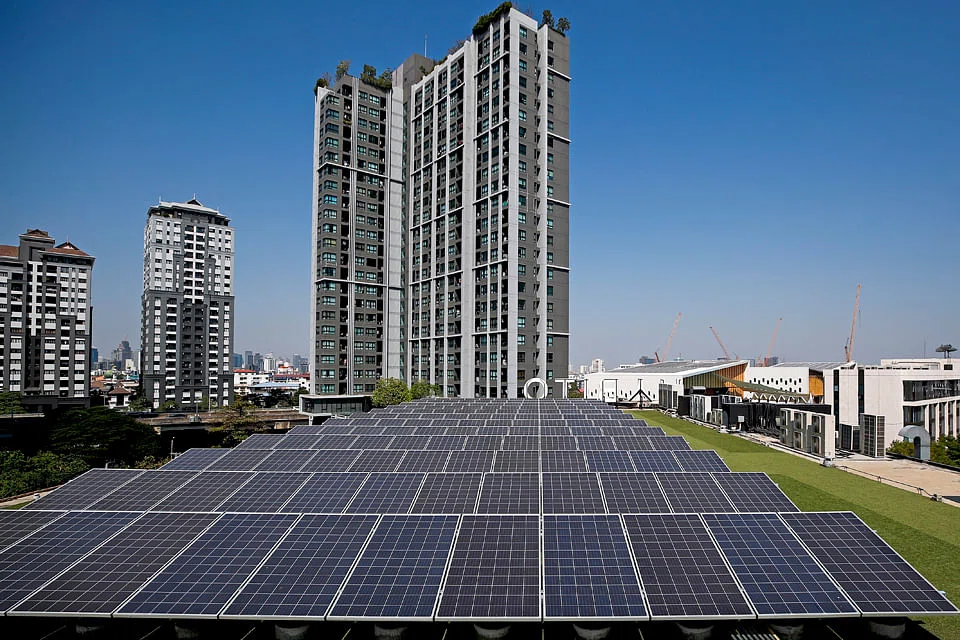
PRIVATE equity and venture investors in South-east Asia are betting on something new - sustainability. Bain research shows a significant increase in capital flowing to companies that contribute to environmental and social progress.
Just 10 years ago, most large investors in South-east Asia targeted primary industries such as oil and gas, mining and agricultural commodities. Today, investors are piling into renewable energy projects, financial platforms that provide access to capital for microbusinesses, and for-profit hospital networks that offer underserved populations better access to health care.
In developing countries, the range of potential sustainability investments is arguably broader than in developed countries. Based on a definition adapted to developing countries, sustainability investing in South east Asia has rapidly gone mainstream.
Of all private equity deals in the first half of 2019, 56 per cent involved companies that met our sustainability criteria for developing countries, up from 30 per cent in 2017, Bain research shows. The total deal value of sustainability investments for the first half of 2019 was US$3.2 billion, up 60 per cent over the first half of 2018, and is on track to surpass 2018.
For our research, we defined a sustainable investment as one that fuels growth - as opposed to a mere change in financial ownership - and meets at least one of three criteria:
Improves the environment: Includes investments in clean energy, water purification, pollution controls, waste reduction, low-carbon transportation, sustainability fisheries and energy from waste.
Increases access to basic resources or services: Encompasses investments in platforms to expand and improve access to vital services that often are lacking in developing countries and hinder growth, such as education, health care and e-wallets for low-income segments of the populations with no access to traditional banking services.
Provides microbusinesses access to finance and markets and promotes social mobility: Includes microfinancing or digital sales platforms for small businesses that help reduce poverty and promote upward economic mobility of business owners.
Several forces are accelerating the shift to sustainability investing in South-east Asia. Global private equity funds are rapidly adopting environmental, social and governance (ESG) criteria and shifting their investment focus. And as awareness and commitment to sustainability grow, private businesses increasingly see big opportunities.
The region's sovereign investment funds and government-linked funds, which are among the world's most active sustainability investors, are another powerful force.
Funds such as Temasek and Khazanah have helped expand the sector, deploying patient, long-term capital to develop successful business platforms in areas such as healthcare.
As the region's largest funds take the lead on embedding sustainability goals into their strategies and championing ESG-focused investing policies, they are setting the tone for portfolio companies as well as private equity funds.
In a recent Bain survey, 96 per cent of investors in South-east Asia said they had accelerated their efforts to incorporate environmental and social criteria into their investment decisions.
Large global private equity funds are among the most committed. KKR, for example, incorporates ESG diligence into all its deals in the region in keeping with its global policy. Global investment group EQT, headquartered in Sweden with roughly US$45 billion in assets under management, keeps an ESG scorecard for all its portfolio companies and tracks ESG performance globally. However, many smaller and medium-sized funds are lagging in implementation, according to the survey.
More importantly, a growing number of studies show that funds that incorporate ESG goals into their strategies perform as well as or better than other portfolios. That is accelerating the shift to sustainability investing.
The number of fund managers who have signed the United Nations-supported PRI has grown to more than 2,660, from 1,200 in 2013. The US$82 trillion in assets under management by these signatories increased by a compound annual growth rate of 19 per cent in the same period.
For Asia-Pacific exits between 2014 and 2018, Bain research shows the median return multiple for deals that either involved impact funds or focused on sectors that score high on ESG - including clean tech, ecology, renewables, education, water and waste - was 3.4, compared with 2.5 for other deals.
The majority of investors in these deals are attracted by business opportunities with solid returns that happen to address environmental problems or social needs. Impact investors, a much smaller subset of sustainability investors, by contrast, intentionally build portfolios of companies to achieve environmental or social goals in addition to financial returns - and they systematically measure their impact.
In December 2018, KKR made its first global impact investment in South-east Asia, committing up to US$33 million for a stake in Barghest Building Performance, a Singapore provider of energy-saving solutions.
The company uses sensors, software algorithms and equipment controls to cut electricity consumption by up to 40 per cent in the air-conditioning systems of industrial and commercial customers throughout Asia.
KKR's impact investing strategy focuses on global opportunities where financial performance and societal impact are aligned and where there is no trade-off between the two goals.
The most striking sustainability trend in South-east Asia, however, is the growing number of ordinary deals across the region that involve companies with a positive environmental or social progress (as defined for developing countries).
In 2018, private equity funds invested more than US$6 billion in sustainability assets in South-east Asia, making up 41 per cent of deal value, compared with one per cent in 2010.
AI Grid Foundation, a nonprofit based in Singapore that codeveloped a community-based model to deploy decentralised renewable energy resources, raised US$20 million in a 2018 round from more than a dozen private equity funds, venture capital funds and corporates.
South-east Asian startups also are accelerating the shift to sustainability investing by building environmental and social businesses. Halodoc, an Indonesian digital health platform with venture funding, for example, offers health care teleconsultations over a phone app in a market that lacks primary health clinics. Topica Edtech Group cooperates with 16 universities in the US, the Philippines and Vietnam to provide high-quality online degree programmes in South-east Asia.
The leaders investing in sustainability businesses in South-east Asia highlight the growing opportunity to seek strong returns while promoting more balanced economic development.
TRENDING NOW

He built the Vingroup empire. Now South-east Asia’s richest man is handing some key roles to his sons

Despite the de-dollarisation debate, demand for dollar liquidity in Asia is growing

Can a first-time homebuyer couple earning S$18,000 a month afford a new EC unit?

Asia needs new energy security architecture

