Construction material manufacturers mull green opportunities for growth

Yong Jun Yuan
Published Wed, Mar 13, 2024 · 05:00 AM
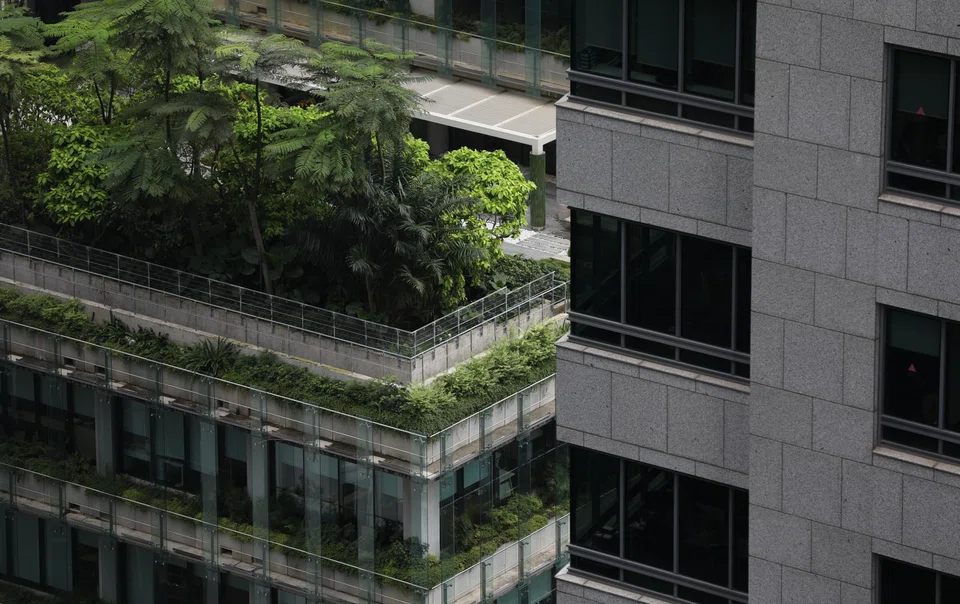
    • The pressure to adopt greener materials may eventually have to come from end-users of buildings.
    • The pressure to adopt greener materials may eventually have to come from end-users of buildings. PHOTO: BT FILE

    AS AWARENESS rises about environmental concerns, building materials companies may be able to benefit by producing greener materials.

    Peggy Mak, research manager at Phillip Securities Research, noted that while the ready-mix concrete space has generally produced the same sort of products in the past, there is now an opportunity for companies to differentiate with low-carbon products.

    In February last year, ready-mix concrete producer Pan-United Corporation announced that it is supplying 360,000 cubic metres of carbon dioxide mineralised concrete over a 2.5-year period for Tuas Port.


    Other projects that have adopted such solutions include Avenue South Residence and a CapitaLand building at 3 Science Park Drive.

    Pan-United currently has over 300 specialised concrete solutions in its portfolio, with over half of them green certified.

    The company has positioned itself as a leader in low-carbon concrete solutions, and has committed to sell only low-carbon concrete by 2030.

    Mak estimates that while such products currently make up about 10 per cent of its orders, the company has already observed better margins as it has raised its average selling price ahead of the industry average.

    However, this may not necessarily benefit all building materials companies just yet.

    Mak said that there is currently no appetite from the construction industry to adopt green steel.

    “It will take some time for the market to use this product and also pay the price for the product. It’s not going to be easy,” she said.

    Seah Kiin Peng, chief executive at steel manufacturing and solutions provider BRC Asia, said that it will be more difficult to convince the industry that greener materials need to be adopted as the benefits are not always apparent to the end-user.

    “Solar panels that give you free or cheaper electricity (are good), but steel buried in concrete does not give you any benefit at all,” he said, adding that companies may have to justify the higher cost of using green steel with the need to meet certain green targets.

    The pressure may eventually have to come from end-users of these buildings.

    Pan-United chief executive May Ng said that she has heard of developers raising concerns over whether their office spaces can be rented out as tenants calculate their carbon footprint.

    “I think that the ecosystem is pressuring developers, owners, users of buildings and governments to decarbonise,” she said, adding that the company is trying to get economies of scale so that the cost of low-carbon alternatives can be mitigated.