

Construction recovery paves the way for Singapore-listed concrete, steel producers

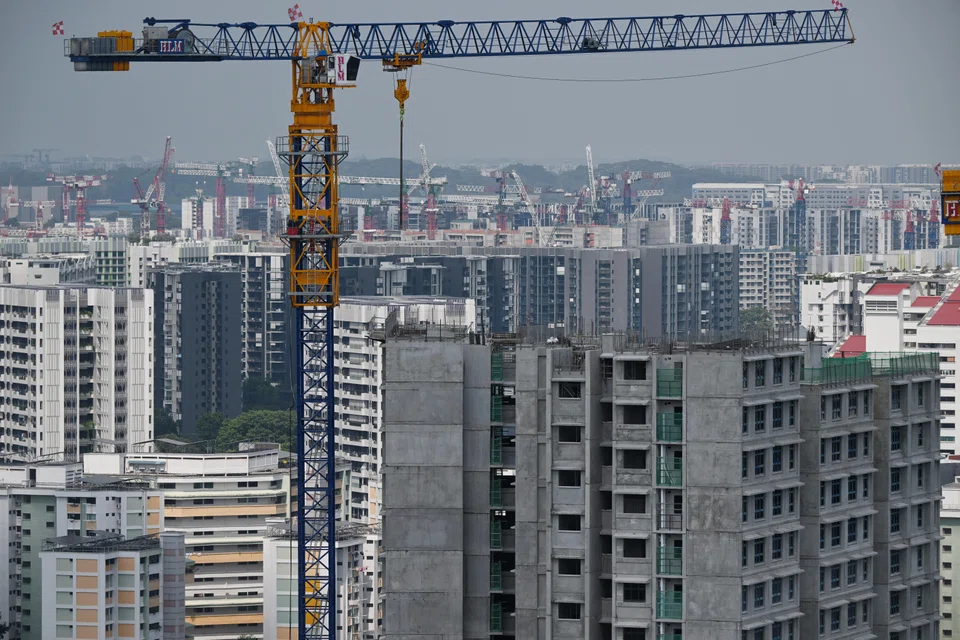
INVESTOR interest is building for locally listed construction material manufacturers, as they ride on a ramp-up in construction activity in Singapore.
Peggy Mak, research manager at Phillip Securities Research, noted that some of the market leaders in the construction material space – such as ready-mix concrete producer Pan-United Corporation and steel manufacturing and solutions provider BRC Asia – have benefited from an increase in construction activity since May last year.
She estimated that Pan-United has about a 40 per cent local market share in ready-mix concrete, while BRC Asia has about an 80 per cent local market share in steel rebars.
For its second half ended Dec 31, Pan-United’s earnings more than doubled to S$20.4 million, from S$9.9 million in the corresponding year-ago period. This brought its full-year net profit up 56 per cent to S$36.3 million.
Meanwhile, in a first quarter update for the period ended Dec 31, BRC Asia posted a 46.5 per cent rise in profit after tax to S$17.1 million.
Over the past 12 months, Pan-United and BRC Asia have generated total returns of 23.8 per cent and 20.2 per cent, respectively. In comparison, the benchmark Straits Times Index has returned 3.8 per cent over the same period.
The recovery in construction activity comes on the back of the lifting of a Heightened Safety Period (HSP) put in place by the Ministry of Manpower from Sep 1, 2022 to May 31, 2023, after a spate of workplace fatalities in the sector.
During the period, site inspections were ramped up and stiffer penalties were imposed on companies, among other measures.
“When the volume comes up, it lowers the overall cost of production (for these companies),” Mak said.
Scott Halyday, director of construction consultancy Linesight Singapore, pointed out that construction demand has also strengthened over time as the prices of construction materials stabilised in 2023.
Still, he noted that prices of construction materials have stayed higher than pre-Covid levels, even if they have eased from peaks last seen in 2022.
“We’ve seen a lot of those extremes subdue a lot... for the most part, we’ve seen some easing and stability in the market,” Halyday said.
According to Linesight data, steel rebar and concrete prices decreased by about 15 per cent and 1 per cent, respectively, between Q4 2022 and Q4 2023.
On the rise
Meanwhile, estimates from the Building and Construction Authority (BCA) suggest that it is expecting construction output to improve further in 2024, according to CGS International equity research analysts Ong Khang Chuen and Kenneth Tan.
Preliminary data from BCA showed that construction output for 2023 stood at about S$34.8 billion. It further expects construction output for 2024 to come in at between S$34 billion and S$37 billion.
The analysts cited healthy construction demand, elevated industry order books and productivity improvements from the lifting of the HSP as reasons to expect further improvements in the sector.
“Our channel checks indicate that industry order books currently remain about 9 per cent above pre-Covid levels as of end-December 2023, presenting healthy near-term revenue visibility for building material players as contractors continue to execute on their backlog while orders are being replenished,” they said.
In response to queries from The Business Times, Ong added that companies such as Pan-United and BRC Asia, with their greater market shares, will likely deliver better performance than the broader sector.
“The contractor space is extremely fragmented and margins for their respective order wins vary widely, hence financial performance varies and a more bottom-up approach is required to pick winners,” he said.
The research house remains bullish on BRC Asia as its top sector pick, as well as Pan-United and Hong Leong Asia, which could both benefit from healthy concrete demand.
Hong Leong Asia produces diesel engines in China, as well as cement, pre-cast concrete products, ready-mix concrete and quarry products in Singapore and Malaysia.
For the full-year ended December, the company’s building materials segment generated 67.2 per cent higher profit after tax of S$76.3 million, out of a total profit after tax of S$120.1 million.
Phillip Securities’ Mak is similarly bullish on building materials companies. She noted that while BCA has predicted a rise in construction output, much of it can be attributed to increased manpower and materials prices. In fact, BCA is only predicting a marginal 1.6 per cent increase in year-on-year volume growth.
“If (materials) prices increase and you can keep your costs stable, that flows directly all the way down to the bottom line, so we think it’s going to be another good year for the building materials makers,” she said.
However, she added that the uplift for Hong Leong Asia could be more limited, as the company also generates significant income from diesel engine sales in China.
Mak noted that the company’s sale of diesel engines has slowed after an initial boom in volumes, due to a change in emissions standards in China.
“Hong Leong Asia’s key earnings driver was cement sales in Malaysia and its 20 per cent stake in BRC Asia, which sells steel rebars in the Singapore market,” she said.
“Even with strong building materials numbers, it might not translate into a better bottom line for it in FY24.”
TRENDING NOW

Britain’s mansion tax shows the difficulty of targeting wealth

Once staunchly pro-China, Malaysian Chinese businesses are now distancing themselves from Beijing

The only common thing in S-E Asia is that we all eat rice: Cisco’s Asean president
Singapore data centre operator DayOne opts for US IPO at likely US$20 billion valuation

