New Keppel Infrastructure Trust CEO wants to have his cake and eat it too
Elysia Tan
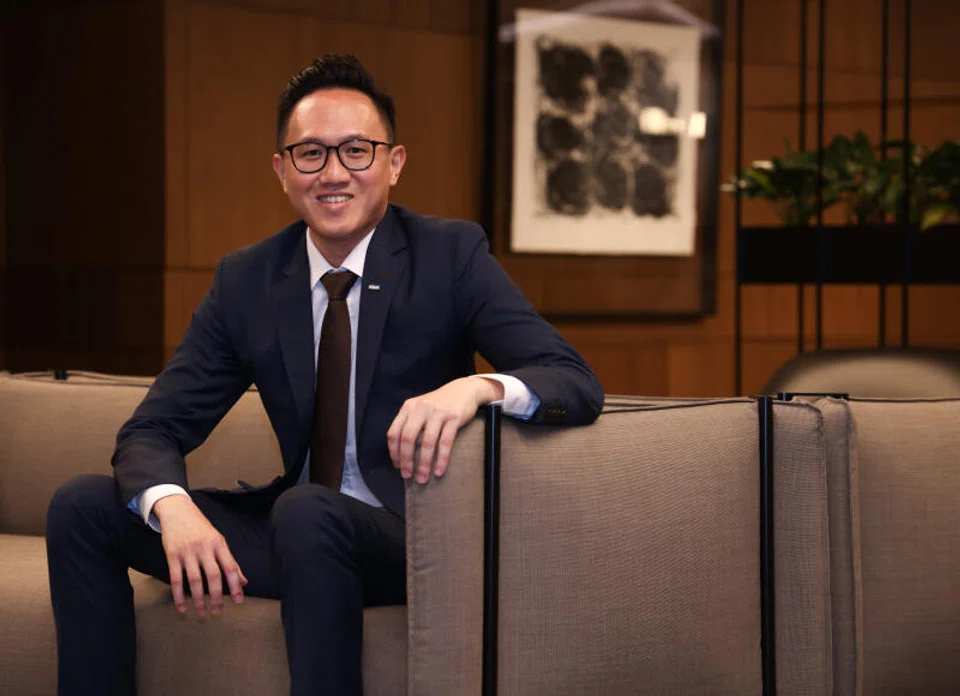
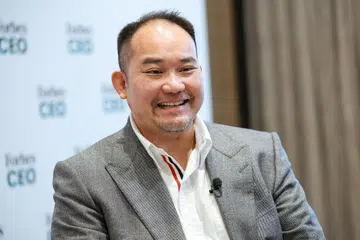
DON’T fix what’s not broken – that’s what Kevin Neo, the new chief executive officer of the trustee-manager of Keppel Infrastructure Trust (KIT), believes when it comes to the trust’s investment and growth strategy.
Appointed to the helm in October last year, Neo previously played a lead role in several major transactions as a senior member of the trustee-manager’s investment team.
From wind farms to a waste management company, and – soon – a bus transportation business, KIT’s portfolio might seem highly diversified. But they are all connected by the trust’s focus on sustainable urbanisation, the CEO said.
In with the new
After years of monitoring the solar energy space, KIT in January this year completed phase one of its acquisition of a German solar portfolio – backed by 20-year lease contracts. The remaining phases are slated for completion by end-June.
Now in the works is the proposed acquisition of a majority stake in Ventura Motors, the largest bus-service business in Australia’s Victoria state. Following the signing of a sale and purchase agreement in February, KIT is currently going through the Foreign Investment Review process, and remains on track to complete the transaction in Q2 2024.
These fit into its strategy to provide essential services or products – “things that are required day in, day out, regardless of economic cycles”, Neo said. “The more critical the better.”
Ventura’s appeal also lies in its business model as it does not take volume or pricing risks, he continued. Due to its contract with the government, it is paid to operate buses on routes in metropolitan Melbourne, regardless of passenger flow.
One new potential area that aligns with KIT’s sustainable urbanisation theme is digital infrastructure, with the increasing prevalence of streaming, 5G and similar technologies, he added.
In the renewables space, it is also monitoring upcoming areas such as clean hydrogen. But any investments will only be when these technologies have been proven and become operational.
The trust looks for resilient assets that provide stable, predictable cash flows while having a good growth outlook. KIT also looks for assets in which it can tap its network and its sponsor Keppel to add value. “You can say that I want to have my cake and eat it at the same time,” he said. “And I will say that we have a very good track record in achieving that.”
Neo said that when it comes to investing in infrastructure, a strong rule of law is key to ensure that KIT’s ownership of its assets will be safeguarded. He added that this has motivated the trust’s decision to seek out assets in the Asia-Pacific and Europe’s developed markets.
Neo has now set his sights on Japan, the UK, France and the Netherlands in search of the next addition to KIT’s portfolio.
But not out with the old
But beyond hunting for these top-tier assets, the CEO intends to focus his attention on value creation and enhancement of its existing assets.
It is important to invest in countries where there is growing demand for KIT’s products and services, as well as potential for increasing utilisation and capacity, he said.
In the short term, profitability can be increased when utilisation has been maximised, he added, citing the example of incinerating higher-value products at its incineration plants.
For the 2023 financial year, KIT’s distribution per unit (DPU) jumped to S$0.0619, up 62 per cent from FY2022. This included special distributions of S$0.0233 paid out in November.
In the case of Ixom, KIT’s Australian water treatment and chemical distribution company, 2023 marked the end of a four-year business plan, and an opportune time to take stock of the business and “crystallise” its value.
KIT had grown Ixom’s earnings before interest, taxes, depreciation, and amortisation (Ebitda) to A$197.7 million (S$173.4 million) in FY2023, up from A$130.2 million in FY2019 when it was acquired. This was done through seven bolt-on acquisitions and divestments of non-core businesses, as well as improving its business margins.
This, along with growth in KIT’s City Energy, resulted in about S$131.2 million (or 48 per cent of its S$273 million in “capital optimisation”) being disbursed in special distributions to unitholders.
On the possibility of future special distributions, Neo said: “Our investors can look at the timing of our investments.”
The trust’s business plans for its assets run in four to five-year cycles, he explained. If it continues to perform well, “there will be a very stable pipeline of value crystallisation”.
Financials up, but confidence down?
KIT’s financial performance has been on an uptrend. Despite a dip in revenue on year in H2, which Neo attributed to one-off refinancing costs and adverse currency movements, FY2023’s revenue registered a 1.5 per cent on-year growth to S$2.04 billion.
Its distributable income surged 42.4 per cent to S$316.8 million, while profit before tax increased to S$128.9 million, almost 4.5 times that of from the previous financial year.
Excluding the special distributions in FY2023, the full-year DPU would be 1 per cent higher on year. This is in line with KIT’s aim to increase DPU by 1 to 2 per cent every year, Neo said, noting that its assets are inflation-linked, allowing cost pass-through to end-customers and counterparties.
The long-term goalposts remain unchanged. KIT aims to bring its assets under management (AUM) to S$18 billion by 2030, it said in 2022.
“I think we’re well on track to achieve that,” said Neo. As at Jan 2 this year, KIT’s AUM was at S$8.1 billion. Upon completion of the proposed Ventura acquisition, this would rise to about S$8.7 billion.
But, he added: “We don’t want to grow fast. We only grow when the right investments come by.”
Investors, however, have not been responding in step with KIT’s improving financials.
Over the past 12 months, KIT’s units have declined 8.4 per cent to close at S$0.49 on Mar 14.
Neo believes that this is the impact of the general weaker macroeconomic environment. “When the macros are weaker, investors tend to be more cautious, maybe moving into safe assets like cash,” he said.
But he added that their concerns are likely unwarranted.
“Look at our track record. We have performed well every single year through Covid,” he said. Still, he acknowledged that he could not control the market, and would instead need to step up market engagement.
“It’s very important to say: ‘Before (you) do anything, please take a second look at us. Don’t sell our stock just because you’re selling down your entire portfolio.’”