Over 75% of S-Reits log DPU declines in H2; expected interest rate cuts may offer reprieve

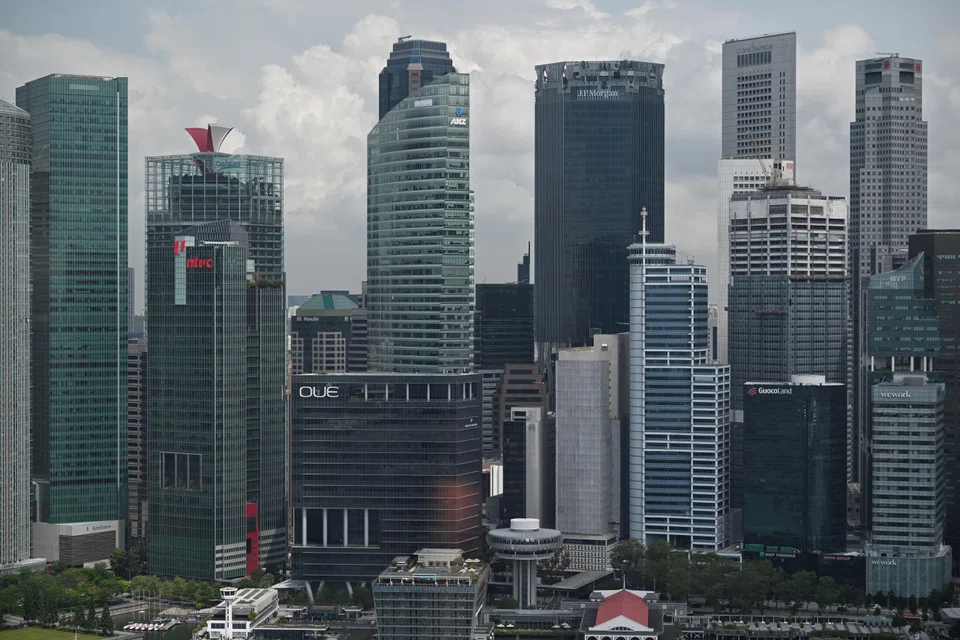
HIGHER interest costs continued to weigh on distributions for locally listed real estate investment trusts (S-Reits) in the second half of 2023.
More than three-quarters of the trusts that disclosed distribution per unit (DPU) figures in their latest earnings reports posted year-on-year declines for the financial period ended December 2023.
Just six S-Reits reported DPU improvements, while two had unchanged DPU.
Analysts said the lacklustre performance was largely in line with expectations, even though there were some surprises in certain sectors. They also remain watchful for potential upside from interest rate cuts later this year.
Darren Chan, senior research analyst at Phillip Securities Research, said stronger revenue and net property income (NPI) were offset by an increase in finance costs.
“As a result, most Reits had a year-on-year decline in DPU, in line with our expectations,” he said.
Data compiled by The Business Times showed that over two-thirds of the S-Reit sector posted higher gross revenue and NPI in the latest reporting period. However, S-Reits still saw a median DPU decline of around 8 per cent.
OCBC Investment Research analysts noted that most of the decline was again attributed to higher borrowing costs, an enlarged unit base, and foreign exchange translation losses.
“As a result, we have adjusted our forecasts for DPU downwards for the current and next financial year as these factors are expected to persist and impact DPU,” they said.
Morningstar analyst Xavier Lee believes DPU growth for 2024 will remain under pressure as S-Reits continue to refinance expiring debt at higher interest rates.
“Nevertheless, we expect rate cuts from the US to start in May or June 2024 and take some pressure off the Reits’ DPUs,” he said. “US rate cuts should also act as a catalyst for Reit prices during the year.”
Hospitality trusts were among the outperformers in terms of distribution growth in the second half of 2023.
Far East Hospitality Trust’s H2 distribution per stapled security (DPS) rose the most among its S-Reit peers, growing 25.4 per cent year on year, on the back of higher gross revenue and NPI.
ARA US Hospitality Trust and CapitaLand Ascott Trust (Clas) were also among the top performers, posting double-digit growth in DPS on the back of higher gross revenue.
Chan observed that hospitality players were among the minority that managed to see improved DPS as better operating performance and top line revenue could more than offset rising interest expenses.
“The hospitality sector continues to perform well with stronger (revenue per available room) across the board, and its ability to grow DPU in a challenging macroeconomic environment,” he said.
Some of this performance could continue this year.
DBS analysts said in a note that they anticipate hospitality and retail counters could get a boost in the first quarter of 2024 from events and concerts.
“We anticipate news from Taylor Swift concerts – the first of which lands on Mar 2 – to benefit retail and hospitality stocks ahead of the Q1 24 results announcements,” said analysts Geraldine Wong, Derek Tan, Rachel Tan and Dale Lai.
They added that occupancies for hotel landlords could see a boost during peak concert weeks in March.
“Tourist-positioned malls will benefit from the extra footfall, including Orchard landlords such as Lendlease Global Commercial Reit (LReit) and Starhill Global Reit, and the likes of VivoCity,” the analysts said.
LReit reported a 14.5 per cent decline in DPU for its fiscal first half amid higher interest costs. This was despite higher gross revenue and NPI.
Other retail trusts including Starhill Global Reit and Paragon Reit also saw slight DPU declines, even though NPI was a bit higher.
But not everyone is as optimistic on the retail segment.
“We have seen tenant sales slow to the low single-digit level year on year, with some retail Reits reporting negative tenant sales growth,” Chan from Phillip Securities said.
“However, we still think rental reversions will be positive for retail in 2024.”
Reits with predominantly overseas assets were the worst performers in the current reporting season, amid falling valuations and the high-rate environment.
Notably, four trusts had no distributions in the second half of 2023, including several US office counters.
Manulife US Reit’s distributions were halted following a breach in loan covenants in the middle of 2023. While the company has proceeded with a unitholder-approved recapitalisation plan, distributions would still be halted until end-2025, unless it achieves certain reinstatement conditions.
Keppel Pacific Oak US Reit also announced a shock recapitalisation plan in February that involved pre-emptively halting distributions from H2 2023 to H2 2025, after a decline in valuations resulted in increased gearing.
While Prime US Reit still paid cash distributions, DPU for the second half was down 91.7 per cent as it also withheld most of distributable income amid weaker valuations and higher gearing.
“We think the recovery in the US office (segment) will be slower than originally anticipated. We now think the recovery will come in 2025,” Chan said.
Lippo Malls Indonesia Retail Trust and EC World Reit also had no distributions in H2 2023. They join Dasin Retail Trust, which said last year that it was not able to declare distributions as it had defaulted on loans. Dasin Retail Trust has not announced its H2 2023 results.
Lee from Morningstar observed that Reits with China assets and tenants are beginning to feel the effects of the weak economic performance in China.
“This is reflected by rental arrears creeping up and in the case of Keppel DC Reit, a letter of demand had to be issued to their (data centre) tenant in mainland China,” he said.
Keppel DC Reit’s DPU for the second half fell 16.1 per cent amid higher finance costs and loss allowances for uncollected rental income from its Guangdong Data Centres.
Nevertheless, data centres could remain a bright spark for S-Reits.
Lee said: “We think that demand from the AI sector has yet to fully hit Singapore’s data centre market and we expect S-Reits with Singapore (data centre) exposure to be the main beneficiaries of this trend.”
He added that the Singapore office market may also have some upside in the event of an interest rate cut starting in May or June 2024.
“An improving economic outlook may encourage companies to expand business and take up more office space to support business expansion.”
The DBS analysts also noted that markets are pricing in for an interest rate cut in the middle of 2024, ahead of the US elections.
“We maintain our strategic call to shift allocations into retail (Frasers Centrepoint Trust, LReit), commercial and hospitality (Clas) S-Reits,” they said, noting that these sectors trade close to 1 standard deviation below the mean in price-to-book and yield.