

Simba focuses on customer experience, expansion into fibre broadband to further narrow losses

Yong Jun Yuan
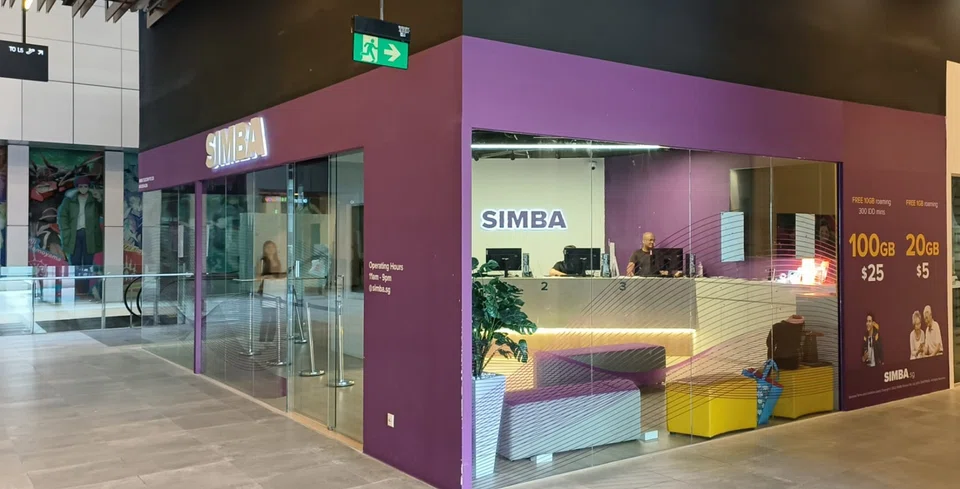
AS THE fourth local telco with just shy of 900,000 subscribers as at end-November 2023, Simba Telecom, formerly known as TPG Singapore, has made its mark on the industry.
Since its inception in March 2020, it has continued to give customers more for the same price, even as inflation has continued to put pressure on many other companies.
In September last year, it bundled 5G data with all its plans at no extra charge, even though it paid S$31 million for 5G spectrum.
Still, Simba’s chief executive Richard Tan sees this as part of the company’s plan to gain market share efficiently and sustainably.
“We have obviously made an impact on the market, because we have been able to deliver benefits that customers appreciate,” he said.
On the mobile broadband front, Simba has broadened its roaming offerings to address the needs of different segments, such as frequent travellers and business users.
The company has also made its offerings more accessible to customers using eSIM technology. ESIMs are digital SIM cards that can be downloaded to compatible devices to access mobile networks.
Tan said that this is part of the company’s focus on the customer journey, to ensure that signing up for its services is as seamless as possible.
He added that it has been “gratifying” to hear of customers who have purchased and downloaded roaming eSIMs on their way to the airport.
Yet, Simba continues to be perceived as a budget provider with subpar service.
Tan said that the company has “spared no effort” to improve its network quality, and that it continues to review its network metrics daily and takes onboard customer feedback.
It also proactively scales up its network to prepare for spikes in usage, such as around Little India, Lucky Plaza and Peninsula Plaza on the weekends, where migrant workers tend to congregate. It aims to do so at concert venues when big acts, such as Coldplay and Taylor Swift, come to town.
This year, Tan plans to bring the same sort of competition and customer-centric approach to the fibre broadband market, as well.
Simba began trialling its 2.5 Gbps plan in November last year among a limited number of users in the east region of Singapore, before rolling the service out to other parts of the country. The service is currently offered at S$21.80 – below the price offered by some of its peers for even a 1 Gbps plan.
Tan said that the company decided to offer the 2.5 Gbps plan because this is what customers are currently able to take advantage of, noting that many Wi-Fi routers as well as PCs now come with 2.5 Gbps ethernet ports.
“You wouldn’t want to be in a situation where there is no competition right? What we are doing is delivering... real competition to the market, whether it’s mobile or fibre broadband,” he said.
Furthermore, Tan said, he does not foresee raising prices as the company expands the fibre service islandwide.
“We want to deliver something that is sustainable and we can grow. We are very comfortable with the pricing, the execution of our plan,” he said.
He noted that a key part of how the company is staying efficient is by simplifying its product offerings and listening to what customers are asking for.
For instance, its broadband plans do not come with added frills, such as routers, which would raise the price of the plans. He added that most customers already have Wi-Fi routers.
As the company steadily gains market share, Tan believes that it is on track to achieve profitability, as well.
For the year ended Jul 31, 2023, the revenue for Tuas Ltd, the Australia-listed company whose only operating segment is Simba, climbed 49.9 per cent year on year to S$86.1 million. Loss after tax narrowed to S$15.3 million over the same period, from S$26.7 million a year earlier.
Tan said that he is confident that as the initial infrastructure that the company put in place is fully depreciated and the costs for network spectrum are paid for, it is on track to achieving profitability.
Furthermore, he noted that earnings before its interest, tax, depreciation and amortisation margin has been trending towards 40 per cent, and that the company continues to generate cash from its operations – which it reinvests in its network.
Tuas’ cash from operating activities rose 73.9 per cent to S$39.2 million for the year ended Jul 31, 2023.
“We can do more for shareholders, but what we’re always looking for is the opportunity to grow together with our customers, not grow... at the expense of our customers,” Tan said.
TRENDING NOW

Once staunchly pro-China, Malaysian Chinese businesses are now distancing themselves from Beijing

Britain’s mansion tax shows the difficulty of targeting wealth

Three hats, one goal: How Ng Kian Swan runs sustainability at NUHS

COE review: The gap between luxury and mass-market cars isn’t the only one worth bridging

