

Wanted: blended finance for smaller, riskier projects

Wong Pei Ting
NEED to finance a large-scale wind or solar project? The bankers will line up at your door. If your project is a solar-powered mini-grid, however, even the purportedly accessible blended-finance solutions may not be available to you yet.
A report by members of US think tank Institute for Energy Economics and Financial Analysis (IEEFA) and India-based management consultancy auctusESG found that commercial lenders are still favouring utility-scale projects, while sidelining smaller projects.
The report’s authors said blended finance – meant to close a funding gap by offering credit to projects that would not qualify for conventional financing – needs demystifying to create a roadmap for interventions in those segments that struggle to secure conventional finance.
That said, this funding solution should not be made available to just every financing need, sector or borrower, they stressed.
When projects aim to raise capital through blended finance even when they would likely qualify for conventional finance, a “misallocation of capital” is implied, they said in the report which was released last week.
Blended finance combines grants, concessional loans and commercial capital to lower the cost of capital and fund risky projects. Lenders bear only as much risk as they are comfortable with.
Market professionals had painted blended finance as a means of financing projects needed to close the emissions gap. By one estimate, developing countries need at least US$5.8 trillion to meet their self-defined climate pledges.
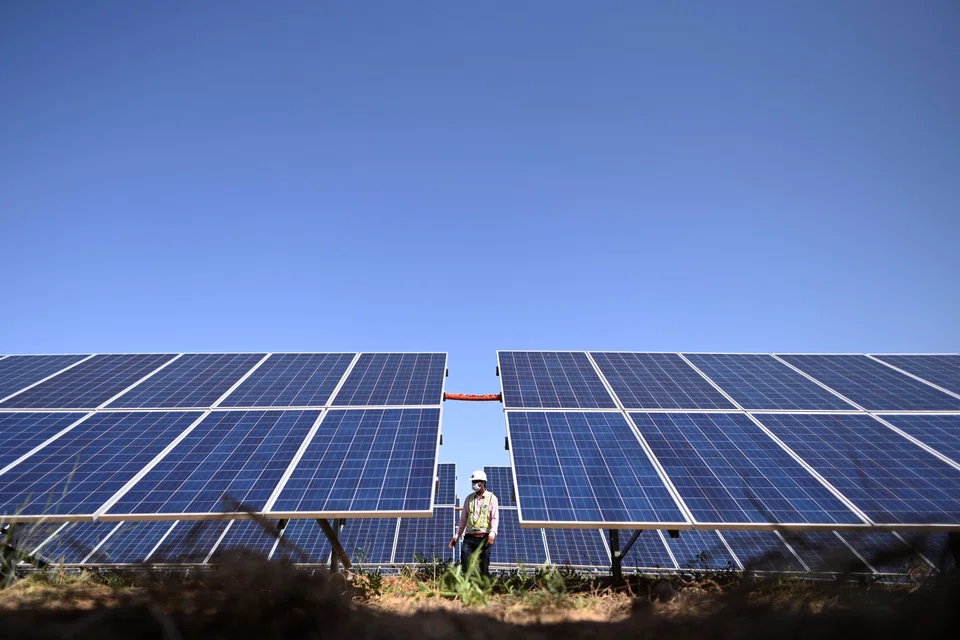
India’s solar mini-grids were raised as one example of an overlooked segment. Mini-grids are decentralised electricity options that could step in where the national grid network has yet to expand, or where grid reliability is poor.
India has far fewer solar mini-grids than required across its hinterlands due to a lack of finance. Lenders have shied away from such projects as they could involve communities with low income, high climate vulnerability, scarce credit track records, or low levels of energy consumption.
Even if they could attract lenders, these projects would likely be bogged down by high transaction costs due to their smaller financing volumes. There is also an overdependence on local banks with short maturity horizons.
All these factors have deterred providers of capital from taking the plunge.
To attract funding for such projects, the report’s authors suggested that project risks could be mitigated through concessional debt and a revenue shortfall guarantee.
Concessional debt may be linked to results, or could guarantee a minimum fixed feed-in tariff in case cash flows dip below a threshold.
The projects could also include a community engagement component to establish demand buy-in.
Down the road, such demand estimations could help to assess the stage at which a project would reach commercial viability. The project could then be weaned off development capital from multilateral development banks, it said.
Commercial lenders would be better off approaching blended finance through the lens of “incremental opportunity”, the report added.
“It is about breaking into new market segments and gaining market share ahead of peers, rather than simply looking at this as a developmental or social goal,” it said. There are competitive returns to be had outside of impact and scale, it reiterated.
While the report focuses on India, Shantanu Srivastava, the lead analyst for sustainable finance and climate risk at IEEFA, told The Business Times that the findings are also relevant to South-east Asian markets, especially Indonesia, the Philippines, Vietnam and Cambodia.
He noted that the cost of solar is still more expensive in this region than it is in India and China. Blended finance could help to lower the cost of capital for some energy projects, especially those focusing on demographics or applications that may otherwise struggle to raise conventional finance.
Most domestic commercial lenders in these jurisdictions may not be actively participating in blended-finance solutions, he said. This could be due to a lack of expertise, knowledge or even opportunities.
The battle for South-east Asia is likely to be fought in a global financial hub such as Singapore.
Noting that most of the major financial institutions of all South-east Asian countries have a branch or liaison office in Singapore, auctusESG vice-president of sustainable finance and climate strategy Sourajit Aiyer said the Republic is very important from a green-capital mobilisation perspective.
“Its status as an international financial centre gives it the room to attract a large pool of dedicated green capital from the Western markets, which could be deployed into these regional markets of South-east Asia,” he said.
Singapore is active in driving blended finance for Asia. The Monetary Authority of Singapore has an initiative called Financing Asia’s Transition Partnership, or Fast-P, which aims to raise at least US$5 billion of such capital to accelerate the region’s energy transition.
Projects coming under the Fast-P initiative were said to include the early phase-out of coal-fired power plants and their replacement with renewable-energy sources, as well as other decarbonisation projects in hard-to-abate sectors, such as cement and steel manufacturing.
Blended finance should be used to scale climate finance in segments that are required to meet the needs of underserved communities or regions, said the report’s authors, as projects serving such needs are likely to be those for which it is tough to estimate risk-adjusted returns.
TRENDING NOW

From legacy to launch: Francis Yeoh and Yeoh Pei Xien on family unity and YTL’s next‑gen ventures

Things to know about DBS’ incoming chairman Anthony Lim

Wealthy Indonesians snap up government bonds as yields near 8%: OCBC

From local AI partnerships to global opportunities: How MNCs help Singapore firms scale

