



Johor property old hand KSL readies family handover amid market boom
The Khoo family’s younger members take on larger roles ahead of at least RM3.8 billion in launches this year

Inside Asia’s family empires: How they are transforming to seize the next stage of growth
[KUALA LUMPUR] As Johor’s property market stirs on the back of renewed investor interest, homebuyers’ demand and the Singapore spillover story, one of the state’s best-known family-run developers has been preparing for a generational handover.
The shift follows four decades of building the business from a small office in a district in northern Johor famed for its durians, to a Bursa Malaysia-listed group with a market capitalisation of nearly RM3.5 billion (S$1.1 billion), spanning townships, malls and hotels.
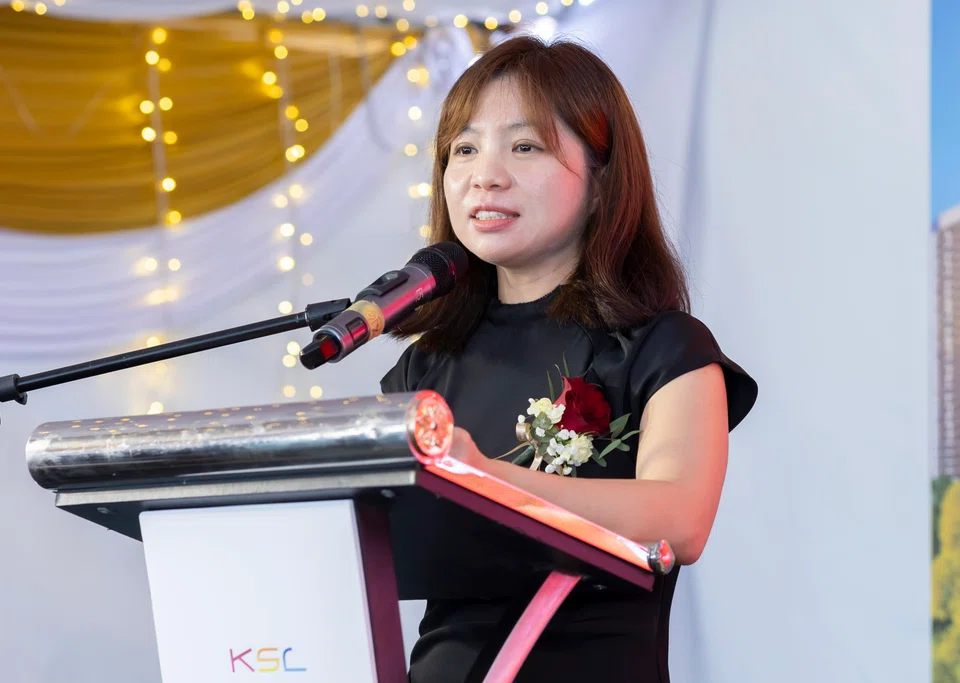
Khoo Lee Feng, daughter of the group’s founder, is among the new wave of family members taking on leadership roles as KSL navigates Johor’s rapidly changing property landscape.
The group was founded in 1979 as Khoo Soon Lee Realty in Segamat in Malaysia’s southern-most state by her father Khoo Cheng Hai and grandfather Ku Pon.
Its mainboard debut on Bursa Malaysia in February 2002 was a corporate milestone, giving the family business status and visibility.
Despite the company’s expansion, Khoo Lee Feng emphasises that Segamat remains its heart.
“We had humble beginnings here, and to this day, our core decisions are still made in that same small headquarters,” said the 39-year-old executive director.
The Johor-based developer, which specialises in township and integrated developments, has diversified into building and managing shopping malls and hotels in Johor and Klang Valley.
The group’s earnings trajectory appears promising, with FY2025 net profit up 11 per cent at RM526 million (S$169.7 million) from the year before, on the back of a 10 per cent year-on-year jump in revenue to RM1.5 billion.
Learning a different language
Khoo noted that she is the most junior among members of her family who have joined the family business.
Trained in biochemistry and management at Imperial College London, she has an academic background that seems to have little connection to the world of land acquisition, construction and retail operations that now defines much of her daily work.
Yet, she sees the transition less as a career detour and more as an exercise in adaptability.
“It’s not so much what you study, but how you learn,” she told The Business Times, adding that her entry into the industry was guided by KSL’s senior generation, including her father and uncles, who mentored her through the operational and strategic fundamentals of the business.
“I was fortunate to have seniors who were willing to share their experience and resources,” she said. “I don’t mind resetting and going on a learning curve again.”
Khoo joined the company in 2010 and now oversees land acquisition, development planning and investor relations, while working closely with siblings and cousins who collectively form KSL’s second generation of leadership.
While the founding generation remains actively involved, the younger management team has been given room to learn independently, she said.
“The older generation still provides strategic guidance, but they also give us room to learn from mistakes,” she added, describing the company culture as one centred on teamwork, accountability and long-term thinking.
Betting on Johor’s long-term growth
As one of Johor’s oldest property developers, KSL holds a sizeable land bank of about 1,856 hectares, most of it in Johor.
Despite relatively limited analyst coverage, the company drew positive outlooks from research houses in late 2025, largely due to its exposure to Johor’s long-term structural growth story.
Loong Kok Wen, regional head of property at RHB Investment Bank, described KSL as “an almost-pure Johor property play”, citing its positioning to benefit from the Johor-Singapore Special Economic Zone, the Johor Bahru-Singapore RTS Link and sustained spending from Singaporeans crossing the border.
The company plans to roll out at least RM3.8 billion in launches this year, including new phases of the residential development in Riveria Garden in Johor and an industrial development in Bestari Industrial Park in Selangor.
Affordability over luxury
Johor has re-emerged as one of South-east Asia’s most closely watched property markets in recent years, fuelled by improving connectivity with Singapore and rising investor interest in the state’s industrial and residential sectors.
But while some developers have leaned heavily into the Singapore spillover narrative and launched increasingly premium projects, KSL is taking a more measured approach.
Khoo said that KSL remains focused on affordable housing for local buyers, while quietly building up recurring income through malls and hotels.
“We’re not seeing a significant influx of foreign buyers at this stage,” she said. “Our buyers are mainly locals, including young couples and Malaysians commuting to Singapore.”
While she acknowledged that the “Singapore factor” remains supportive, particularly for Malaysians working across the border, Khoo highlighted that it has yet to translate into broad-based speculative foreign demand.
Against the backdrop of rising property prices in Johor, KSL is positioning itself firmly within the middle-income segment, which Khoo described as the market’s most resilient demand pool.
Landed homes in its latest developments, such as the recent launches in its flagship development Riveria Garden, are generally priced below RM1 million; serviced apartments range from about RM280,000 to RM580,000 – well below the pricing seen in some competing developments in Johor’s key growth corridors.
“If local buyers cannot afford that kind of pricing, we won’t even consider going into that segment,” Khoo said.
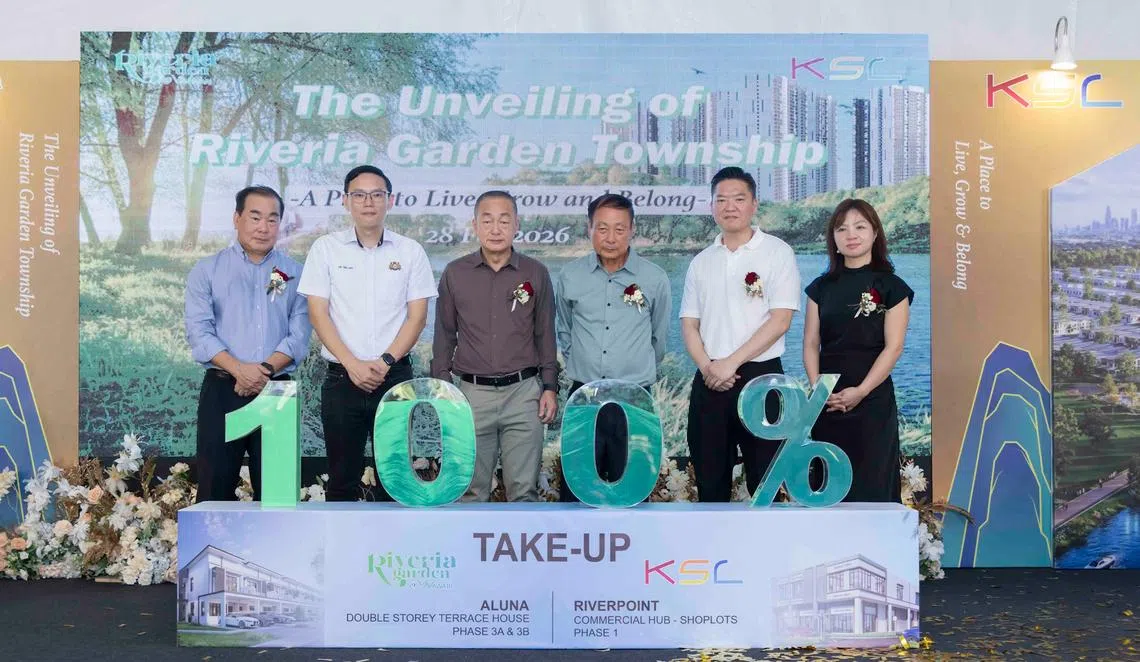
Located in Iskandar Puteri and just 15 minutes from the Second Link, the 405-hectare Riveria Garden is a wellness-focused township. It has a projected gross development value of RM15 billion over the next two decades.
Building a second income engine
Beyond residential development, KSL is also accelerating efforts to grow its investment property segment, which includes malls, hotels and rental assets.
Although the division contributes a smaller share of revenue, it currently accounts for roughly 25 to 30 per cent of operating profit.
Over the next five years, the group aims to increase recurring income contribution to at least 30 per cent.
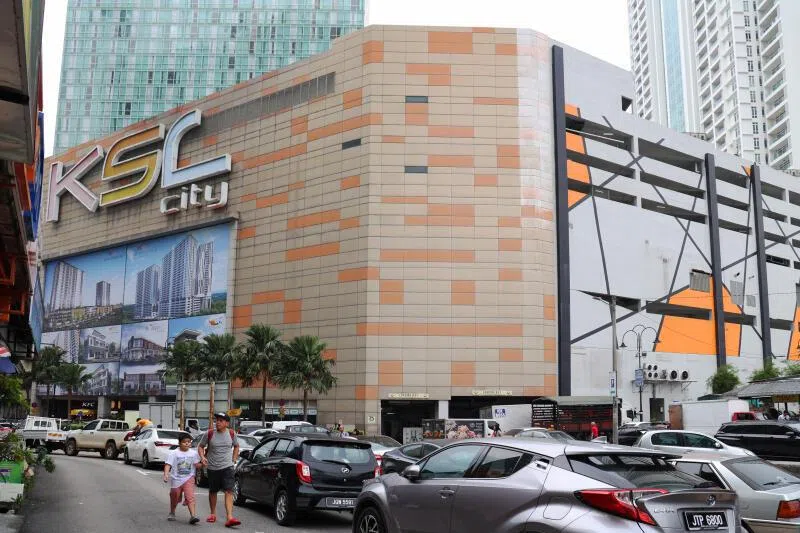
At the heart of KSL’s strategy is KSL City Mall, one of Johor Bahru’s most iconic retail assets. Located 3.5 km from the CIQ complex, it remains a premier destination for tourists.
Khoo, noting that the mall was developed during the 2008 global financial crisis, said it was when industry sceptics doubted the project, given the city's many struggling or abandoned malls.
Undeterred, KSL’s senior management pushed ahead, integrating a hotel with the retail space to ensure a steady flow of visitors.
Today, with a net lettable area of about 775,000 sq ft, KSL City Mall maintains near-full occupancy. It continues to be a cross-border favourite, with Singaporeans accounting for about 50 to 60 per cent of its footfall, said Khoo.
KSL remains wary of the risks facing ageing retail assets, citing the decline of Holiday Plaza as a cautionary example.
Once a hub for fashion and media, it succumbed to the digital shift, physical decay and the Covid-19 pandemic’s border closures. This decline was accelerated by the exit of its decades-old anchors, Parkson and Johor Bahru’s first KFC.
Khoo realised that, to avoid a similar fate for KSL City Mall, it would need to be able to respond quickly to shifting patterns in consumer behaviour – hence the company’s flat organisation structure, which enables it to be nimble.
The group intends to scale this agile model in its future integrated developments.
Another major upcoming project is the redevelopment of Nusa Bestari near the Second Link. The 4.9-hectare site will be transformed into an integrated retail, lifestyle and, potentially, residential hub.
Khoo said the groundwork for that is slated to begin around 2028.
She envisions KSL evolving into a more professionally managed and diversified property group in the next five years, with stronger recurring income streams complementing its traditional development business.
“We want to build sustainable, vibrant communities while strengthening our fundamentals as a listed company.”
TRENDING NOW

MSCI proposes standalone status for Indonesia; Jakarta stocks plunge 8%

Palm oil stocks slide after Singapore begins looking into which firms responsible for haze
High Court rules against Julius Baer’s Singapore trust arm in US$50 million family trust dispute

Why is the haze so bad in South-east Asia this year?

