



Strong US dollar hits Thai baht, Malaysian ringgit hardest among Asean currencies
Thailand’s currency, one of Asia’s best-performing last quarter, has switched fortunes and will likely remain Asean’s top underperformer in Q2

Goh Ruoxue
STORM clouds are gathering for South-east Asian currencies as the US dollar fires up in a robust start to the dragon year, fuelled by stubborn inflation and rosy jobs data, heightening expectations that the US Federal Reserve will maintain rates higher for longer.
Across South-east Asia, the Thai baht and Malaysian ringgit have been the hardest hit, although there was a brief recovery on Thursday (Mar 21) following the US central bank’s latest decision to hold rates.
“Almost all currencies in the world weakened against the US dollar in the first quarter. Asean FX (foreign exchange) was not an exception,” HSBC Head of Asia FX Research Joey Chew told The Business Times.
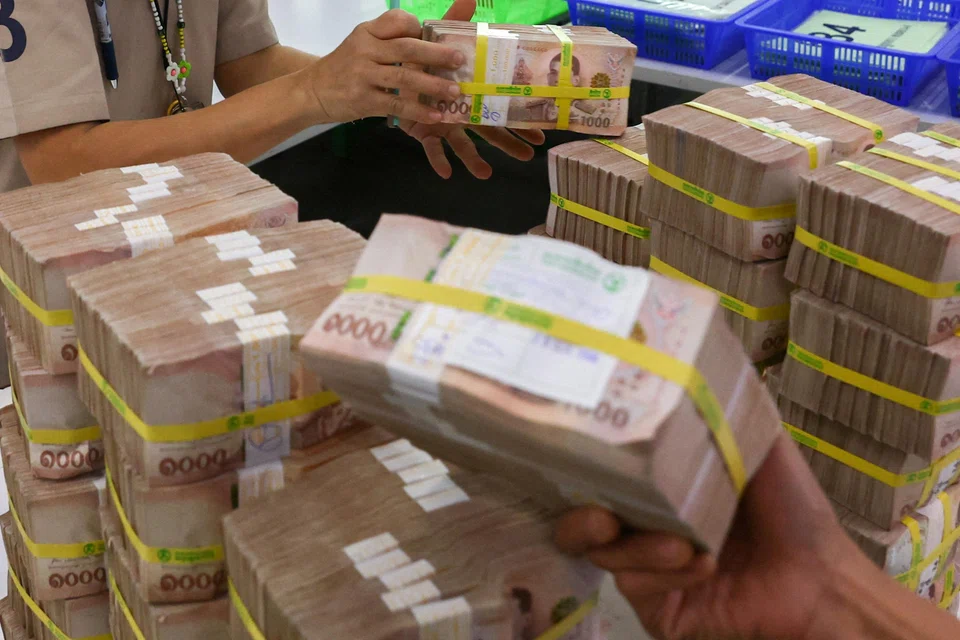
The baht has been sliding since the year began, falling more than 5 per cent to 36.3 to the greenback on Mar 23.
Nomura’s Asia FX strategist Teo Wee Choon attributes the baht’s depreciation to concerns over the months-long clash between Thai Prime Minister and Finance Minister Srettha Thavisin and the Bank of Thailand over rate cuts, as well as the end of the kingdom’s peak tourism season.
In a Feb 20 note, Nomura analysts, including Teo, raised the conviction level on their long position on the US dollar to the Thai baht, targeting a rate of 37.2 – or around 3.1 per cent of gains for the greenback – by end-April.
Meanwhile, the ringgit is trading at around 4.7 per US dollar after it tanked to a 26-year-low on Feb 20, breaching by a whisker the historic 4.8 mark against the greenback.
Prior to the Fed’s decision last week, in which the world’s largest central bank indicated its commitment to its plan for three rate cuts this year, the US dollar index has climbed about 2.5 per cent this year.
The index, which measures its value against a basket of six major currencies – the euro, Japanese yen, British pound, Canadian dollar, Swedish krona, and Swiss franc – fell following the Fed’s two-day policy meeting, but is still up for the year to Mar 23.
The ringgit – which had the dubious honour of being the worst-performing currency in emerging Asia in 2023 – has recouped some losses as the country’s central bank has urged state-linked firms to repatriate and convert their foreign investment income.
Besides the baht and the ringgit, HSBC’s Chew deemed the Indonesian rupiah as another regional underperformer. She said this may be partly due to Indonesian president-elect Prabowo Subianto’s recent remarks suggesting a preference for a looser fiscal policy.
The rupiah – Asia’s top-performing currency and final holdout against the greenback for much of 2023 – has been trending downwards since the year began, trading at around 15,800 against the dollar on Mar 23.
No room for rate cuts
Overall, Asean central banks do not appear to be very concerned about currency depreciation just yet, said Nomura’s Teo.
Earlier this month, Malaysia’s Bank Negara maintained its benchmark interest rate at 3 per cent for a fifth consecutive meeting as per expectations.
The central bank has consistently reiterated its stance that the ringgit, which it describes as undervalued, should be trading higher, given Malaysia’s positive economic fundamentals and prospects.
In a Mar 8 note, DBS analysts maintained their forecast for an unchanged overnight policy rate in Malaysia at 3 per cent in 2024.
There appears to be limited space for rate cuts given the ringgit’s depreciation against the greenback while the central bank has stressed that its policy stance is supportive of the economy. These factors “suggest an extended pause”, said DBS economist Chua Han Teng.
Chua noted that the Malaysian authorities are leaning on other approaches beyond the policy rate to stem currency weakness.
Bank Indonesia also kept its key interest rate at 6 per cent for a fifth straight month on Mar 20 as it continues to zero in on maintaining currency stability.
Over in South-east Asia’s second-largest economy, the Bank of Thailand continues to stand pat against Srettha, with its governor maintaining that interest rate cuts will not significantly boost the economy.
Like its regional peers, the Thai central bank left its key interest rate unchanged in February, at a decade-high of 2.5 per cent.
Sunny June forecast
Economists across the board expect the Fed to cut rates in June, which would offer some respite for currencies of South-east Asia.
The Fed will remain a critical determinant of Asean currencies in the June quarter, said economist Denise Cheok of Moody’s Analytics.
“If the US economy continues to perform strongly and inflation (does) not cool as swiftly as desired, rate cuts will be pushed out, which will maintain greenback strength and keep downward pressure on emerging markets,” she said.
“Central banks across Asean are unlikely to respond with further hikes as domestic demand is already softening and inflation cooling, so other bespoke currency stabilisation methods may occur,” she added.
Nomura’s Teo flagged the baht as a likely top underperformer next quarter, noting that Asean currencies may continue to face depreciation pressures against the greenback in light of the risk that moderation in US inflation and labour data progress slower than anticipated.
Over the long term, however, the picture could reverse.
“Asian emerging market (EM) currencies are cheap. They have depreciated in real, inflation-adjusted terms against the US dollar to an extent that is likely to result in (real) appreciation in the coming decade,” said a February report by S&P Global Ratings titled Asian Emerging Market Currencies will chart a Comeback.
“That is especially so since we expect EM economies to significantly outgrow the US during this time,” it continued.
TRENDING NOW

ComfortDelGro appoints two new independent directors

Once staunchly pro-China, Malaysian Chinese businesses are now distancing themselves from Beijing

NoonTalk needs continued financial support from CEO Dasmond Koh, auditors warn

DP Architects sets the benchmark for sustainability disclosure and design

