

Despite its flaws, Iran nuke deal helps America protect its interests
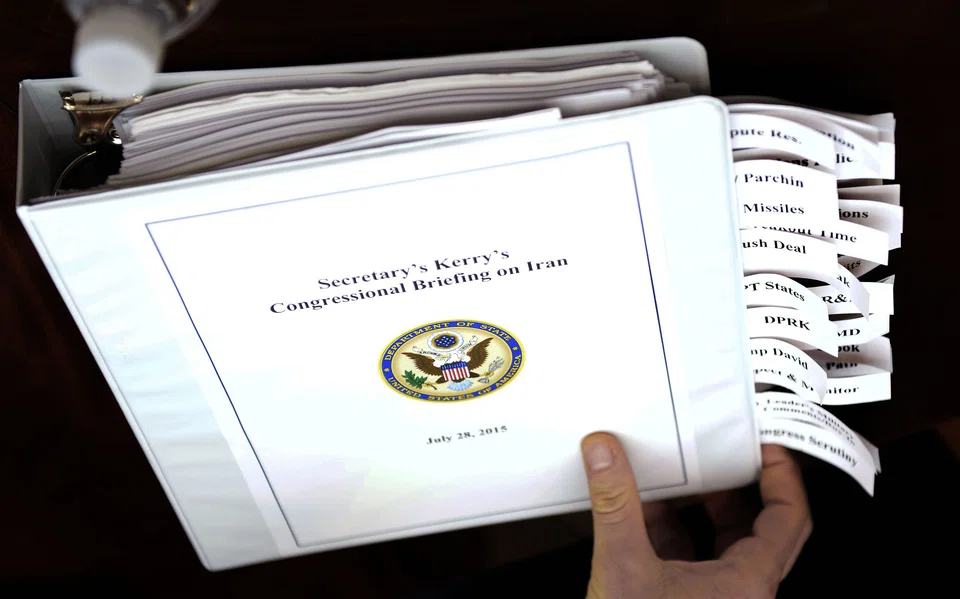
FOLLOWING the acrimonious hearing on the nuclear accord with Iran on Capitol Hill last Thursday, it seemed at times that critics had expected the United States to dictate what amounted to terms of surrender to Iran.
But in reality, the talks between the United States (and Britain, France, Russia, China, and Germany) and Iran involved a bargaining process under which all sides had to make concessions and reach a compromise. So it's not surprising that an American assessment of the agreement could lead to a conclusion that at best, it's not a perfect agreement, and at worst, it's a flawed bargain as far as the interests of the United States are concerned.
"I believe that you've been fleeced," Foreign Relations Committee chairman Bob Corker, a Republican from Tennessee, told Secretary of State John Kerry during the hearing. Iran, he argued, went from being "a rogue nation that has a boot on its neck" with crippling international sanctions to a country that would reap a windfall from lifted sanctions and be allowed to develop an "industrial strength" nuclear programme.
But Senator Corker may be overstating the case against the deal. More important, he and other critics have yet to come up with an alternative scenario, short of one that would leave Iran no choice but to surrender and declare that it would completely shut down its nuclear programme.
One reason that this is not a realistic option is that the United States is not ready to use its military power to force Iran to do that. It's doubtful whether, in the aftermath of the costly Iraq War and the rise of the Islamic State, even Senator Corker and his Republican colleagues were willing to support going to war against Iran over its nuclear programme. But the agreement with Iran did achieve the main goal of the negotiations, which is to prevent Iran from developing a nuclear weapon by not allowing it to do that in the next 15 years.
The downside is that in exchange for Iran's concessions, the Americans and the other negotiators agreed to gradually eliminate the economic sanctions on Iran, boosting the chances of the Islamic Republic to boost its economy, strengthen its military, and emerge as a major regional power.
But then a failure to reach a deal with Iran in Vienna would have encouraged Iran to speedily move ahead to develop a nuclear bomb and would have made it likely that the economic sanctions regime would have disintegrated sooner than later. And without a deal, Iran wouldn't have allowed international inspectors to monitor its nuclear programme and the United States and its partners wouldn't be in a position to retaliate against Iran if and when it violated its commitment not to develop a nuclear bomb.
Moreover, it's conceivable (but not inevitable) that renewed Iranian diplomatic and economic engagement with the West would help strengthen the hands of the more pragmatic and reformist forces in the country.
And the deal doesn't prevent Washington from taking steps to confront Iran's backing for radical governments and movements in the Middle East, including by working together with allies such as Saudi Arabia and Israel, suggesting that all things considered, the deal may have many flaws, but it would still allow the United States to protect its interests in the region.
TRENDING NOW

Mercedes GLC 400 electric review: One hidden feature sets it apart from other EVs

South-east Asia has lost Nvidia’s best salesman
Beyond the greenback, Vietnam’s big borrowers turn to Asian-currency bonds

Demand, tech capabilities position Apac and AI as Skyscanner’s next growth frontiers: CEO Bryan Batista

