

Forget business as usual – transformation is the new normal
Singapore must continue to transform industries, build new growth engines and strengthen its “TICK” quotient
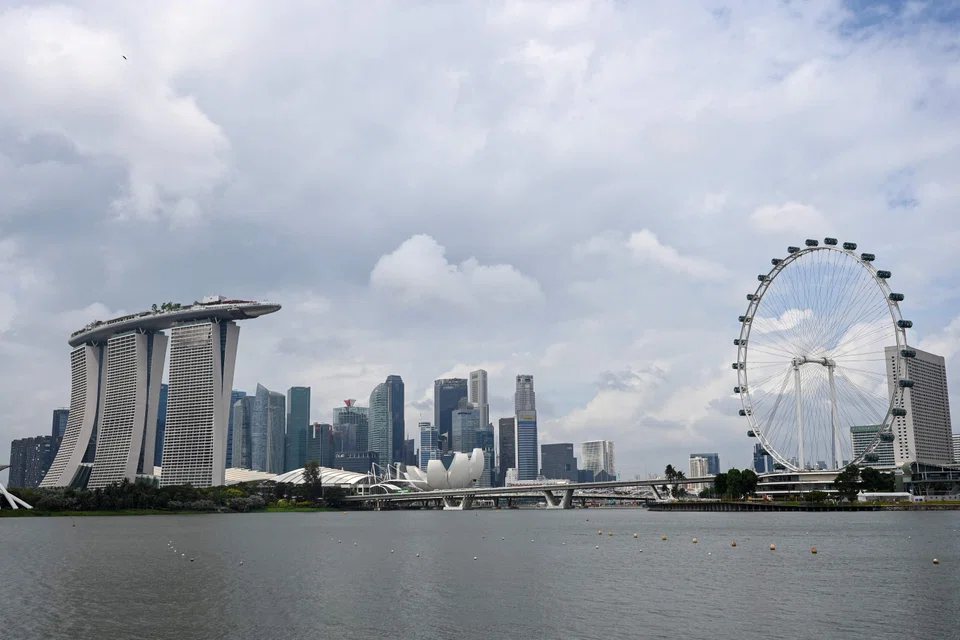
ELECTROLUX is shutting its Singapore regional headquarters, while Tetra Pak will close its Singapore factory, with 300 workers affected. Meanwhile, retrenchments in the Republic more than doubled to 14,320 last year.
Some may wonder if Singapore is losing its mojo, or if we are being priced out of the competition, with our value eroded because of constraints in manpower and land.
We could not have predicted Covid-19 and the onslaught it had on the global economy. Business transformation took a backseat as companies fought to survive. The world is now very different. Economic fragmentation, wars, the end of cheap money and rapid technological advancements have changed the rules of the game.
How can Singapore stay competitive and grow at 2 to 3 per cent over the next decade? We cannot revert to business as usual. Instead, we need to embrace “transformation as usual” as the default mindset.
Tech sovereignty and growth engines
Take the semiconductor industry as an example. We have built up a vibrant ecosystem – with major multinational enterprises (MNEs) supported by homegrown SMEs.
However, the semiconductor landscape is undergoing dramatic changes as companies react to geopolitical forces. Trends include decoupling, re-shoring and even “friend-shoring” – where countries reroute supply chains to allies.
Technological sovereignty emerged as a strategic national goal, as nations hope to build their own semiconductor industries.
Singapore cannot just focus solely on attracting semiconductor giants to set up manufacturing plants here. Instead, we must help our SMEs become integral partners with the global semiconductor ecosystem. They need to be able to follow their customers overseas and become global suppliers.
In addition, we will need to review our industry transformation maps (ITMs) – a series of road maps developed for 23 industries to address business challenges and deepen partnerships.
Singapore does not have the critical mass to be number one in all 23 industries. We need to be more intentional in identifying the clusters, considering not just the cost of attracting MNEs here, but the resources needed to build an ecosystem of local suppliers, local research and development partners, and local talent.
Separately, we need to invest in new engines of growth that can transform all industries. Artificial intelligence (AI) is one such engine. As announced in the Budget, the government will invest more than S$1 billion over the next five years to develop AI infrastructure and talent.
Some of those resources can be channelled to help SMEs build AI capabilities. In particular, SMEs need support with the cost of licensing AI models, training employees, building business data sets and modelling data.
In turn, AI tools can mitigate manpower shortages that SMEs face, by automating functions such as customer service and the creation of marketing videos.
The TICK factor
Beyond these efforts, Singapore needs to focus on four fundamentals – trust, infrastructure, connectivity and kinships, or TICK.
First, we need trust as our brand attribute, to be an oasis amid uncertainty for capital and people. With trust, we can also facilitate international conversations on the governance of AI and other emerging technologies.
Trust further enables us to be the bastion for quality products and services. Many of our food and health products have export markets because Singapore is associated with trustworthiness, high standards and the protection of intellectual property rights. We can extend this advantage to more sectors.
Next is our infrastructure – not just the hard transport and network infrastructure, but softer social elements such as liveability and our people. On the workforce front, we need to ensure that the step-up in the SkillsFuture scheme is made with a tighter coupling between training and employability.
Third is our economic connectivity. Even as some economies turn inwards, we need to build on our network of trade agreements. This must be done in closer partnerships with businesses and earlier in the process, before agreements are finalised. Regular clinic sessions are needed to help companies benefit from these deals.
Finally, kinships are crucial in our fragmented world. The people-to-people relationships we develop with our trade partners will be key for Singapore businesses and talent to thrive.
We should also facilitate the flow of more regional talent to spend time in Singapore, building kinships across various industries and segments of society. The Asean Scholarship Programme, into its 36th year, has yielded many friends and business leaders.
Most fundamental are the kinships we forge as a nation. Social trust and economic growth are interlinked. An increase in social trust by 10 percentage points can be expected to help raise economic growth by half a percentage point, according to a 2017 report by the Nordic Council of Ministers.
Singapore cannot take its existing kinships for granted. Our tripartite partnership – between unions, employers and the government – has brought about industrial stability. Through the ITM process, industry stakeholders have built trust and forged shared goals.
Meanwhile, the Alliance for Action on Business Competitiveness – announced in the Budget – can strengthen kinships across the public and private sectors. We need to continually cultivate and renew these relationships.
Overall, if Singapore can operate in a transformation-as-usual mode, find new engines of growth and invest in the TICK fundamentals, we will attract businesses and investors in this uncertain economic environment. Singapore can then transcend its constraints to achieve growth that provides people with more opportunities and a better quality of life.
The writer is chief executive of the Singapore Business Federation
TRENDING NOW
Motoring tycoon Peter Kwee is back in court: Here are his previous legal battles

Demand, tech capabilities position Apac and AI as Skyscanner’s next growth frontiers: CEO Bryan Batista

Beyond the greenback, Vietnam’s big borrowers turn to Asian-currency bonds

Nvidia’s outlook cut to stable by Moody’s on governance concerns

