

UK Conservatives lose collective self-confidence as election approaches
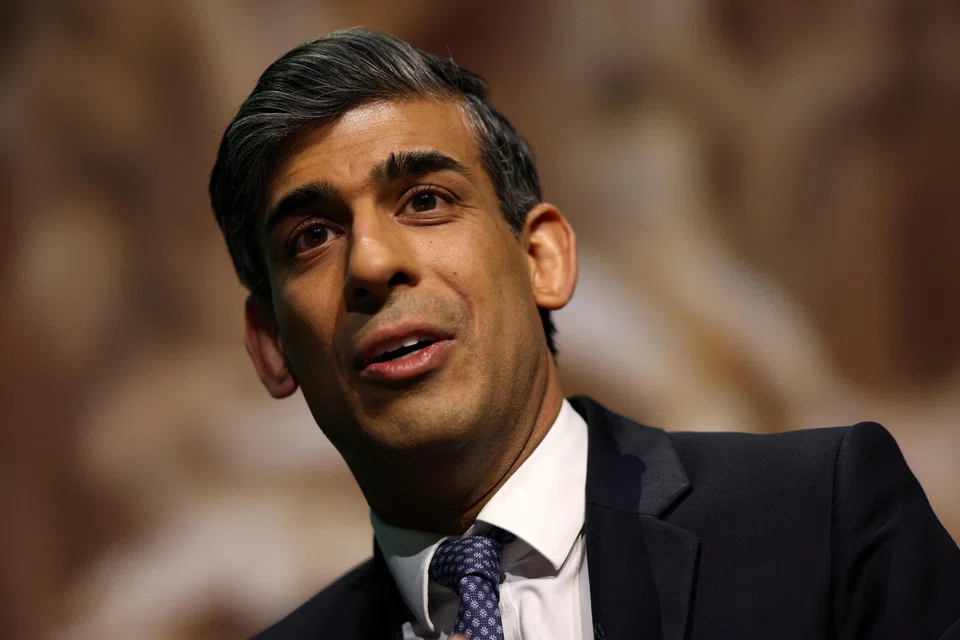
WITH the UK Labour Party riding high in opinion polls, comparisons are often made between the 2024 potential election result and Tony Blair’s huge triumph in 1997. However, some Conservatives now fear a far-worse outcome.
The specific reference here is to what is sometimes called the “extinction-level event” of Canada’s 1993 federal election, which saw the then ruling Progressive Conservatives lose more than 150 seats and win just two – it was one of the worst-ever defeats for a governing party in the Western world. This ultimately led to the organisation’s winding up, and a merger into a new Conservative Party of Canada.
On the face of it, there are some political similarities between Canada in 1993 and the United Kingdom in 2024. For starters, tactical voting in a first-past-the-post Westminster-type electoral system can give rise to unusual outcomes.
In 1993, the Progressive Conservatives won about 16 per cent of the Canadian vote, but secured less than 1 per cent of the seats, finishing in fifth place. In the UK, meanwhile, tactical voting by voters supporting opposition parties in 2024 could accentuate the loss of Conservative seats.
Second, as in Canada in 1993, the ruling UK Conservative Party faces a vigorous challenge in 2024 from the political right in the guise of Reform UK (formerly the Brexit Party) which is polling more than 10 per cent nationally. Plausibly, this could split the centre-right and right-wing vote in a way that allows opposition parties, especially Labour, to win even more seats than forecast.
A third issue is leadership. In 1993, then Canadian prime minister Kim Campbell led the Progressive Conservatives in the context of a struggling economy following two big earlier election victories in 1984 and 1988 for Brian Mulroney, her more charismatic predecessor. While not identical, this is analogous with the challenge faced by UK Prime Minister Rishi Sunak after the unexpectedly big victory in 2019 of his flamboyant predecessor-but-one in 10 Downing Street, Boris Johnson.
Yet, despite these parallels, it is most unlikely that the UK Conservatives will suffer the type of worst-case election scenario suffered by their Canadian cousins in 1993. Despite the UK party’s huge problems, it is currently polling around 25 per cent – well down on the approximately 45 per cent secured in 2019, but strong enough according to the Electoral Calculus prediction tool to win 99 seats (down from 376 in 2019).
While nothing can be entirely ruled out in politics, in reality, these figures are likely to be around the “floor” rather than the “ceiling” for the Conservatives. Many pundits think it more likely that the opinion poll gulf between Labour and Conservatives will narrow, than widen, in the weeks ahead.
Indeed, in 1997, when the Conservatives’ standing in the polls was last around as low as today, the party regained modest support by election day, but not nearly enough to keep hold of power, winning only 165 seats.
While this was less than half the number in the previous parliament from 1992 to 1997, it comfortably avoided the Canadian 1993 meltdown scenario.
In this context, the key explanation for the rise in speculation of the potential extinction of the UK Conservatives probably lies more with disgruntled MPs in the party who are plotting against Sunak’s leadership and/or seeking to have him shift in a more hard-right, populist fashion on issues such as immigration to counter Reform UK’s rise.
Many of these MPs are supporters of former prime minister Johnson, who still craves a return to the top job in UK politics after his messy departure from power in 2022.
While it is far from certain that Sunak will be the Conservative leader at the next election, the likelihood is that he will be. This is not least because his potential rivals contending for the leadership know that the party is headed for probable defeat and would therefore prefer to sit this ballot out.
Moreover, for now, it is the “usual suspects” such as former minister Simon Clarke, a close ally of Johnson and his successor Liz Truss, and Andrea Jenkyns, an arch-Johnson-loyalist, who have so far publicly expressed no confidence in the leadership of Sunak.
So, barring even more seriously negative developments for the Conservatives, Sunak will most likely see these challenges off.
Yet, he has a gargantuan political mountain to climb as he, like other previous prime ministers who take over in mid-term, tries to buy himself sufficient time to establish himself before going to the polls.
The task is so difficult for Sunak because public opinion has now been sceptical of him and his government for over a year.
This is shown in a remarkable Deltapoll only this week which details how Labour leader Keir Starmer, who has done much to restore confidence in the party after the huge 2019 election loss, has opened up a 41 percentage point lead over Sunak in leadership approval. In recent days alone, Starmer’s approval rating has increased by five points, while Sunak has slid by eight points.
Sunak must also defy political gravity, given that no party in modern UK political history has won five elections in a row, as the Conservatives are now attempting. There is wide discontent with the ruling party, which has ditched four prime ministers in the past seven years as Brexit and also the pandemic caused major convulsions across the country.
Plus, Sunak must try to turn this around in the context of a weak economy, including comparatively high inflation and interest rates, and cuts in government spending. If this is not bad enough, he also knows that Johnson and indeed the much-wider number of ministers leaving office in recent years, including Truss, remain significant political thorns in his side.
For instance, Truss is launching a new book called Ten Years To Save the West in April which is styled as “a call to action for fellow conservatives who share my belief in our nation and our way of life”. She has also set up a new backbench group of MPs, called Popular Conservatives. “PopCon”, as the movement calls itself, wants to see radical institutional reform, and is campaigning against so-called woke ideas, looking at restoring what it perceives as democratic accountability to the UK, and promoting populist, hard-right policies in areas such as immigration.
Taken together, this toxic brew is why Sunak’s prime ministership is now perilously positioned. While he is most likely to last in office to fight the 2024 general election, the political winds are blowing very hard against him to defy history and win a fifth term of office for the Conservatives.
The writer is an associate at LSE IDEAS at the London School of Economics






