

I survived Typhoon Hato, and it was no miracle
HK's safety, warning measures pay off, in contrast to what happened in Macau
Hong Kong
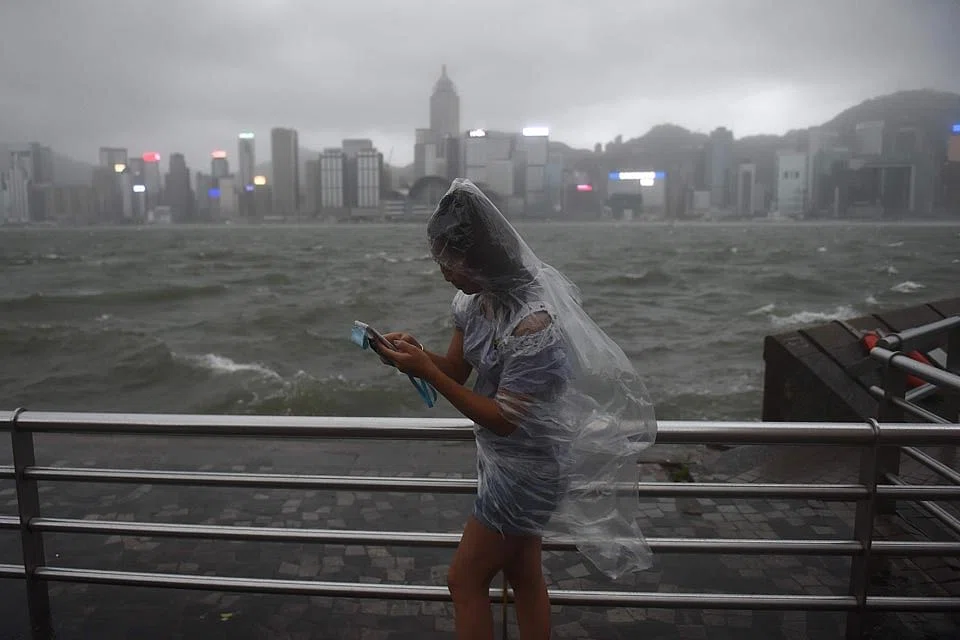
MY phone was buzzing last Wednesday with messages of concern from family and friends reading alarming reports about Typhoon Hato's path of destruction through southern China.
Hong Kong is no stranger to typhoons, but this one was the worst storm to hit the region in decades, claiming at least nine lives in neighbouring Macau and another 10 on the mainland.
So I could understand the confusion of some when I told them not to worry about me, even as the government raised the highest possible storm warning - Hurricane Signal No 10 - and shut doen the city before peak gusts went as high as 193 kmh.
That Hong Kong emerged relatively unscathed after the pummelling is likely thanks to a comprehensive early-warning system and manpower guidelines that employers who put safety ahead of business are more than willing to follow.
The Hong Kong Observatory had already pre-emptively warned of a possible upcoming No 10 signal on Tuesday, the day before Hato was forecast to deal its hardest blows.
Later that same evening, the Labour Department issued a reminder to employers to make prior work arrangements for staff during typhoons and rainstorms.
There are no legal mandates on how employers should manage manpower during storms, but Labour Department guidelines recommend that they should not require employees to report for work when storm signals of 8 or higher are issued.
Adequate preparation
The government has no qualms leading the way in showing safety comes first - classes of all day schools are also suspended with No 8 signals up, and courts and tribunals adjourned.
The Home Affairs Department on Tuesday evening activated a round-the-clock hotline specifically for Hato, and would later set up 26 temporary shelters.
Hongkongers were kept updated on the approaching storm's growing severity via signs manually plastered around residences and broadcast on television and radio as well as across train station monitors.
First was the No 1 signal, indicating a tropical cyclone centred within about 800km of Hong Kong; then the No 3 signal, warning of sustained wind speeds at 41-62 kmh and gusts potentially exceeding 110 kmh.
Knowing that public transportation would likely be suspended on Wednesday, many were already making alternative work plans way before the Observatory hoisted the No 8 signal at 5.20 am.
This was a whole nine hours before Macau's government finally did the same. Critics have pointed out that the lag - which led to the resignation of the head of Macau's Meteorological and Geophysical Bureau - was likely a key contributor to the fatalities and wreckage in the gambling hub.
By the time the No 10 signal was issued in Hong Kong at 9.10 am, the streets were mostly empty; shops were closed; the Hong Kong Exchanges and Clearing Limited cancelled trading sessions; flights were halted; and evacuations in lower-lying areas were conducted.
The city hunkered down to wait out the howling winds and torrential rain.
Sure, economic losses were estimated at HK$4 billion (S$700 million) to HK$8 billion as Hong Kong essentially went dark for a day, but no lives were lost (about a hundred people reportedly sought treatment during the typhoon) and that was far more important.
Perhaps anxious over the lack of updates during what, for myself and all those who heeded warnings and stayed indoors, was largely an uneventful day, my father called me on Wednesday evening to check that I was still alive.
He sounded in disbelief when I insisted that, unlike five years ago when I was living and reporting in New York City when Superstorm Sandy hit and claimed 52 lives in the Big Apple, there was no drama to report from Hong Kong.
As more storms loom in the days ahead, I would be happy to keep it that way, fingers crossed.
READ MORE: Second storm hits HK, Macau days after Typhoon Hato
TRENDING NOW
Motoring tycoon Peter Kwee is back in court: Here are his previous legal battles

Demand, tech capabilities position Apac and AI as Skyscanner’s next growth frontiers: CEO Bryan Batista

Beyond the greenback, Vietnam’s big borrowers turn to Asian-currency bonds

Nvidia’s outlook cut to stable by Moody’s on governance concerns

