Indochina states drive Asean investor appeal
Although they are the poorest countries in the regional bloc, investors are drawn to their advantageous geographical locations and relatively stable governments.
THE Indochina quartet of Cambodia, Laos, Myanmar and Vietnam (the CLMV countries) are predicted to remain the fastest-growing sub-region within Asean - at least until 2022 - and are seen by many foreign investors as the key magnets drawing attention to Asean. The four, however, need to catch up with their more prosperous partner states.
The CLMV countries are forecast to maintain high rates of economic growth ranging from 6.8 per cent to 7.5 per cent between 2016 and 2022. Their combined GDP is more than 12 per cent of Asean's GDP, and a total population of 170 million which is more than 26 per cent of Asean's, according to the Asian Development Bank and the World Bank.
The Asean foreign ministers recognised the potential of the CLMV in a statement issued at the end of their recent meeting in Bangkok on July 31. They "acknowledged the important role and contribution of sub-regional cooperation frameworks such as the CLMV cooperation", and they encouraged closer coordination to reach the goal of narrowing the development gap among and within Asean countries.
A key factor in foreign investor interest in Asean is the CLMV, according to a report from the Economic Research Institute for Asean and East Asia (ERIA) that found investors were "returning their focus towards Asean".
For example, "Japanese multinational companies have increased their business operations in Myanmar by close to 1,000 per cent in just over six years", it states.
STRONG GROWTH
Much of the CLMV story remains one of potential, and the four countries are playing catch-up with the other Asean states. Although the CLMV are the poorest countries in the regional group, investors are drawn to their advantageous geographical locations and relatively stable governments.
The Asean foreign ministers acknowledged "the significant progress made by the CLMV countries in the past two decades", particularly in economic development, poverty reduction and productive employment. The development gap between the CLMV and the more developed Asean countries is most visible in their deficiencies in roads, railways, ports, airports and energy, as well as in their capital markets.
In order to attain the development targets of Asean, the CLMV needs to create a more conducive business environment by ensuring effective implementation of commitments in trade liberalisation, and establish a transparent and non-discriminatory investment regime.
Here is how they are performing: The Cambodian economy is expected to grow 6.6 per cent a year from 2016 to 2022, driven by surging garment and footwear exports and buoyancy in tourism, real estate and construction, which would make it a US$34 billion economy by 2022, according to PricewaterhouseCoopers.
The gross domestic product of Laos has more than doubled since 2010 and is projected to grow at a rapid pace of 7 per cent per year to reach US$27 billion by 2022, led by rising investments in its booming power sector, rising exports to Asean countries, and strong growth in the services and construction sectors.
Myanmar is expected to maintain the highest economic growth in Asean of 7.5 per cent a year between 2016 and 2022, which will help it surpass the US$100 billion mark in GDP by 2022. It owes its growth to private investments - in infrastructure, light manufacturing and hospitality - that gained momentum since liberalisation in 2011 and the election of a civilian government in 2015.
The largest of the sub-group's economies, Vietnam, is expected to cross the US$300 billion GDP mark by 2022, based on growth of 6.2 per cent annually between 2016 and 2022, powered by improvements in domestic consumption, rising foreign investments, and growth in manufactured exports.
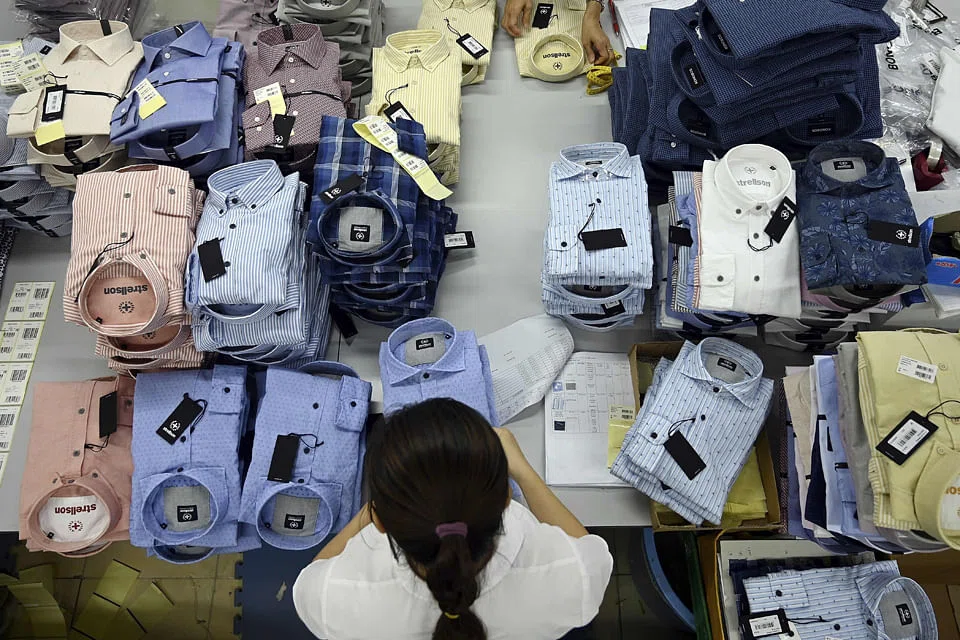
Yet, the CLMV countries are in danger of losing their comparative wage advantage, the ERIA study warns, explaining that these economies have benefited from having low wages - even lower than in China - but since wages are rising, the CLMV countries are struggling to provide alternative comparative advantages to investors.
The CLMV countries currently have the lowest wage costs in Asean, led by Myanmar at just over US$2,000 per annum in 2016, compared to US$6,000 in Thailand. However, the annual wage increase in Myanmar is 6.5 per cent, compared to just 1.7 per cent in Indonesia, and 4.4 per cent in Malaysia.
Likewise, wages in Cambodia's garment sector - which dominates the economy - are trending upwards. The country continues to face the risk of tough Western sanctions being imposed for alleged violations of human rights and civil liberties. But Western sanctions are unlikely to be imposed for fear of driving Cambodia further into China's sphere of influence.
The CLMV countries should rapidly adjust their strategies in view of global protectionism, and they should realise they cannot rely on economic growth coming solely from exports to the West. All Asean states are rightly focused on faster regional integration under the Asean Economic Community.
COMPARATIVE ADVANTAGE
The efforts of the CLMV countries to stay attractive to foreign investors cannot stop at regional integration, the ERIA cautions. They must build strong small and medium enterprises and nurture local industries as a strategy that will not only help improve investor confidence, but will also lay the foundation of sustainable growth and domestic consumption that does not rely on foreign companies as creators of jobs and investment.
The rise of the CLMV countries would be a positive factor in the emergence of Asean as the fourth-largest economy in the world by 2050, as the four will drive investor interest in Asean, the ERIA predicts. But both Asean and the nascent CLMV need to continue working towards regional integration and narrowing internal development gaps.
Purely from an economic standpoint, the relatively strong economic growth of China is a positive influence on the CLMV through increased trade, investment and tourism, according to the Economist Intelligence Unit. Chinese projects being planned in Cambodia grew almost three times in the first nine months of 2017 to US$1.6 billion, equalling two-thirds of all foreign projects. Similarly, the economy of Laos is deeply integrated with China through trade and investments - almost 30 per cent of its exports were to China in 2016, such as copper and gold. Laos' production and export of electricity to its neighbours will help manage its twin current and fiscal deficits.
And Myanmar depends on a booming China which accounts for 40 per cent of its exports, and looks to Beijing to offset the effect of any Western sanctions imposed for its policy on the Rohingyas.
Often overlooked and discounted, the CLMV are proving to be the magnet attracting investments to the region. They need to continually find ways to retain their comparative advantage.