

Sustainable development: What does it really mean?
Although the idea appeals to concerns about ensuring a better life for future generations, it is difficult to pin down when practical questions of policy or private sector behaviour are posed.
SUSTAINABLE development is mom's apple pie and the central organising principle of all things environmental. Governments and companies are all for it. 2018 has been announced as the Year of Climate Action in Singapore, and the country holds Asean's chairmanship this year as well. Sustainability thus occupies pride of place in Singapore's public policy and social discourse. However, the concept lacks definition and its ambiguity allows its proponents to make extravagant claims that cannot be tested.
In the private sector, most companies extol their commitment to sustainability in advertisements, annual reports, CEO speeches and PR communications. These serve to promote a favourable corporate image, burnish credentials in corporate social responsibility (CSR) and often are meant to appease their NGO and social activist critics. Originating in the Rio Earth Summit of 1992, the World Business Council for Sustainable Development includes leading multinational corporations such as AT&T, BP, General Motors, Mitsubishi, Nestle, Proctor and Gamble, Shell, Sony and Toyota.
While the sustainability concept has been defined in many ways, it was first coined in a report published by the Brundtland Commission in 1987 (Gro Brundtland was the former prime minister of Norway and was appointed by the United Nations to head its sustainability programme in 1983). It was defined as "development that meets the needs of the present without compromising the ability of future generations to meet their own needs". This definition appeals quite naturally to the broad intuition of most people who are concerned about ensuring a better life for future generations. Yet, it is difficult to pin down when practical questions of policy or private sector behaviour are posed.
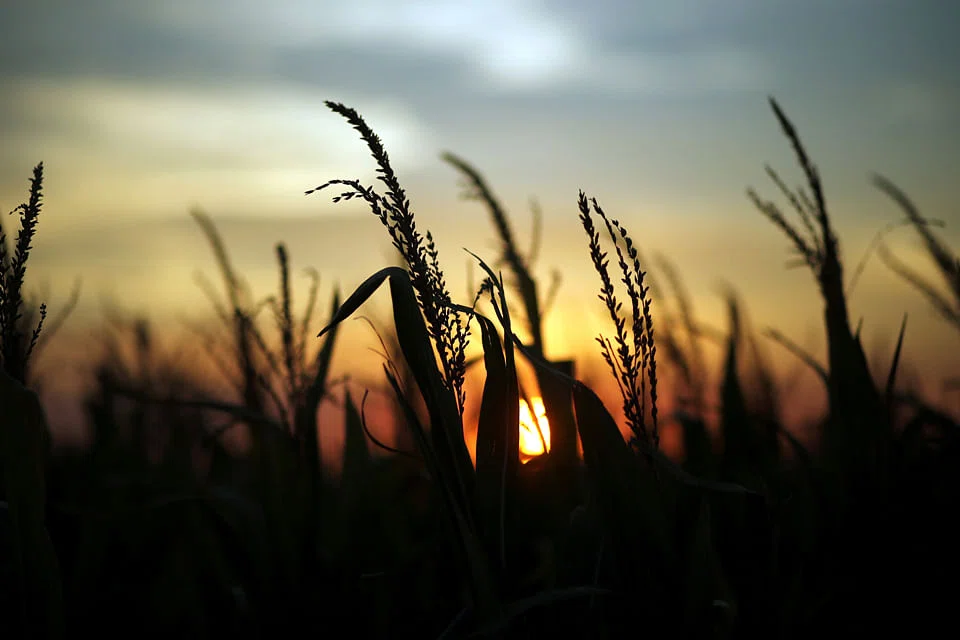
Some examples serve to make this apparent. The first derives from the experience in the US. Among the most expensive energy policies imposed in that country is the programme to substitute a portion of the gasoline used for transport by blending it with ethanol derived primarily from corn. Current US ethanol production uses 30 per cent of the nation's corn crop, billions of gallons of water and vast quantities of pesticides, fertilisers and diesel for tractors to produce a blended fuel that drives up food prices and gets one-third less mileage per gallon than ordinary gasoline. Vast tracts of precious farmland are being devoted to make ethanol with little discernible benefit to energy security or reducing CO2 emissions.
Meanwhile, the country - with private capital and dynamic entrepreneurship - is producing prodigious amounts of additional oil from what was once useless shale rock by the remarkable "fracking revolution" in the past decade. For most observers, calling the blending of ethanol for gasoline supply in the US a "sustainable" practice is a gross misuse of the term.
AMBIGUOUS CONCEPT
Perhaps the most direct sense of sustainability that relates to the man on the street has to do with the fear of "running out of resources". This Malthusian scare was propagated by the Club of Rome which came out with the highly publicised study titled Limits to Growth in 1972. Utilising a (then) state-of-the-art computer model, it forecast that the world would have run out of aluminium, copper, gold, lead, mercury, natural gas, oil, silver, tin and zinc by 2013. Of course, none of this has happened, and the study's predictions are now duly noted as examples of doom-mongering that gained global attention.
The example of oil resources is illustrative. In 1970, world oil reserves stood at 531 billion barrels according to the US Energy Information Administration. Annual use amounted to 16.5 billion barrels, yielding a reserves/production ratio (time before the resources "ran out") of 32 years. In 2013, reserves stood at 1.65 trillion barrels, and at a consumption rate of 328 billion barrels a year, life expectancy increased to 50 years despite billions of barrels of oil being used up in the interim. How was this so?
A basic appreciation of economics and technological progress suggests that as demand increases and the price of oil rises, consumers would economise, and suppliers would search for newer sources of oil, improve techniques of extraction and exploit opportunities to use substitutes wherever possible. This applies to all natural resources. The late economist Julian Simon once said that the only true resource in the world was human ingenuity.
Another example of what sustainability really means relates to organic farming which forsakes the use of chemical fertilisers and pesticides as well as genetically modified seeds. This is quite a turn from the situation five decades ago when countries such as China, India and Mexico among many other countries were facing widespread food shortages and endemic hunger. Famines were a common occurrence in Asia, Africa and Latin America.
In the 1960s, Dr Norman Borlaug introduced high- yielding varieties of the wheat crop and later other staples such as rice. These yielded a dramatic improvement in agricultural productivity. The Green Revolution that subsequently took off in Asia and elsewhere has been credited with saving hundreds of millions of people. When the Nobel Laureate was asked about his views on organic farming, he said: "There are 6.6 billion on the planet today. With organic farming, we can only feed four billion of them. Which two billion people would volunteer to die?"
It is clear that while organic farming can be a thriving small sub-sector of global agriculture serving affluent consumers with particular preferences - despite the lack of any scientific evidence that organic crops are "healthier" than those normally-grown - it is not sustainable for the world at large.
What is most striking, if not perverse, about any discussion of this ambiguous concept - and its subtext of how modern lifestyles are unsustainable - is the fact that humanity as a whole is doing better than it ever has. With entrepreneurship, free markets and technological progress, the world is richer, more peaceful and healthier than at any previous time in history. Yet, in reading any number of "sustainable development" tracts, you would never have guessed it.
TRENDING NOW
Can a first-time homebuyer couple earning S$18,000 a month afford a new EC unit?

He built the Vingroup empire. Now South-east Asia’s richest man is handing some key roles to his sons
Asia needs new energy security architecture
Chagee, Mixue and Luckin won the market. Sustaining their edge is the harder part

