

Six things to watch in Budget 2026: AI push, smaller CDC payouts, more upskilling
Clarity on carbon tax rates, support for businesses to internationalise and potential manpower adjustments could feature in PM Wong’s Budget statement
Tessa Oh &
Jermaine Fok
Follow The Business Times’ live coverage of Singapore’s Budget 2026 here.
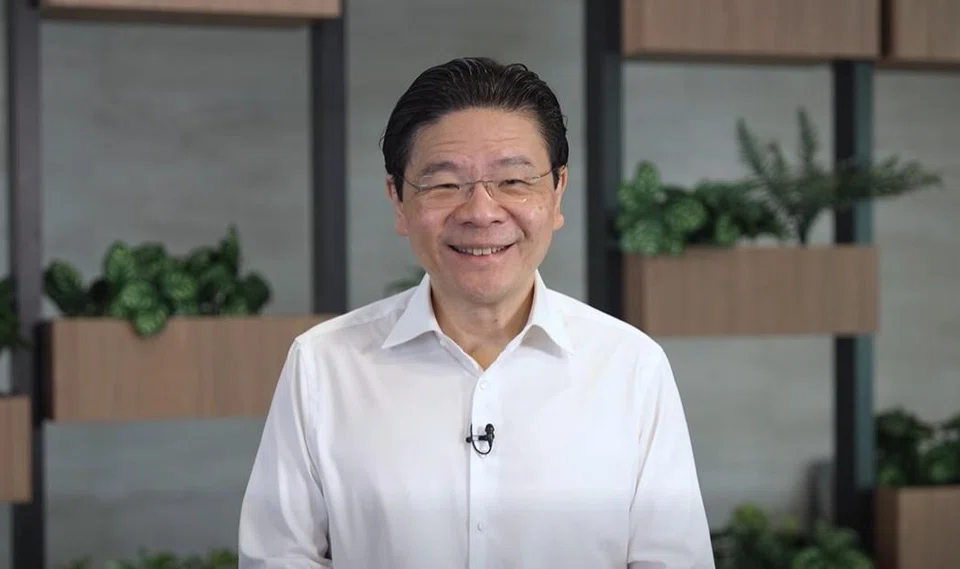
[SINGAPORE] Prime Minister and Minister for Finance Lawrence Wong will deliver the Budget statement on Thursday (Feb 12) at 3.30 pm.
The Business Times will provide live coverage on its Budget blog and microsite. There will also be a livestream of the speech.
Budget 2026 will be the first since last year’s general election, and the first in this term of government. Among other things, PM Wong is expected to respond to the Economic Strategy Review’s (ESR) midterm recommendations that were announced in late January.
In a social media video on Wednesday, PM Wong noted that many Singaporeans are concerned about jobs, amid rapid technological change and an uncertain economic environment.
“The government will do more to support Singaporeans in navigating these changes,” he said. “That includes helping you manage job transitions, equipping you with relevant skills to stay competitive, and ensuring that all Singaporeans are able to secure good jobs with rising incomes.”

With a larger-than-expected fiscal surplus anticipated, thanks to higher tax takings, observers are also expecting Budget 2026 to remain supportive overall, with spending focused on targeted relief and long-term priorities.
1. Preparing for the AI era
Watchers widely expect Budget 2026 to roll out initiatives to support businesses and workers to build artificial intelligence (AI) capabilities.
AI was also a key theme of ESR’s recommendations. The committees called on Singapore to double down on AI adoption and introduce a national AI skills strategy.
SEE ALSO





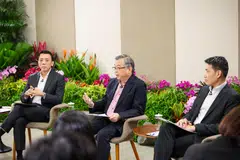
Targeted support for mid-career and older workers over 40 years to upskill and reskill is also anticipated.
Observers also expect an update of Singapore’s National AI Strategy. Launched in 2019, it was last updated in 2023, when generative AI became mainstream.
Potential measures may include support for job redesign and efforts to boost employee productivity.
2. Securing jobs, easing manpower crunch
Observers believe Budget 2026 is unlikely to bring sweeping manpower changes, but rather targeted adjustments focused on migrant labour access, workforce transformation and support for different worker segments.
In a video on Jan 27, PM Wong noted Singaporeans’ concerns about “the uncertain external environment, the impact of technology and AI on jobs and also on cost pressures”, which Budget 2026 will address.
The ESR committees called for stronger career transition support for displaced workers, while the National Trades Union Congress is pushing for mandatory advance retrenchment notifications and enhancements to the Jobseeker Support Scheme.
For younger and mid-career workers, there could be expanded training and upskilling support.
In the Wednesday video, PM Wong said there is scope for the government to improve the SkillsFuture platform to have better curation and be more user-friendly.
For businesses, Manpower Minister Tan See Leng recently signalled refinements to the local qualifying salary. Other policies that could be tweaked include the Non-Traditional Sources Occupation List and the Complementarity Assessment Framework.
3. CDC vouchers no more?
Budget 2026 could see the end of the Community Development Council (CDC) vouchers; observers expect smaller payouts and tighter eligibility criteria.
This could mean payouts of S$400 to S$500, down from the S$800 that Singaporean households received in 2025, with lower-income households receiving greater relief.
4. Internationalisation push for businesses
Aside from driving AI adoption, Budget 2026 could introduce initiatives to drive internationalisation and sustainability.
These were key themes in the ESR committee’s proposals, which called for businesses to invest in sustainable technologies and pursue overseas ventures with higher risk and higher capital outlay.
In particular, SMEs can expect further assistance to help manage rising costs, strengthen resilience and support overseas expansion as they diversify markets.
Watchers also anticipate continued support for digitalisation and productivity improvements to help firms stay competitive.
5. Carbon tax clarity
Singapore’s carbon tax regime could be adjusted in Budget 2026 as the government faces pressure to provide clarity on rates beyond 2027.
The tax currently stands at S$45 a tonne of emissions in 2026 and 2027; plans have been made to raise it to between S$50 and S$80 a tonne by 2030.
The exact landing point and pathway from 2028 have not been announced, creating uncertainty for businesses planning decarbonisation investments.
Watchers have asked for the 2030 rate to land closer to the lower S$50 a tonne threshold, to ease operating costs amid global uncertainties. They have also called for raising the carbon credit offset cap to 10 per cent from 5 per cent of emissions to give flexibility for large emitters.
6. Wealth taxes on the cards?
Budget 2026 could see “wealth-adjacent” levies targeting high-value assets, following the Ministry of Finance’s first release of official wealth data in an occasional paper released this week.
In response to the findings, PM Wong has highlighted the need for “refreshed approaches” to maintain social mobility.
While the government has not given specific policy commitments, the decision to formalise the measurement of non-employment income could signal future policy moves.
For more of BT’s Budget 2026 coverage, go to bt.sg/budget26
Decoding Asia newsletter: your guide to navigating Asia in a new global order. Sign up here to get Decoding Asia newsletter. Delivered to your inbox. Free.
Copyright SPH Media. All rights reserved.
TRENDING NOW
Singapore identifies 7 firms responsible for haze fires, notices issued urging action: Grace Fu
DBS remains analysts’ pick ahead of Q3 earnings after Singapore banks’ share slump
High Court rules against Julius Baer’s Singapore trust arm in US$50 million family trust dispute

Could stablecoins be the future of money?

