

Making gender diversity a priority in the wealth management industry
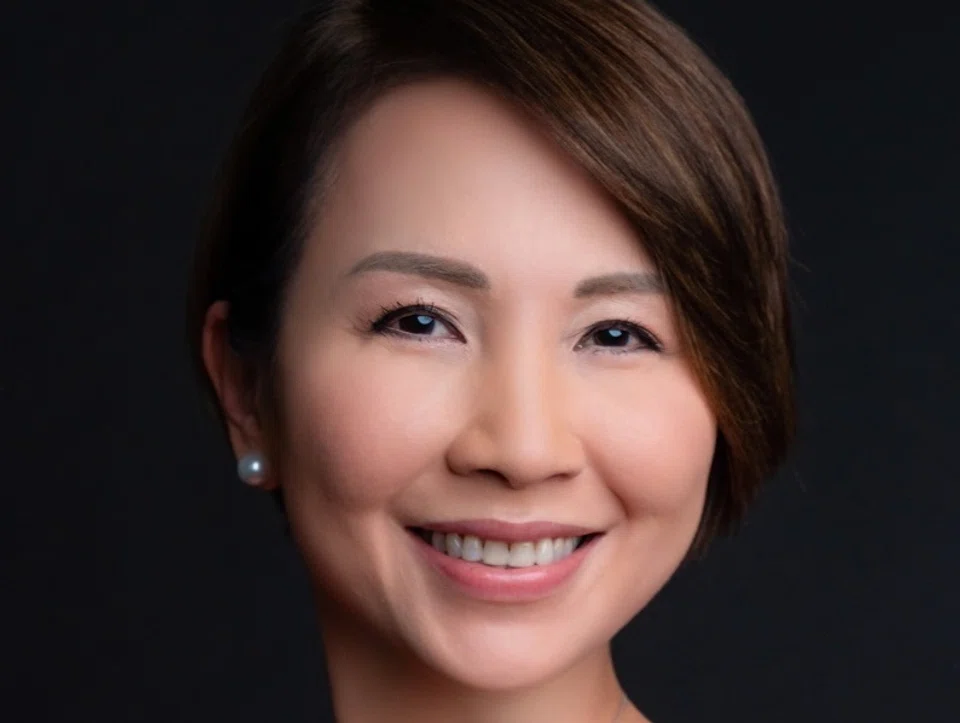
NELSON Mandela once said: “It is better to lead from behind and to put others in front, especially when you celebrate victory, when nice things occur.”
Indeed, the best leaders are the ones who can inspire and empower their team to do their best.
In my more than 25 years in the wealth management industry, I have come to be convinced that team culture is key to an organisation’s success.
As a working mother, I put myself forward for a leadership position to make my own impact in a team’s culture. I am also hopeful of creating a bigger impact in society, especially in the area of gender diversity.
In the wealth management industry, gender diversity is necessary to support the financial empowerment of women as they take control of their finances.
McKinsey estimates that by the end of the decade, women will inherit US$30 trillion in assets as part of the great wealth transition. In addition to controlling assets, women already make nearly 80 per cent of purchasing decisions.
In honour of International Women’s Day, here are some thoughts on my leadership journey, as well as on the importance of diversity in the wealth management industry.
Gender diversity supports clients
Supporting gender diversity within an organisation is not just about supporting clients or employees who are women.
A number of studies have shown that companies with more gender-diverse boards and senior management are likely to perform better. The diversity on boards improves decision-making as a result of a greater range of perspectives and skills.
Furthermore, wealth management is a people-centric business. Diverse teams are able to better understand and relate to the equally diverse needs of clients. Through different viewpoints, they are able to make better decisions and drive innovation.
The Asia-Pacific continues to be a centre of wealth creation, with the highest number of billionaires in the world – more than 1,000.
Many of these Asian ultra-high-net-worth individuals are first- or second-generation entrepreneurs who built successful businesses in various industries.
With diversity already a fast-developing topic, we have to account for its growth and change in the future.
Globally, over the next 20 years, we expect around 1,000 billionaires to pass an estimated US$5.2 trillion to their children.
In a survey of UBS’ billionaire clients last year, 95 per cent said they believed they should use their wealth or resources to help tackle the world’s environmental and societal problems – from climate change and biodiversity to health, education and inequality.
Seven in 10 billionaire heirs wish to continue their family’s philanthropic goals.
Here in the Asia-Pacific, as we anticipate the great wealth transfer, we have also seen a rising number of Asian entrepreneurs creating a greater social impact in the communities where they live.
It is up to wealth managers like us to help mobilise private wealth to create greater social impact.
Leading in gender equality
Building a team culture that supports gender diversity goals means enabling more women to build long and satisfying careers. It also means focusing on hiring, promoting and retaining women at all levels.
I am proud that UBS has been steadily increasing the representation of women at the senior management level, and has a strong bench of women leading the company both globally and in the Asia-Pacific.
In 2023, UBS was included in the Bloomberg Gender-Equality Index (GEI) for the eighth year running. Inclusion in the GEI requires companies to participate in Bloomberg’s gender reporting framework.
Companies on the index are those that score above a global threshold established by Bloomberg, and that reflect a high level of disclosure and performance across five pillars: leadership and talent pipeline, equal pay and gender pay parity, inclusive culture, anti-sexual harassment policies, and external brand.
Building a strong team culture requires leading by example. My guiding principle, over my years of experience as a relationship manager, team leader, market leader and country head, has been to put clients first and stay close to them.
I continue to travel extensively to meet clients across the region. From my base in Singapore, I have visited Indonesia, the Philippines, Thailand, Malaysia, Japan, Australia and Taiwan since the start of the year. I plan to go to Switzerland and India in the coming weeks.
At the same time, I believe it is important to know your team members and their strengths, to be able to match the most suitable adviser to the client.
For that reason, it has been my priority to meet as many of my colleagues as possible while I travel to meet clients.
Finally, whether you’re approaching leadership from a team, organisational or societal level, and whatever your main focus area is, keep one thing in mind: what we do today and pass on to the next generation shapes what we do tomorrow.
The writer is co-head of UBS Global Wealth Management Asia Pacific, and country head at UBS Singapore






