

Scoot looks to raise top line to tackle cost pressures

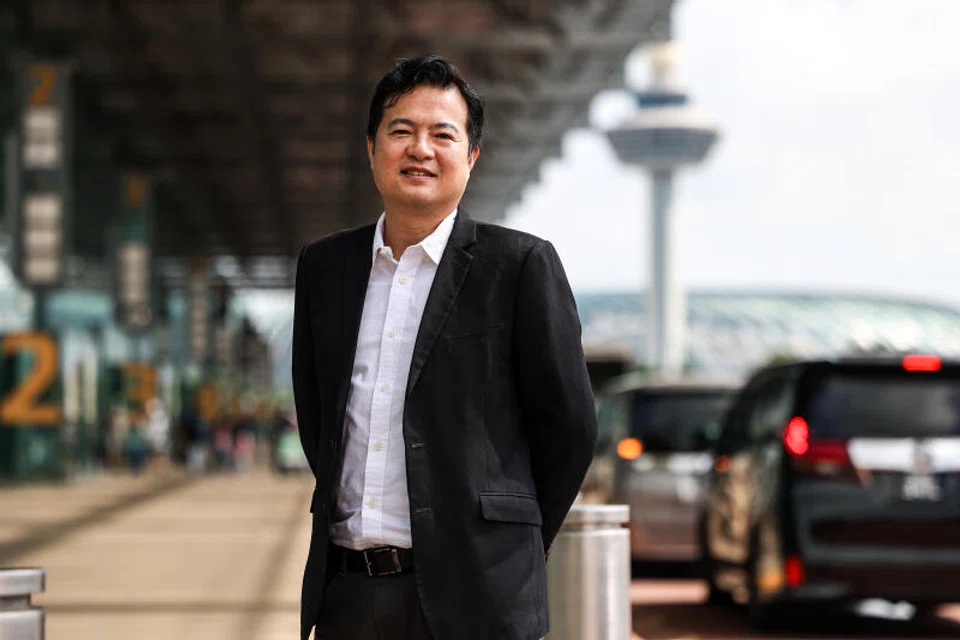
GIVEN the limits to the ways costs can be cut, Scoot – the budget arm of Singapore Airlines (SIA) – will strive to raise revenue from seats sold and from add-on offerings to soften the impact of rising costs on its profit margins, its chief executive officer Leslie Thng said on Thursday (Mar 7).
In a recent quarterly update, SIA group posted a 19.3 per cent decline in operating profit for the third quarter of FY2024. This was attributed to a 9.5 per cent increase in non-fuel expenditure, and a 9.1 per cent rise in net fuel cost.
Scoot’s operating profit for the quarter amounted to S$39.8 million, a 70.5 per cent drop from that in Q3 FY2023. Passenger yield dipped 15.3 per cent as its competitors added capacity; unit cost rose by 3.2 per cent in an inflationary environment.
Given that cost increases eat into profitability, and the constraints on what Scoot can cut in fuel costs and other expenses, the carrier will seek to bump up its top line to mitigate the impact.
“We do then measure in terms of how we can maximise the revenue that we can generate from the seats that we sell, (and) how we can look at initiatives to improve on ancillary revenue ...” Thng told reporters in a wide-ranging interview.
Carriers in the low-cost segment generate 15 to 20 per cent of their total revenue from ancillary offerings such as allowing passengers a choice of seat, excess baggage, meals on board and travel insurance.
Scoot, which is operating at a capacity comparable to pre-pandemic levels, will ramp up its capacity. However, Thng declined to provide a number when asked about the targeted increase in capacity, citing commercial sensitivity.
All he would say was that Scoot will fly to five to seven more destinations in South-east Asia in FY2025, bringing the network points to 74, as the airline adds Embraer aircraft to its fleet.
Scoot will take delivery of five Embraer planes this year, and four next year. On Tuesday, it announced two new routes – to Koh Samui in Thailand and Sibu in East Malaysia – using the Brazilian jet.
When the carrier takes delivery of 18 narrow-body planes from Airbus from 2025, it will consider adding more destinations.
China now accounts for about 20 to 22 per cent of Scoot’s total capacity, or 80 flights a week, to 17 destinations.
This is still 20 per cent below pre-pandemic levels, because demand for travel in China – which reopened its borders only in January 2023 – is still not back to what it was before the lockdown.
But Scoot has noted a rise in travel demand since the announcement of the mutual visa-free travel arrangement between Singapore and China. Bookings spiked by two to three times shortly after the announcement in January; the arrangement took effect on Feb 9.
Thng said: “It gives us confidence to say that in the coming months, with the plan to go back to 100 per cent – 100 weekly services, we would want to tap the returning demand from Chinese travellers.”
However, the recovery in travel demand, and Scoot’s return to capacity has not been even across Chinese cities. For example, the carrier has returned to pre-pandemic capacity for cities such as Nanjing, Hangzhou and Tianjin; in cities such as Changsha, it is working at restoring its capacity.
Thng also observed that mainland Chinese used to travel in bigger groups, but are now doing so individually or with families. They are also making more trips to Singapore.
In contrast, Scoot’s capacity to India is back to almost pre-pandemic levels. But with the Air India-Vistara merger pending antitrust clearance, Thng said it is “premature” to talk about cooperation with the entity that SIA would eventually own a 25.1 per cent stake of.
Scoot recruited slightly more than 500 staff in the past 12 months. Half were cabin crew, 20 per cent of them pilots, and 30 per cent, to fill office positions. The carrier is looking to make a further three-digit addition to its headcount, including one to two batches of cabin crew, in cohorts of 20 each, graduating every month.
SIA’s counter was trading at S$6.43, S$0.08 or 1.2 per cent lower, at the market close on Thursday.
TRENDING NOW

Higher rates, weaker spending: Is the Philippines entering stagflation?

Ex-Nvidia CEO misled top lawyer on affair with Chinese businesswoman, sources say

‘I’ll be buying more’: Singapore investors pour into Nvidia shares on Jensen Huang’s exit

Nvidia approaches Arm CEO Haas as employees seek Huang's return, reports say

