


Asian cities build big as infrastructure woes take centre stage in region’s Taylor Swift tussle
The likes of Bangkok, Hong Kong, Manila and Jakarta are all hungry for a share of the lucrative international concerts pie.

Goh Ruoxue
AS TALK rages on over whether Singapore’s exclusivity deal with American pop icon Taylor Swift was a smart business move or “not what good neighbours do”, a more pressing issue regarding the state of infrastructure in key cities in the region has been thrust into the spotlight.
Many fans in South-east Asia – such as those from the Philippines, who count themselves as Swift’s most ardent supporters in this part of the world – have lamented their countries’ lack of infrastructure for the failure to woo such big-name acts to their shores.
Singapore is playing host to Swift’s six sold-out concerts as part of her wildly successful The Eras Tour, with the final three shows taking place from Thursday (Mar 7) to Saturday.
The government gave a grant of an undisclosed amount to Swift’s promoter to guarantee that the Republic would be Swift’s lone stop in South-east Asia.
With Asia’s red-hot live entertainment scene hauling in billions of dollars in tourism revenue, many cities across the region want a share of the spoils, and they are more than willing to splash the cash to beef up their venues.
Construction craze
Thai Prime Minister Srettha Thavisin, who sparked the Swift saga with his disclosure about Singapore’s grant to Swift, has vowed to put the Kingdom on the map as an entertainment destination.
In February this year, a 6,000-capacity entertainment venue opened in Bangkok. The city will see the opening of a 5,000-seat hall in June and a 15,000-seat arena in 2026.
In Kuala Lumpur, a 2,400-seat concert hall opened in 2022. That same year, Jakarta opened an 82,000-seat stadium that has since welcomed the likes of South Korean K-pop group Twice and British singer-songwriter Ed Sheeran.
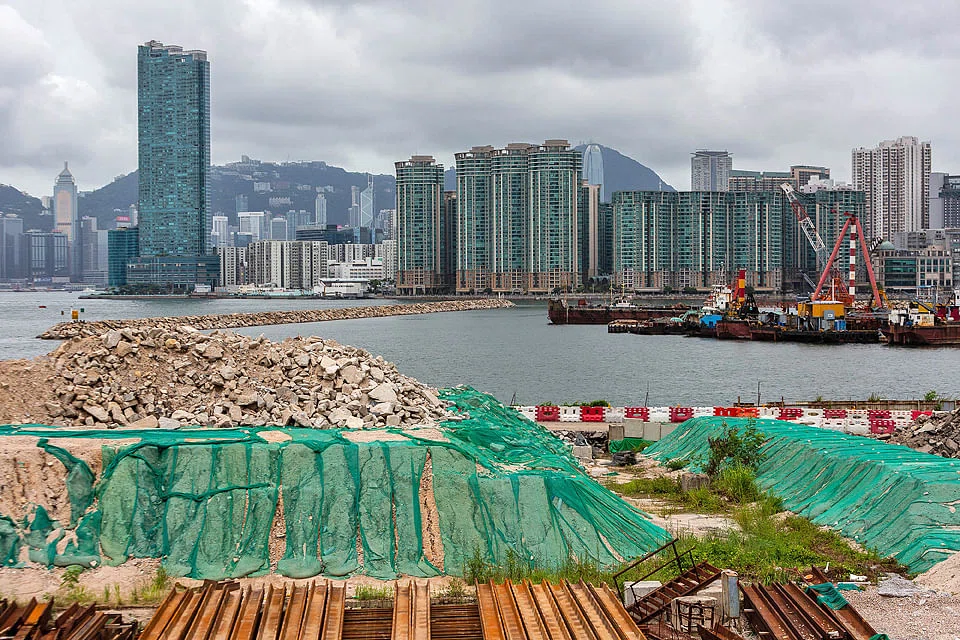
And in Hong Kong, the Kai Tak Sports Park will finish construction by end-2024, boasting a 50,000-seat stadium, 10,000-seat indoor sports centre and 5,000-seat public sports ground.
South Korea is also stamping its mark with three new concert venues due to open by 2025 in Incheon, Goyang and the capital Seoul.
Japan, meanwhile, is set to launch two new arenas – one in Nagoya in 2025 and another in Osaka in 2027.
Philippines’ golden age of infrastructure
Unlike these Asian cities, the Philippines has no big new venues in the pipeline so far. But South-east Asia’s fastest-growing economy is pumping its money into infrastructure spending.
Big-ticket items include road networks, flood control systems and railway systems.
This year, a record 1.4 trillion pesos (S$33.6 billion) was proposed for infrastructure outlays, accounting for almost a quarter of the total budget.
Gary Bowerman, a Malaysia-based analyst of travel and consumer trends in Asia, noted that while geography is key for A-list international concerts, aspects such as airport handling capacity and flight connectivity are also critical factors.
“A broad range of hotel inventory, dining and entertainment to meet different budgets is important, as is efficient transport infrastructure to and from venues,” he said.
Although the Philippines currently boasts the world’s largest 55,000-seat indoor arena, there is no direct public transport link there, and visitors who drive have to jostle for one of around 10,000 parking lots.
Traffic congestion leading up to the Philippine Arena – about 30 km from the capital – is a common sight, and concert-goers have bemoaned the lack of facilities nearby.
When US singer Bruno Mars performed there last June, traffic gridlock left much of the audience arriving late while others resorted to walking along the expressway.
Andy Hodgson, global advisory services leader of sustainable development consultancy firm Arup, said: “To be a competitive host city, the city needs to get a lot right; not just the hosting of the event but getting the enablers for the event in place, including the broader city as an attractive destination for spectators.
“Importantly, the infrastructure also needs to work during non-event times to avoid costly and redundant investment by the host city without legacy or baseline need,” he added.
Currently, there are 198 infrastructure flagship projects under the Philippine administration’s belt.
Almost 40 per cent of them are located in Metropolitan Manila, and most involve works on rail lines, bus systems, highways, bridges and airports.
Singapore’s shrinking slice?
Even as Singapore scored a big win by convincing Swift to perform here, there have been many international acts that have skipped the Lion City in their Asian tours.
Award-winning rock band Muse had one Asia stop in Malaysia for their world tour that began in 2022. British band Bring Me the Horizon performed in Bangkok, Jakarta and several Japanese cities in end-2023.
The Asia leg of Japanese singer Ado’s tour in February this year comprised Kuala Lumpur, Bangkok, Jakarta, Hong Kong, Taipei and Seoul.
Notably, American dream pop band Cigarettes After Sex recently announced their Asian tour dates for Hong Kong, Kuala Lumpur, Manila, Jakarta and Bangkok next January.
As shiny new stadiums pop up across the map in the coming years, observers say that Singapore’s status as an entertainment hub faces growing competition from its Asian neighbours.
But these investments pose no threat to the Republic, said managing director Christopher Khoo of tourism consultancy MasterConsult Services.
Singapore’s hub status is determined by more than just having a suitable venue, he said.
“Things work in Singapore – there are sufficient accommodation options, connectivity to major and secondary cities, seamless local transportation, safety and security, and a host of other factors that will swing things our way.”
More importantly, South-east Asia is now becoming a serious market for international artists, who are less likely to skip the region entirely.
“Whether it is Singapore only or Singapore plus, the growing pie will mean good news to the events and tourism industry,” Khoo said.
Nicolas Buchoud, a senior consultant and advisor to the dean at the Asian Development Bank Institute, said: “Asia has become over the years a global hub for the development of creative economy, performing arts, culture (and) the entertainment industry.”
Buchoud pointed out Singapore and Hong Kong as long-time global tourism hubs and Macau as an entertainment destination.
Macau opened its largest indoor arena with 16,000 seats in 2023, as Asia’s gambling capital diversifies away from the casino industry.
“In the future, the competition should not only be about the bigger stadium or the most advanced technological place, but about skilling and empowering people in the different fields of the creative economy,” he added.
Tourism analyst Bowerman also highlighted Singapore and Macau as the two concert cities that will “go head to head” in the coming years.
“They are geographically separate, have great infrastructure, are small and manageable for quick-trip visitors, and have huge potential market reach to attract a range of performers.”
He believes that cities such as Bangkok will eventually start attracting more concerts, but said: “Singapore and Macau are ahead of them in terms of exclusivity potential – and that is where the real deals are made.”
For now, Bowerman noted: “Singapore is clearly in the box seat, and everyone else is playing catch-up.”
When it comes to infrastructure competitiveness, Singapore ranked the highest (ninth) among its Asian counterparts, according to 2023’s World Competitiveness Ranking.
Others like Hong Kong came in at 13th, South Korea at 16th, Japan at 23rd, Malaysia at 35th, Thailand at 43rd, and Indonesia at 51st. The Philippines brought up the rear at 58th place among all 64 economies assessed.
TRENDING NOW
He built the Vingroup empire. Now South-east Asia’s richest man is handing some key roles to his sons
DBS wants to be ‘Asian bank for Asians’ rather than global bank: CEO Tan Su Shan
Ex-Goldman trader builds mini pod shop in Singapore with offbeat hires
Asean’s challenge is to become resilient against global geopolitics: former Indonesia trade minister



