Asean Business logo
SPONSORED BYUOB logo
ASEAN BUSINESS

The Philippines’ growth to stay ‘stronger for longer’ in 2024: economists

Consumer spending, favourable demographics and rising income will continue to drive growth amid inflationary risks

Zhao Yifan
Zhao Yifan

Published Wed, Mar 20, 2024 · 01:42 PM
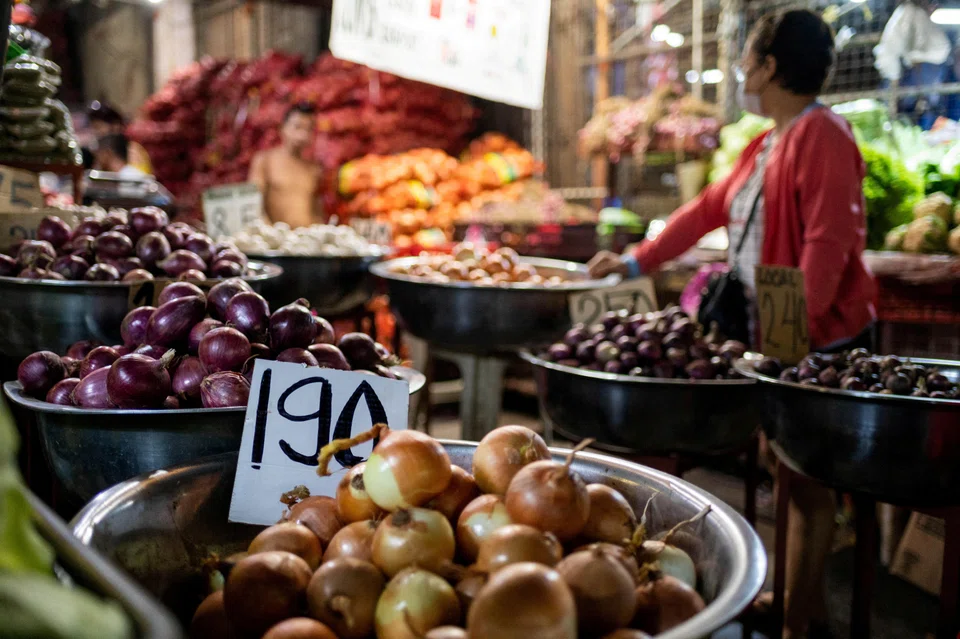
    • The Philippines faced the most severe inflation and the most aggressive monetary tightening cycle among all Asean members in 2023. However, the country has  emerged as South-east Asia’s fastest-growing economy.
    • The Philippines faced the most severe inflation and the most aggressive monetary tightening cycle among all Asean members in 2023. However, the country has emerged as South-east Asia’s fastest-growing economy. PHOTO: REUTERS

    THE Philippines’ solid growth of 5.6 per cent last year – the highest gross domestic product expansion among its South-east Asian peers – has cemented a “stronger for longer” expectation of the consumer-led economy’s growth in 2024.

    A recent McKinsey report titled Stronger for longer?, following the Philippines’ resilient showing last year, cited several factors as key growth drivers, from a resumption in commercial activities and public infrastructure spending to growth in digital financial services.

    While last year’s growth was shy of the government’s ambitious target of 6 to 7 per cent, it surpassed the median 5.5 per cent growth of Bloomberg’s poll of economists.


    Most economists told The Business Times that they expect the Philippine economy, valued at more than US$400 billion in 2023, to keep up with the positive trajectory. Supportive factors include slower inflation, narrowing twin deficits and a sound banking system, even as it pushed ahead with national reforms.

    A tale of two halves

    Euben Paracuelles, chief Asean economist at Nomura, pointed out that the Philippines’ full-year growth exceeded expectations. This was despite the first half falling short due to the country facing the most severe inflation, and the most aggressive monetary tightening cycle in Asean that weighed down the private sector.

    Economists attributed the second half’s growth to a recovery in domestic consumption on the back of falling unemployment rates. “When people have jobs, they are willing and able to spend more,” added Paracuelles.

    HSBC’s Asean economist Aris Dacanay noted that the Philippines’ unemployment rate has reached its lowest in the bank’s records since 2005, at 3.6 per cent, with a high labour force participation rate above 65 per cent.

    “There were roughly 5.7 million more people working in December 2023 compared to what the demographic trend would suggest, with many using digitalisation as leverage to seek employment in the informal sector,” said Dacanay.

    “What has been supporting growth amid the challenges in 2023 was ‘strength in numbers’, or having more hands on deck in the economy,” he added.

    Another often-overlooked factor is the country’s low household debt ratio of 10.1 per cent of GDP as at June 2023, versus nearly 90 per cent in Thailand or Malaysia.

    Nomura’s Paracuelles explained that this means less pressure on the balance sheets of households in a high interest rate environment, hence, households are more willing to spend.

    Going by data from JPMorgan, the primary driver of the 5.6 per cent GDP growth is private consumption, which contributed 4.1 percentage points.

    Lingering inflation

    On the flip side, having a very consumer-led economy means that it is highly sensitive to inflation. Experts noted any resurgence in inflation could lead to a renewed weakening of consumer sentiment.

    Although inflation has returned to target in recent months, JPMorgan’s Emerging Markets Asia economist Ngai Jin Tik cautioned that “the path of disinflation could be bumpy due to persistent supply-side pressures, especially in the food market, and administrative price adjustments such as electricity tariffs and transport charges”.

    Ngai added that the impact of the Philippine central bank’s recent tightening in October 2023 has yet to fully run its course.

    “Credit-intensive sectors such as residential real estate may experience a further slowdown due to supply overhang and elevated borrowing costs,” he said.

    Nomura’s Paracuelles pointed out that the sensitivity to inflation also means that the central bank is very cautious about pivoting towards a rate-cutting cycle, as inflationary risks remain its main concern. This in turn, could “keep private sector spending at bay”.

    A stronger future

    Economists agree that the growth in 2024 will continue to be driven by private-sector consumption, supported by favourable demographics and rising income per capita.

    HSBC’s Dacanay highlighted that with a median age as young as 25 years old – a young and tech-savvy cohort – this unique characteristic of demographic resilience should help buoy the Philippine economy for years to come.

    HSBC expects full-year growth to average 5.3 per cent in 2024, but acknowledges that the stronger-than-expected performance of the labour market amid easing inflation could lead to higher growth than forecast.

    Building on the expectation for lowered inflation and market resilience, Nomura recently revised the forecast upwards to 6 per cent from 5.8 per cent. The revision is also driven by the no-show of an anticipated mild recession in the US. “As the US is an important trade partner with the Philippines, there will be less drag on the Philippines’ exports,” said Paracuelles.

    On a more conservative note, JPMorgan expects the Philippines’ 2024 growth to moderate to 5.3 per cent in view of inflationary risks, but still outperforming Asean peers with an average GDP growth estimate of 3.6 per cent.

    In the longer term, economists expect infrastructure investments to continue fuelling the country’ growth, including projects under the recent US$5 billion investment pledges from German and US companies announced on Mar 13.

    The Philippine government is pursuing an ambitious infrastructure agenda totalling US$150 billion or 36 per cent of its GDP, with over 180 key projects earmarked over the next five to 10 years across various sectors.

    “This multi-year plan is expected to generate high-multiplier effects for the economy by reducing logistics costs, creating quality employment, and boosting potential growth,” said Ngai.

    However, there are risks over the realisation of these longer-term projects or investment pledges.

    “The government’s medium-term fiscal consolidation plan, aiming to reduce the budget deficit from 6 per cent of GDP in 2023 to 3 per cent of GDP by 2028, may limit the scope for infrastructure outlays,” he added.