Valentine’s Day: The changing face of love
From ‘slow dating’ to ‘situationships’, romance and dating aren’t what they were a decade ago

Helmi Yusof

IN 2024, finding love has never been more efficient and convenient. The advent of smartphones and dating apps give singles unprecedented access to a world of potential partners – an advantage no previous generations could even begin to imagine. Yet, at the same time, the ease of finding a lover also equates to the ease of losing one, since the same technologies that facilitate connections can also hasten their demise.
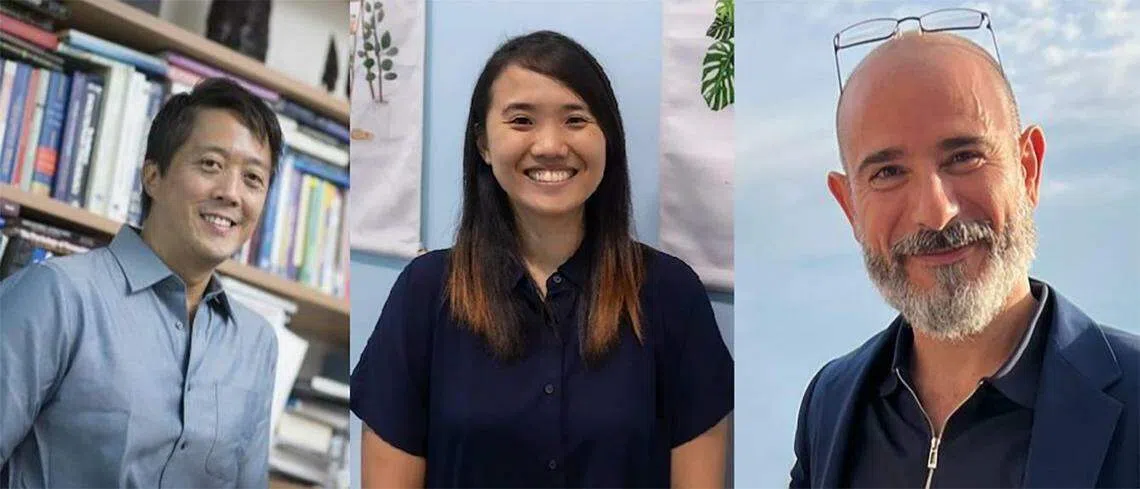
That’s the view of three love experts The Business Times spoke with: Prof Norman Li, an academic and researcher on human mating preferences at Singapore Management University; Dr Oberdan Marianetti, a psychologist, clinical sexologist and founder of Dr OM & Associates; and Ooi Sze Jin, a psychologist and founder of counselling clinic A Kind Place.
Prof Li says: “For those of us who live in a city, we think we have a lot of options because we’re now able to reach a lot more people. But our options also have options. As a result, people are getting in and out of relationships more quickly, ending them quickly when they think they can find something better out there. Technology has made it easy to get into a romance, but it’s also made it easy to get out. Everything has been sped up and relationships are getting shorter.”
Expanding on this, Dr Marianetti notes: “These digital platforms and services have significantly lowered the barriers to meeting people, but the complexities of romance and love persist. App users can now connect with a larger pool of people, compared to 10 or 20 years ago – yet confusion remains. Whether due to overwhelming options, misleading profiles, unclear intentions or mismatched expectations, many approach the digital dating world cautiously, sometimes with disillusionment or dread.”
According to Jonathan Hartley, a relationship coach writing on the website positivedating.com, an emerging trend in 2024 is “slow dating” – which means “being more considerate of how often one goes on dates and generally taking things slow to build an emotional connection in a pressure-free and relaxed environment”.
He cites a survey carried out by the popular dating app Bumble, which found that 31 per cent of its users are slow-dating as a way of protecting their mental health: “The build-up to creating a connection with a partner can be overwhelming; if it does not go well, it can be mentally draining – which is why slow is best.”
At Ooi’s clinic A Kind Place, the number of clients signing up for couple’s therapy have “spiked” in recent months. She says: “Popular culture creates this impression that love happens really quickly. There’s this idea that you meet someone and sparks fly immediately. But we know from real-life examples that we often don’t fall in love with a person right away. Chemistry doesn’t happen from the get-go. Love takes time to build. Couples come to us when they are genuinely committed to working out their relationship and becoming better partners.”
Dating apps have accelerated the process of connections, but it’s also increased our sense of insecurity. She says: “What I’ve noticed among my clients – especially those that met their partners online – is that they’re often riddled with anxiety, wondering if their partners are still swiping left and right on their smartphones when they’re not looking.”
Non-traditional partnerships
Meanwhile, the speed of coupling up has led to new labels for relationship structures and greater fluidity in partnerships. Prof Li says: “In the past, people were either marrying or on track to getting married. But these days, there are more hybrid relationships. Some are short-term in nature, others are on-again-off-again, still others are somewhat vague. So you have terms like ‘situationships’ being coined to describe them. These trends are largely happening among the younger generations, but sometimes we find them in the older segments as well.”
Ooi says: “In the past, there was a lot more stigma to not settling down. But these days, people are less embarrassed about being involved in casual, exploratory relationships. I’m seeing people who are actually okay with being single and dating around. They’re taking their time to date different people. And that’s not necessarily a bad thing. They’re really finding out more about themselves, their preferences, and their likes and dislikes, before they commit fully to a relationship.”
Dr Marianetti offers a different take on these arrangements. He says: “Situationships, cohabitation, friends with benefits and other such arrangements are not novel. They always existed, but they were never present enough in our common language to warrant a specific label. The Internet has given voice to a wide range of realities, many of which were considered extreme taboos in the past.
“While many relationship practices remain frowned upon in many cultures, the dialogue has widened and, with it, the necessity to better describe its content. People will continue to be creative with their relationship arrangements for many reasons, and I am sure the vocabulary will continue to develop along the way.”

Meanwhile, number of marriages are generally declining. According to the last report published by the Prime Minister’s Office in 2023, the annual average number of citizen marriages over the preceding five years (2018 - 2022) stood at 22,700, below the preceding five-year average (2013 - 2017) of 23,600 – although the fall could be partially attributed to the pandemic. Additionally, grooms and brides are getting older: The median age at first marriage for grooms and brides were 30.7 years and 29.3 years respectively in 2022, up from 30.1 years for grooms and 28.0 years for brides a decade before, depicting the trend towards later marriages.
Individuals today prioritise personal fulfilment and self-discovery in their romantic pursuits. There is a greater emphasis on finding compatibility on emotional, intellectual and lifestyle levels, rather than focusing on practical considerations or societal expectations. Many people now see relationships as a means of self-actualisation and strengthening their positions to achieve their life goals, and not necessarily to procreate.
Later marriages, however, are not necessarily a bad thing, experts say. Many studies carried out across different cultures and communities have found that a longer period of dating before marriage is linked to higher marital happiness and lower risk of divorce. The anthropologist Helen Fisher, arguably the world’s most sought-after love commentator, advocates for “fast sex, slow love” – which involves having sex soon and regularly to trigger romantic feelings in our brains, but spending months and years getting to know each other and doing things together so that the primordial brain circuitry for deep human attachment can be fully activated.
Still single?
Despite all these technological conveniences, some singles still find it hard to find and keep love. What advice might our love doctors have for them?
Dr Marianetti says: “Finding the right partner for a long-term committed relationship begins with finding ourselves. We must be experts of our identity, preferences, likes and dislikes, before entering the dating world and selecting a partner… So find you first, be at peace with the beautiful human being you already are, and be deliberate on your journey. If you are looking for a partner to build a future with, be clear with your intentions and expectations, and take action every day in creating the opportunities to meet your partner.
“I cannot stress enough the importance of self-reflection and inner-work. Our past experiences – whether with family or ex-partners – often shape our choices in partners, leading us to recreate dysfunctional patterns. Recognising them and striving to become a healthy, balanced adult helps us break free from patterns that no longer serve or outrightly harm us.”
While Dr Marianetti advocates for an inside-out perspective, Prof Li proposes a more outright pragmatic approach: “Ironically, technology has made so many things so convenient that we sometimes expect life to be handed to us on a platter… In some cases, I feel that some individuals just aren’t trying hard enough. They’re staying home playing video games, when they could be joining an interest group or going to a place where their potential mates might be. They could also learn what qualities their potential mates are looking for and work towards acquiring those qualities. For instance, if their potential mates prefer someone funny, then they should work on their sense of humour. They have to put in the work.”
Hartley, in predicting love trends of 2024, thinks that more singles will opt for contra-dating (leaving your comfort zone to date someone outside your “type”), micro-flirting (tiny and restrained gestures of flirtation that won’t alarm the person you fancy) and age-busting (ignoring any age gap between you and your date).
Ooi says fewer things prevent a real relationship from blossoming than unrealistic expectations: “Modern dating apps and services give the impression of infinite choices, that somewhere among the thousands of profiles, there is the ‘perfect one’ waiting for you. Pop culture and curated social media accounts give the impression that such individuals exist. But there is no such thing as the perfect person… It’s up to you to accept someone who’s imperfect (perhaps as imperfect as you are), find common ground and build a relationship together.”
Keep the fire alive
As for those lucky enough to have already found someone, the experts say keeping the love alive is not something to be taken for granted. Dr Marianetti says, for instance, that all couples must set aside time for sex. “One of the persistent myths that perplex me is this idea that sex should always be spontaneous. That’s not true… A lot could be said about this from biological, social or psychological perspectives. But for now, let’s emphasise the fact that most of us lead lives filled with pressures and demands that deplete our energy, openness and creativity. We’re immersed in the taxing routines of work and/or parenting – so we de-prioritise sex as a form of self-preservation. To counter this, we must be intentional and deliberate about creating intimate moments with our partners.”
He adds: “Growing and developing a relationship is a marriage between the self and the relationship… Every day we must choose each other, and choose to work on improving our communication, deepening our emotional and physical intimacy, and collaboratively working on the injuries that inevitably we cause each other. Like an untreated wound, ignored conflicts can fester and infect the entire relationship.”

Ooi concurs: “The truth is, the person you dated in your 20s and married when you were 28 isn’t the same person you’re living with in your 40s, 50s and beyond. The way you see the world, the things that are important to you, the frequency of intimacy, have all changed. I’ve met a number of people who have divorced their childhood sweethearts, claiming that they weren’t the same person they fell in their younger days. But how could they? It’s unrealistic to expect people not to change.”
The experts emphasise that long-lasting love requires fundamental elements such as trust, mutual respect, effective communication, adaptability and a considerable dose of patience empathy and forgiveness. Despite the evolving landscape of technology and social norms, these foundational aspects remain indispensable for sustaining meaningful and fulfilling relationships over time.
The speed and dynamics of dating may have changed enormously in the past 10 years. But the fundamental essence of genuine romance with a suitable partner – or what Fisher dubs “life’s greatest prize” – remains the same.
Decoding Asia newsletter: your guide to navigating Asia in a new global order. Sign up here to get Decoding Asia newsletter. Delivered to your inbox. Free.
Copyright SPH Media. All rights reserved.