

America's continuing tango with right-wing dictators
US policy towards such individuals has shifted frequently according to changes in the world order. But whatever Washington does next, it should ensure it doesn't allow new dictators to replace those booted out.
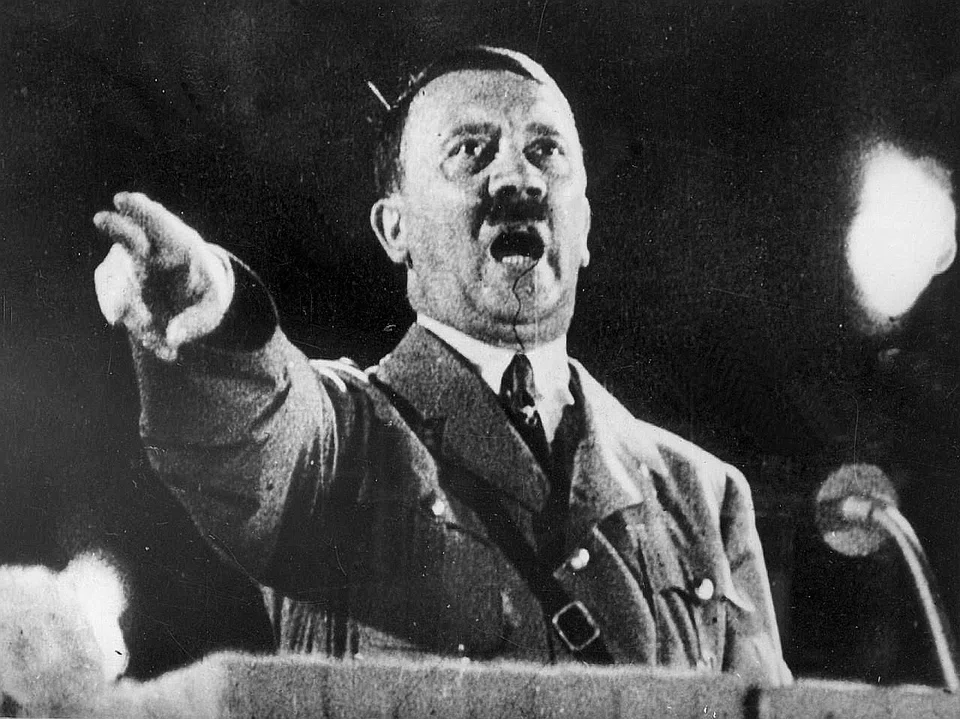
EVER since the 1920s, American presidents have often preferred constructing alliances with Right Wing Dictatorships (RWDs) run by military strongmen in order to achieve three US goals:
US partnership with RWDs - defined as any anti-democratic and anti-communist regime, usually military-run - is a continuing story. For example, in June, the US revealed that it had released US$575 million in military aid to the new Egyptian regime of General Abdel Fatah al-Sisi that had been frozen since the ousting of President Mohammed Morsi last year. The surprising news came as US Secretary of State John Kerry visited Cairo just two weeks after former army chief al-Sisi was sworn in as president that month.
The Washington Post urged the Obama administration to hold Egypt to the standards of democracy. On April 10, the newspaper argued that not only did the US support the brutal Hosni Mubarak regime in Egypt for 30 years, it was now undermining the aspirations of Egyptian people by backing yet another Egyptian strongman, General al-Sisi, whose regime killed more than 2,000 Egyptians and passed death sentences for hundreds in trials that made a travesty of the justice system.
US historian David F Schmitz explains in his magisterial book Thank God They're on Our Side: The United States and Right Wing Dictatorships, 1921-1965 that US patronage of RWDs violates US ideals and is based on paternalistic racism that views non-Western European people as inferior, vulnerable to radical ideas and in need of firm government to maintain order necessary for economic progress.
US policy towards RWDs has not been consistent and has shifted frequently according to changes in the world order. This vacillating approach to RWDs is encapsulated in a 1939 remark by President Franklin Delano Roosevelt (FDR) about the Nicaraguan dictator Anastasio Somoza Garcia: "He may be a son of a b****, but he is our son of a b****."
The US began framing policy towards RWDs in the 1920s. Fearing communist revolution in Russia and the possible spread of revolutions in Mexico and China, US policymakers began assisting RWDs that promised stability, anti-communism and trade with the US.
The first time US policymakers actively supported a RWD was in Italy in the 1920s, when State Department officials backed Benito Mussolini's seizure of power and the emergence of fascism. US officials preferred Mussolini over Giovanni Giolitti's socialism because Mussolini was expected to bring about prosperity, and Giolitti would have turned Italy communist.
At the time, democracy was not seen as a viable option for newly independent nations. Partnerships with RWDs were preferred for the immediate benefits they provided. The US gained friendly, though brutal, allies.
US military forces intervened 12 times in the Caribbean, backing RWDs of Somoza Garcia in Nicaragua, Maximiliano Hernandez-Martinez in El Salvador and Fulgencio Batista in Cuba, ignoring their blood-stained ascent to power in order to ensure stability. By 1933, dictators ruled at least 15 of 20 Latin American republics.
US policy towards RWDs after World War One underwent a sharp break from President Woodrow Wilson's promotion of democracy. Wilson and his successors now pursued a policy of not recognising communist governments, reversing standard policy of supporting any government that could sustain itself in power.
US policymakers saw no other way of protecting US interests. Dictators demonstrated they could maintain themselves in power, but they frustrated US officials by blocking reforms and creating a blowback of anti-US sentiment that brought the exact types of nationalist/socialist governments they opposed.
US policymakers suffered shock when Adolf Hitler challenged the basis of US policy - that RWDs were supposed to promote US interests. FDR first appeased Hitler with friendly economic policies to persuade Hitler to turn from aggression to cooperation; FDR abandoned that policy when Hitler began his conquests. Following Allied victory in World War Two, RWDs began fading away. Martinez in El Salvador and Jorge Ubico in Guatemala fell in 1944. Nicaraguan dictator Somoza and Dominican Republic strongman Rafael Trujillo were forced to concede basic freedoms.
The policy pendulum swung back to RWDs during the Cold War, when the US tried to prevent the spread of Soviet communism. US policy reversed from opposing RWDs to tentative acceptance at first, and then to total support.
US backing for RWDs is explained in a comment by US Secretary of State John Foster Dulles in 1953: "Syngman Rhee (South Korean leader), Chiang kai-Shek (Chinese Nationalist leader)... are not people, under normal circumstances, that we would want to support." Dulles told State Department officials to "do nothing to offend the dictators; they are the only people we can depend on".
Dictatorships were given new justification: they were part of the "free world" and would serve as vehicles in creating "free societies". By connecting military dictators with democracy, US leaders glossed over RWD policy failures. There was no evidence of democracy, for example, in US-backed South Vietnam, where military dictators rigged elections and oversaw corrupt administrations.
President John F Kennedy signalled policy change by opposing RWDs in Latin America because they upset political stability as much as they protected it, but after his assassination in November 1963, President Lyndon B Johnson resumed sponsorship of Brazilian generals in power. Senators Frank Church and J William Fulbright opposed JFK/LBJ policies of propping up military dictatorships.
LBJ eagerly accepted the theories of Thomas Mann, his advisor on Latin America. The Mann Doctrine recommended non-intervention against dictators if they welcomed US business, but the US would certainly intervene against communists. LBJ used the Mann Doctrine in 1965 to prevent the democratically-elected government of Juan Bosch from returning to power in the Dominican Republic.
RWDs have a reputation of misrule, with strong evidence of torture, economic inequality, corruption and suppression of liberty. They tend to last long enough to do a lot of damage to their own people, but they eventually decline.
The Saigon regime collapsed in 1975 after US military withdrawal, Ferdinand Marcos was ousted by a people's rebellion in the Philippines, several Latin American military regimes fell, Saddam Hussein was removed by his own patron (the US), and popular rebellions in the Middle East seem to herald an end to military dictatorships.
The US must ensure it does not allow new dictators to replace older ones.
The writer, a former BT senior correspondent, is a historian who has taught at Canadian universities. This is the third article in a series of various aspects of US foreign relations
TRENDING NOW

Could Jensen Huang work for Elon Musk? It would be ‘a titanic ego death match’, says biographer

What shattered Crystal Jade? How the culinary empire shrank from 120 to just 9 outlets

Vietnam’s Long Thanh airport hits new snag as airlines seek to delay moving operations

Beyond the greenback, Vietnam’s big borrowers turn to Asian-currency bonds

