Why you shouldn’t put all your money in T-bills and SSBs (answer: you won’t beat inflation)

Tan Nai Lun

TREASURY bills (T-bills) and Singapore Savings Bonds (SSBs) have captivated retail investors in Singapore with their attractive yields.
SSBs have been oversubscribed since the July tranche last year, while a T-bill auction in November attracted a record 92,000 bids worth a total of S$14.2 billion – causing the results of the auction to be delayed by over five hours. The amount applied for was 3.2 times the amount available.
The excitement is natural given the rapid rise in yields for Singapore government-backed instruments over 2022. Six-month T-bills were paying less than 1 per cent at the start of 2022. By the end of the year, they were paying over 4 per cent. Yields were last above 4 per cent in 1989, according to data from the Monetary Authority of Singapore (MAS).
SSBs had 10-year average yields of less than 2 per cent at the beginning of 2022. This rose to above 3 per cent by the end of the year.
These products are nearly risk-free and have been a useful buffer to investment portfolios as the values of stocks fell.
The MSCI World Index delivered minus 17.7 per cent in returns with distributions reinvested last year, while the S&P 500 returned minus 18.1 per cent. The Straits Times Index (STI) was among the few major indices globally that ended the year in positive territory, returning 8.4 per cent last year with distributions reinvested.
Gerald Wong, chief executive of investment advisory platform Beansprout, notes that Singapore government-issued bonds are particularly attractive as they do not carry the risks associated with many other bonds.
Many corporate bonds, for instance, fell in value last year as interest rates rose. The market prices of corporate bonds typically fall as interest rates rise, to compensate investors who would have bought the bonds earlier at a lower coupon. In a rising interest rate environment, there is also an increased chance that corporates may default on their various debt obligations.
Wong also noted that SSBs are attractive as they offer the flexibility to be redeemed any time, without penalties, while the short maturity period of T-bills removes the concern of funds being locked up for too long a time.
“Just looking at them on a standalone interest rate perspective, the yields also definitely look quite attractive,” Wong says.
“Compared to alternatives, whether it’s putting your money in fixed deposit, in regular savings accounts or in equities, the bonds actually stand out as you’re at least able to lock in these returns,” Wong adds.
All the same, investors should bear in mind that interest rates are rising because central banks worldwide are trying to tame inflation.
The high yields offered by Singapore T-bills and SSBs remain below the inflation rate in Singapore. Headline inflation rose to as high as 7.5 per cent in September, its highest print in 14 years. Core inflation peaked at 5.3 per cent in September, also the highest in 14 years.
Singapore’s core inflation is also expected to stay elevated at least for the first half of 2023, said MAS in its half-yearly macroeconomic review last October.
Given that the yields on T-bills and SSBs do not beat inflation, it may not be wise to put all your money into such assets, says Alfred Chia, chief executive of financial adviser SingCapital.
He says: “You cannot put all your eggs into one basket. While the T-bills are safe, their actual yield doesn’t beat the inflation rate, so you still need to balance it out with other assets to improve your overall returns.”
The 60:40 portfolio
Investment experts generally agree on the importance of diversification for the best performance in the long run.
SingCapital’s Chia says: “For people who are doing retirement planning, putting all your money in T-bills will not be practical. You would need to combine (fixed income) with equity investments, or invest in stocks or ETFs (exchange-traded funds) or unit trusts, to form an investment portfolio based on your risk tolerance.”
Beansprout’s Wong, too, notes the importance of equities in one’s portfolio. While an investor’s portfolio mix would depend on his or her risk profile, he generally recommends a higher allocation towards equities than bonds.
He says: “In terms of long-term growth (for equities), there is still something that we see coming through. And in terms of the valuation of different markets, they have actually come down compared to where we were at the start of 2022.”
The MSCI World Index was trading at 21.5 times its earnings as at the end of 2021. By the end of 2022, this had fallen to 16.7 times. Its price-to-book value ratio also fell to 2.8 times at end-2022 from 3.3 times at end-2021.
Similarly, the S&P 500 was trading at 24.7 times its earnings at the end of 2021, but ended 2022 at 18.6 times its earnings. Its price-to-book value ratio ended at 3.9 times at end-2022, from 4.8 times at end-2021.
Given the current macroeconomic uncertainty, however, Wong says investors should exercise some caution and choose equities that are more resilient – such as those in consumer-related sectors.
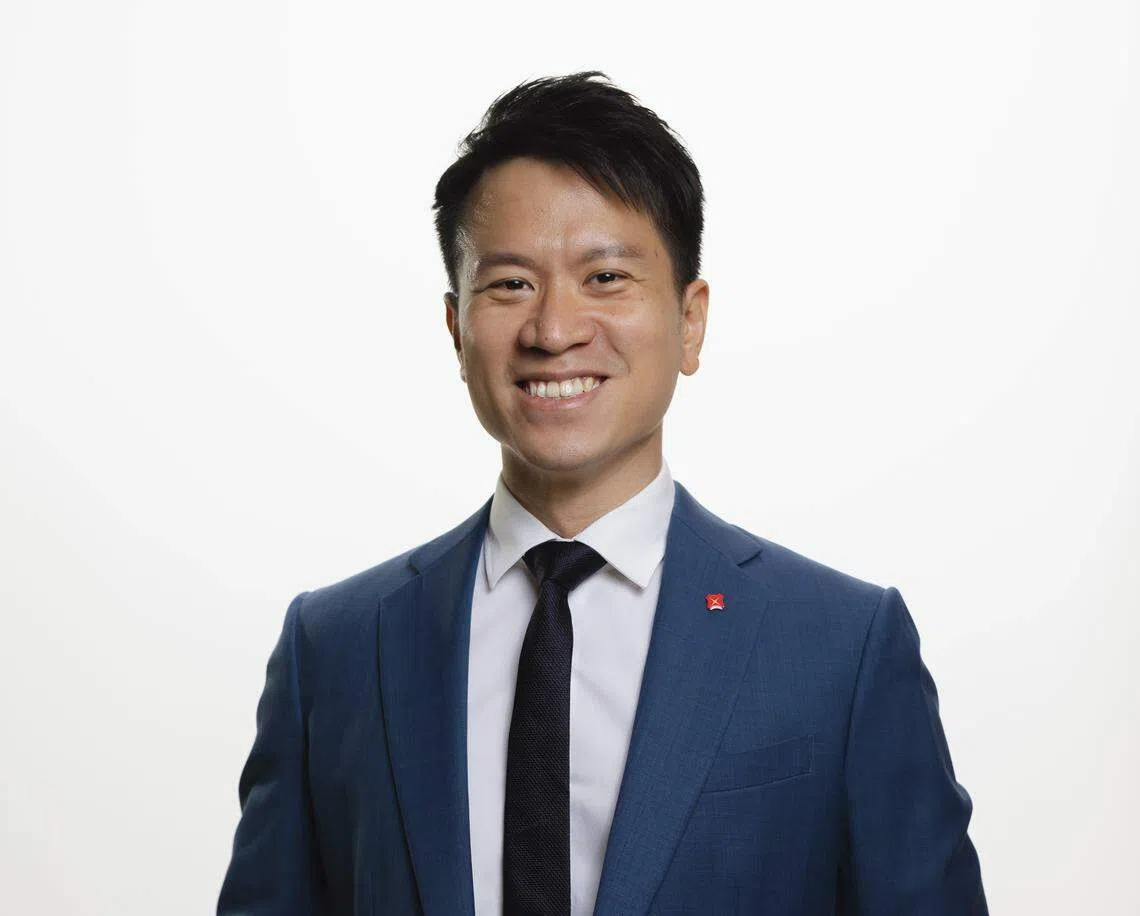
Daryl Ho, senior investment strategist at DBS, recommends that investors work towards a balanced portfolio of 60 per cent equities and 40 per cent bonds – what is commonly referred to as a 60:40 portfolio.
The equities would provide the growth component that would give the balanced portfolio a better chance to beat inflation over the long run, Ho says, as a bond-only portfolio is usually not optimal in doing so.
He adds: “Even if the fixed income asset class cannot beat inflation on its own, the combination of equities and bonds makes the whole portfolio better than the sum of its parts, offering better risk adjusted returns to the portfolio regardless of the prevailing inflationary environment.”
Portfolio goals
All this does not mean, of course, that bonds are not a good form of investment.
Shah Jahan, head of fixed income at Bank of America (BOA), notes that the recent high inflation environment had resulted in near-term negative returns from both fixed income markets and equity markets across the world.
He says: “If inflation stays this high, none of these other assets are going to give you the kind of return that’s going to beat the inflation.”
Singapore government bonds still offer higher returns than some other asset classes, says Beansprout’s Wong.
SSBs are also useful as they are liquid and can be redeemed any time, adds SingCapital’s Chia. “SSBs will make a lot of sense if you need to break the glass and withdraw the money, in case of emergency.”
It is perhaps more important that investors understand the pros and cons of each investment instrument and how they are best used.
The six-month and 12-month T-bills, for instance, serve investors better in the short term.
Loo Cheng Chuan, founder of the 1M65 movement, notes that T-bills are “free money” for those with idle cash. They also provide a relatively strong short to mid-term return with a high level of security.
Loo says: “It’s true that the yields do not beat inflation, but this is the best you have at this current time; it helps you mitigate the rise in inflation and the loss of value of money.
“The only unfortunate thing is that this thing doesn’t last forever.”
The 1M65 movement is focused on a financial strategy developed by Loo to achieve retirement savings of S$1 million by leveraging one’s Central Provident Fund (CPF) account.
CPF pays a 2.5 per cent interest on funds in the Ordinary Account and 4 per cent return on funds in the Special Account. While these rates do not beat current inflation rates as well, Loo notes that funds in the CPF will be compounded, giving them more value in the long run.
“When you buy into a T-bill, you get a one-off gain, but it doesn’t compound and doesn’t grow on a long term,” Loo says.
“For 1M65, where we compound (CPF funds) over some 20 to 30 years, the current one to two years of disturbance where inflation is high is just a little bump in the road,” he adds.
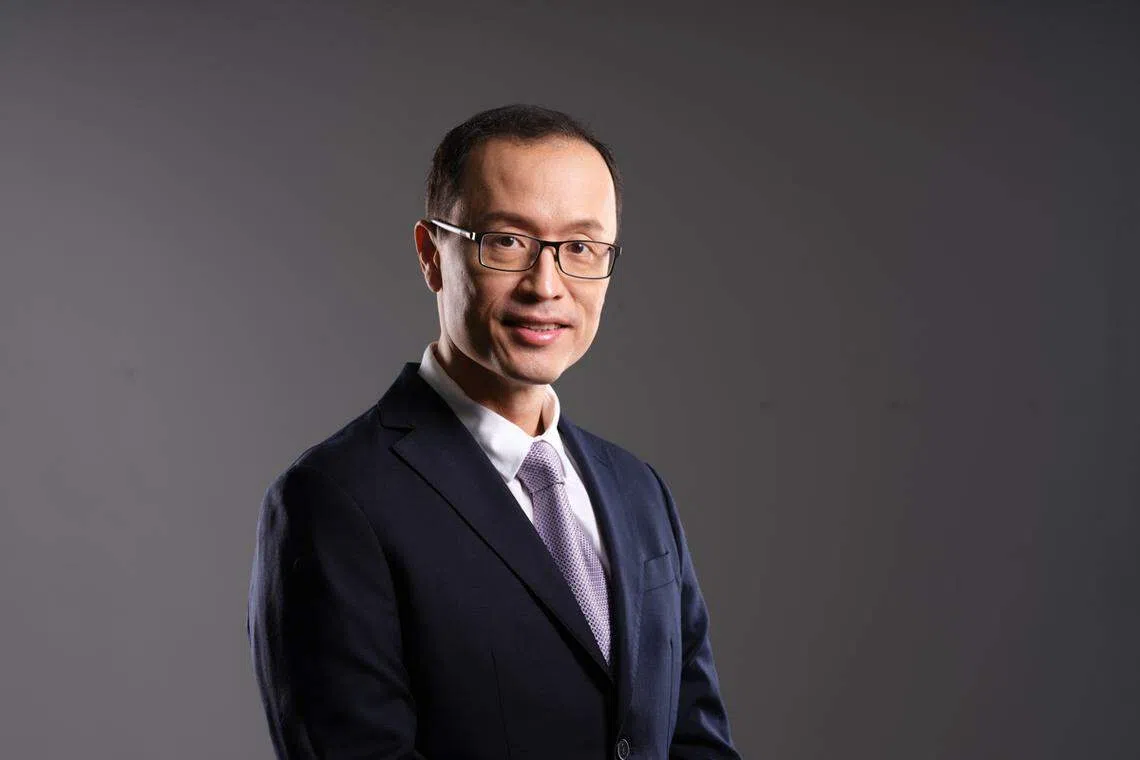
In the longer run, Loo recommends that investors build their portfolios from products they are familiar and feel comfortable with. For most Singaporeans, he says, that would likely be the CPF.
“The CPF forms a cornerstone in all Singaporeans’ retirement funds, so that must be a key cornerstone of your asset allocation,” says Loo, who considers himself a financial educator.
Investors who take a more active role in the management of their portfolios may also opt to opportunistically increase their ownership of bonds this year, given the favourable environment for this asset class.
Standard Chartered, in its Wealth Expectancy Report 2022, recommends that investors with a moderate risk appetite make bonds the largest allocation in their portfolios this year, followed by equities, cash and alternatives.
Standard Chartered expects investors will reduce their cash holdings amid high inflation, and reconsider equities due to market volatility. Equities are nevertheless expected to remain an integral part of portfolios.
“We continue to see multi-asset income generation strategies providing some of the best opportunities today, given the decade-high yields offered by bonds,” Standard Chartered notes.
BOA’s Jahan also expects fixed income to retain its diversification purpose in the longer term.
“With the central bank aggressively raising interest rates, this will result in economic growth slowing dramatically. In that environment, holding fixed income will probably get you the best return,” Jahan says.
“In the meantime, you might have some negative difference between fixed income returns versus inflation; but my view is that when inflation starts to fall, you will start to gain from fixed income again.”