LNG’s role as transition energy in Singapore to blossom despite zeal for renewables
Apart from meeting its domestic energy needs, the city-state is poised to step up its LNG hub game in the region

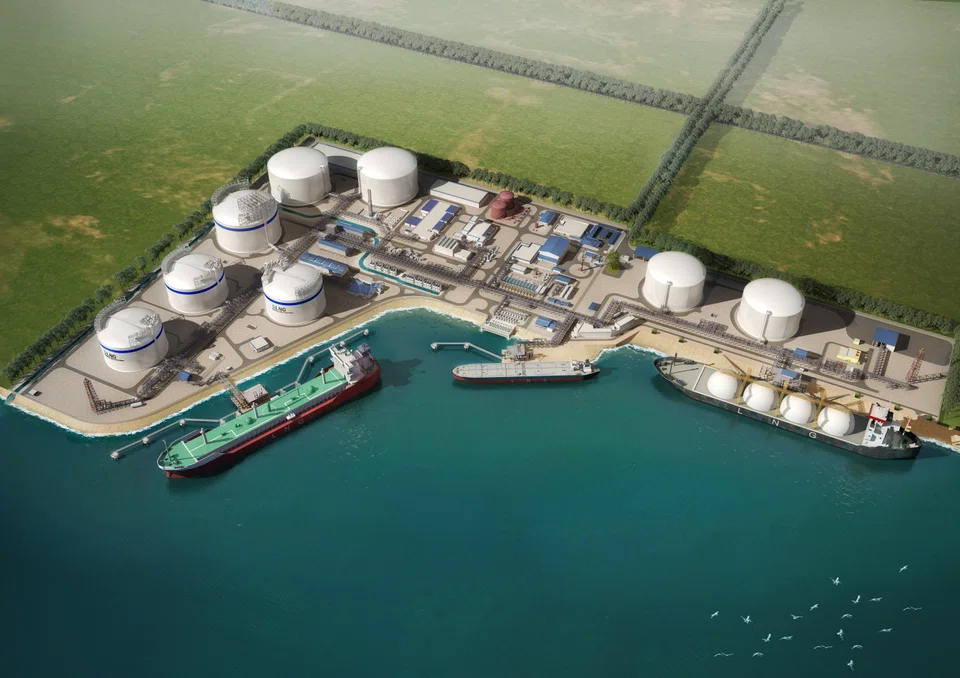
IN SIX years, Singapore is set to have its second (very own) liquefied natural gas (LNG) terminal. This is a big deal on many fronts, chief of all in terms of energy security.
The city-state is hoping to future-proof itself from the likes of the energy crunch three years ago that rocked its liberalised power sector, when an unprecedented gas crunch drove electricity spot prices off the roof and pushed out many electricity retailers.
Almost all of Singapore’s electricity is powered by imported gas, half of which comes through pipelines from Indonesia and Malaysia. The other half comes in the form of LNG from Australia, Qatar and the US.
Singapore is hoping to meet its natural gas demand entirely by LNG “should that become necessary”, said Singapore LNG Corporation, which operates the current LNG terminal in Jurong Island and will develop and operate the second one.
It was just over two decades ago that the city-state’s power sector saw the rapid displacement of oil or diesel fuel in the early 2000s as pipeline imports of natural gas from Indonesia picked up pace, supplemented by Malaysia.
LNG – a growing fuel source for Asia – is expected to be in a sweet spot, at least over the next two decades. The Asia-Pacific is expected to drive global LNG trade as countries industrialise and pivot from coal, which still dominates the region’s energy mix.
Global LNG demand is estimated to rise by more than 50 per cent by 2040, as coal-to-gas switching gathers pace in China, and as South Asia and South-east Asia use more LNG to support their economic growth. This is according to Shell, the world’s largest LNG trader, in its 2024 annual LNG market outlook report released last week.
Shell said the market remained “structurally tight” last year as volatility lingered and prices stayed above historic averages.
Gas prices have, however, cooled considerably since the turmoil sparked by Russia’s invasion of Ukraine in 2022, which choked pipeline exports to Europe.
This is also an opportune time for Singapore to raise its game as a leading LNG trading and bunkering hub in Asia, at a time when its long-held status as one of the world’s top energy and chemicals hub is being challenged by the green energy transition.
Natural gas, the cleanest option among fossil fuels, is regarded as a “transition” or “bridging” fuel on the world’s path to net-zero emissions.
“We will not be able to achieve net zero if we continue to rely solely on natural gas. Unfortunately, we do not have many options for clean energy – we have no tidal power, no wind power, and not enough land for mass deployment of solar,” said Singapore’s Deputy Prime Minister and Finance Minister Lawrence Wong in his Budget 2024 speech.
Singapore has several moving parts in the renewables space.
It has set a goal to import 4 gigawatts of low-carbon electricity by 2035, which would by then account for 30 per cent of Singapore’s power supply. Towards this end, the Energy Market Authority has already hit the target via conditional nods to import low-carbon electricity from Indonesia, Cambodia and Vietnam.
The city-state is exploring other options from hydrogen to geothermal power, and has not ruled out nuclear.
To invest in the infrastructure needed for the energy transition, Wong announced the setting up of a Future Energy Fund with an initial injection of S$5 billion. This is quite possibly one of the biggest moves by the government to spur more private investments in the clean energy space.
Given the continued expansion of renewables in the race to net zero, LNG’s time in the sun is unlikely to last beyond two, or at the most three, decades, said experts.
The long (long) game is still renewables. Singapore faces a complex task as it seeks to strike a fine balance between achieving energy security and meeting climate needs.
TRENDING NOW
Why US$100 oil, 5% US yields affect Singdollar, ringgit differently vs other Asean currencies
He built the Vingroup empire. Now South-east Asia’s richest man is handing some key roles to his sons
Asia needs new energy security architecture
CDL to launch 570-unit Jurong project Lucerne Grand with prices from S$1.5 million