

Why world powers are wooing resource-rich Greenland
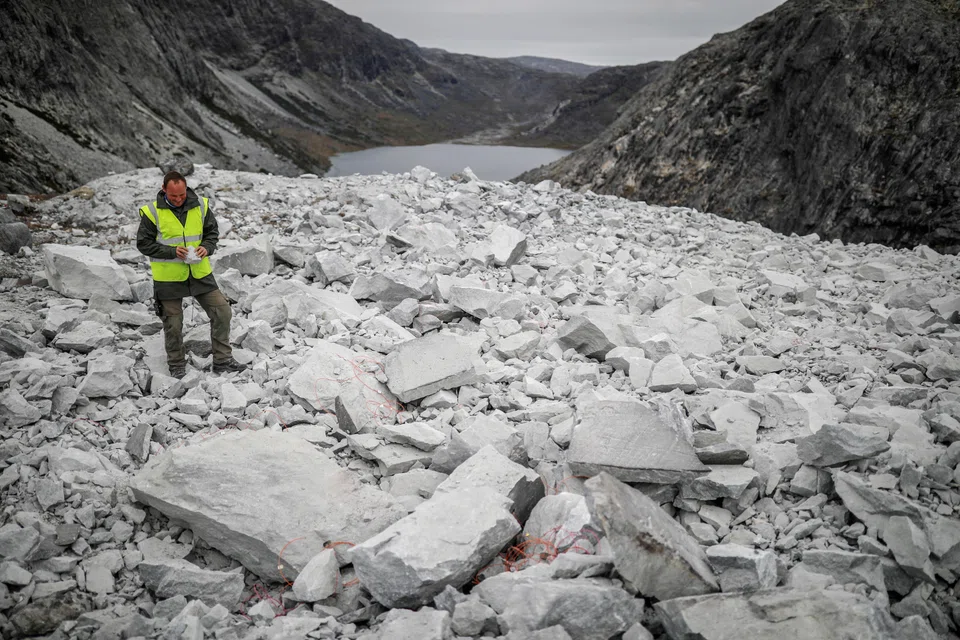
GREENLAND is about 80 per cent ice-capped and, until the 1940s, was a protected, isolated society. Yet, today the growing geopolitical and geoeconomic focus on the Arctic Circle has made the world’s largest island a major prize for powers as far away as the Asia Pacific, especially China.
As the region’s melting ice caps expose unclaimed ocean and lands, what has been called a modern gold rush has commenced over the Arctic’s territory, natural resources, and strategic position. While the economic value of this is obvious, the geopolitical dimension is also key given the Arctic’s critical location between North America and Eurasia.
In this context, the more than 810,000 square mile Greenland is an increasingly prominent player with huge potential. This is not least as it boasts the world’s northernmost territory off its coast, which is the closest point of land to the North Pole.
In recent decades, the autonomous territory which Greenland has become, with a small population of less than 60,000, has gone from direct Danish rule to much greater independence. Today, Denmark (one of the 27 EU states, and a Nato member) retains only powers of monetary and foreign policy.
One signal of Greenland’s growing prominence came in 2019, when then US president Donald Trump floated the idea of buying the huge island. This was dismissed by Danish Prime Minister Mette Frederiksen as “absurd”. Nonetheless, the United States soon after opened a consulate on the island in 2020, and has had an agreement with it since 1943 to house US military assets on Thule Air Base, which has a ballistic missile early warning system and satellite tracking.
China too proposed building new airports and mining facilities in Greenland in 2018, but eventually withdrew this. Beijing’s interest in the region is, in part, related to developing trade through new North Atlantic shipping lanes that are opening due to melting ice caps. These have significantly decreased maritime trade transportation times, which generally include travel via the Suez or Panama canals to navigate the globe.
Interest from Europe
Given US and Chinese interest in Greenland, it is no surprise that the European Union is also raising its profile there. The 27-member bloc is especially alert to the island’s vast natural resources, including coal, zinc, copper, iron ore and rare earths. Europe tends to lack access to both mines and processing of raw materials, and is seeking to reduce its reliance on China, which dominates production of rare earths and other critical minerals.
To this end, the EU and Greenland last November signed a memorandum of understanding (MOU) for a strategic partnership to develop sustainable raw materials value chains needed for the transition to a low-carbon energy future. More than two-thirds (25 of 34) of critical raw materials identified by the European Commission as strategically important for the bloc’s industry and the green transition are located in Greenland.
As part of the EU’s Global Gateway strategy, Brussels already recently established similar strategic partnerships on raw materials with Ukraine, Kazakhstan, Namibia, Argentina, Chile, Zambia and the Democratic Republic of Congo. The partnerships enable trade and investments into a secure, sustainable and resilient raw materials value chain, key to achieving the transition to climate-neutral and digitalised economies.
Such is the importance that Brussels places on its deepening relationship with Greenland, the first EU office opens there this week, officiated by European Commission President Ursula von der Leyen, who will be joined by Frederiksen. The visit on Thursday and Friday (Mar 14, 15) includes a stop-off in the Faroe Islands, another self-governing territory in the Kingdom of Denmark.
The MOU may in the future evolve into one of the EU’s international Green Alliances, akin to those with Canada, Norway and Japan. It will contribute to development of sustainable projects along the raw materials value chains, and to the deployment of infrastructure required to develop them.
This MOU establishes particularly close cooperation between Greenland and the EU in five areas, starting with economic and industrial integration of value chains for critical raw materials and other key commodities. This includes developing projects jointly, creating and promoting new business models, attracting investments, supporting access to finance, facilitating trade linkages, developing and integrating support for economic diversification, and ensuring the resilience of these value chains.
Second is cooperation to leverage high international environmental, social and governance (ESG) standards, to ensure that Greenland’s minerals sector drives sustainable and inclusive economic growth with domestic value creation. This includes sustainable exploitation of mineral resources in close dialogue with Greenland, applying high ESG standards.
Third is deployment of infrastructure required for the development of raw material value chains. This includes taking into consideration the specificities of Greenland’s transport and energy infrastructure needs, and supporting the mobilisation of funding for this infrastructure.
Fourth is strengthening of capacities and skills development along raw materials value chains. This includes developing skills at all levels in the raw materials industry and wider society.
Fifth is cooperation on research, innovation and sharing of knowledge and technologies related to sustainable exploration, extraction, processing and refining of raw materials. Under the deal, Greenland is eligible for participation in the EU Framework Programme for Research and Innovation, and Earth Observation Data which present good opportunities with relevance for mineral exploration. This includes mapping of deposits, monitoring of mining including waste management, and monitoring of environmental impact.
Joint road map
In terms of next steps, von der Leyen has agreed, as part of the MOU, to implement a joint EU and Greenland road map with multiple actions to put the strategic partnership into practice. The goal is ensuring that the island’s resources underpin sustainable, fair and inclusive socioeconomic development following the strictest ESG standards. Equally, it enables the EU to deliver on its ambitious Green Deal, empowering the green and digital transitions in both regions.
This also helps Europe deliver on its need to secure a diversified sustainable supply of raw materials, especially critical raw materials, following Russia’s invasion of Ukraine. As part of the action plan for the EU Critical Raw Materials Act, the bloc has committed to develop strategic international partnerships and associated funding with Greenland.
Taken together, von der Leyen’s trip will therefore help to cement the new EU-Greenland MOU, which may provide a big boost to bilateral ties. As interest from world powers in the Arctic grows, the bloc is keen to double down on relations, not only to seize new economic opportunities on the horizon, but to also boost the EU’s geopolitical punch in the region.
The writer is an associate at LSE IDEAS at the London School of Economics
TRENDING NOW

Things to know about DBS’ incoming chairman Anthony Lim
DBS eyes prime brokerage business as Q3 profit falls 5% on weaker trading income

Royal Group and Sunset Hospitality abandon plans to open Casa Mett hotel off Orchard Road
George Yeo adds 100,000 Wilmar shares at S$2.97 apiece, taking stake to over 1 million shares

