SINGAPORE BUDGET 2024

Budget 2024: Support for short-term costs while keeping Singapore competitive

Tessa Oh
Published Fri, Feb 16, 2024 · 10:19 PM
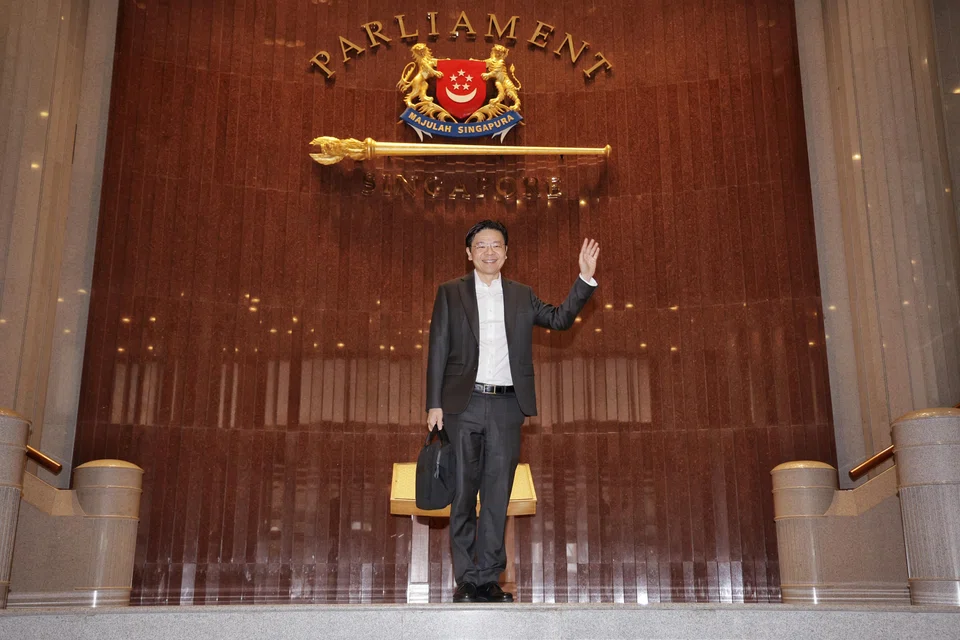
    • Finance Minister Lawrence Wong arriving at Parliament House to deliver Budget 2024 on Friday.
    • Finance Minister Lawrence Wong arriving at Parliament House to deliver Budget 2024 on Friday. PHOTO: KEVIN LIM, ST

    A CORPORATE income tax rebate to help firms in the short term, alongside a new tax credit to keep the country competitive in attracting investments.

    These moves were part of a Budget which tackled immediate challenges, while laying out an ambitious plan to keep the city-state vibrant, prosperous and inclusive.

    In his Budget speech on Friday (Feb 16), Finance Minister Lawrence Wong warned that “for some time to come”, Singapore faces an external environment that is “less stable and favourable to our security and prosperity than the preceding three decades”. There is no turning back in this “new era of conflict and confrontation”, with more violence and armed conflict, greater fragmentation and increased unpredictability. That is why the government embarked on the Forward Singapore exercise, said Wong, “to set out a road map for our way forward in this very troubled world”.


    The first instalment of programmes under this road map is in Budget 2024 – which is likely to be Wong’s last Budget before he succeeds Prime Minister Lee Hsien Loong, as is planned to happen by this November.

    The 50 per cent corporate income tax rebate is part of a new S$1.3 billion Enterprise Support Package to help firms with rising costs, alongside enhanced and extended schemes.

    Yet, these are not permanent solutions, noted Wong. Rather, Singapore must continue to focus on productivity and innovation to ensure sustained growth over the next decade.

    A crucial enabler of this is ensuring that the Republic continues to attract “high-quality and high-value investments”, he said. Singapore has a healthy investment pipeline, but faces intense competition from major economies which are rolling out vast subsidies to attract investments. The country cannot afford to engage in a “bidding war” with them, “but neither should we stand still and just do nothing”, he added.

    Singapore is thus adding a Refundable Investment Credit to its investment promotion toolkit. Said Wong: “Essentially, this new tax credit will help us to stay competitive and attract investments from global companies with the right know-how, and create good jobs for Singaporeans.”

    Both broad-based and targeted help

    Beyond economic measures, Budget 2024 had something for everyone – broad-based handouts as well as targeted measures for groups such as lower-income workers, seniors and parents.

    Said Deloitte tax partner Sharon Tan: “Budget 2024 is comprehensive and thoughtful in making sure that every sector of the community, as well as business needs and challenges have been covered.”

    To further alleviate households’ cost-of-living concerns, an extra S$1.9 billion will be injected into the Assurance Package, with more Community Development Council (CDC) vouchers and rebates. Separately, there will be a 50 per cent personal income tax rebate for the Year of Assessment 2024, capped at S$200 so that it mostly benefits middle-income workers.

    And after the last two Budgets featured tax moves targeting higher-end properties, this year instead saw tweaks that should lessen property tax burdens. In response to rising annual values (AVs), the AV bands for owner-occupied residential property tax rates will be revised from January 2025.

    Older singles who wish to right-size, meanwhile, can now claim a refund of the Additional Buyer’s Stamp Duty if buying a lower-value private property after selling their current home.

    Budget 2024 included several moves for lower-income workers, including a higher Local Qualifying Salary – the minimum that local workers must be paid by an employer that hires foreign workers.

    Full-time workers will have to be paid at least S$1,600, up from S$1,400 now, while part-time workers must get at least S$10.50 an hour, up from S$9. “This increase ensures that we keep pace with wage growth,” explained Wong.

    While employers bear the cost of that move, they will get more support to raise the salaries of lower-income workers, under the separate Progressive Wage Credit Scheme. The government’s co-funding level will be raised, as will the qualifying income cap, meaning that employers can get greater help for more workers.

    Upskilling for young and old

    In a move that both bolsters Singapore’s economic future and helps individuals, a new SkillsFuture Level-Up Programme will support mid-career workers to retrain.

    Singaporeans aged 40 and above will get a hefty S$4,000 SkillsFuture Credit top-up. But unlike the existing basic tier, this new injection can only be used for selected programmes with “better employability outcomes”, said Wong.

    These older workers will also be given subsidies to pursue a second full-time diploma at local polytechnics, Institutes of Technical Education, and arts institutions. And if they enrol in selected full-time courses, they will get a monthly training allowance of up to half their average income in the latest 12-month period, capped at S$3,000 per month.

    These moves make it easier for older workers to retrain even if they have financial and caregiving obligations – and are also part of Singapore’s heavy investments in human capital, which Wong described as critical to its economic dynamism. Other measures to support seniors include adjustments to the Central Provident Fund (CPF) system, with a further 1.5 percentage point increase to contribution rates for those aged 55 to 65.

    Further details of the Majulah Package, announced in the 2023 National Day Rally, were also provided. The package will benefit 1.6 million Singaporeans at a total lifetime cost of S$8.2 billion.

    These and other social measures show “an improved focus on the lower-middle segment”, said Chuin Ting Weber, chief executive officer at MoneyOwl. They provide “a leg up not just in supporting self-help for human capital growth... but also for actual asset building”, she noted, with the government recognising “the need to catch up with structural changes in the economy that affect this segment”.

    In a Facebook post, PM Lee wrote: “I hope the Budget will benefit everyone in one way or another, and reassure Singaporeans in an increasingly troubled world.”