

Singapore’s tax incentives remain relevant even with global tax changes: EDB chairman
Pause in investments unlikely as companies often take a long-term view, says Png Cheong Boon

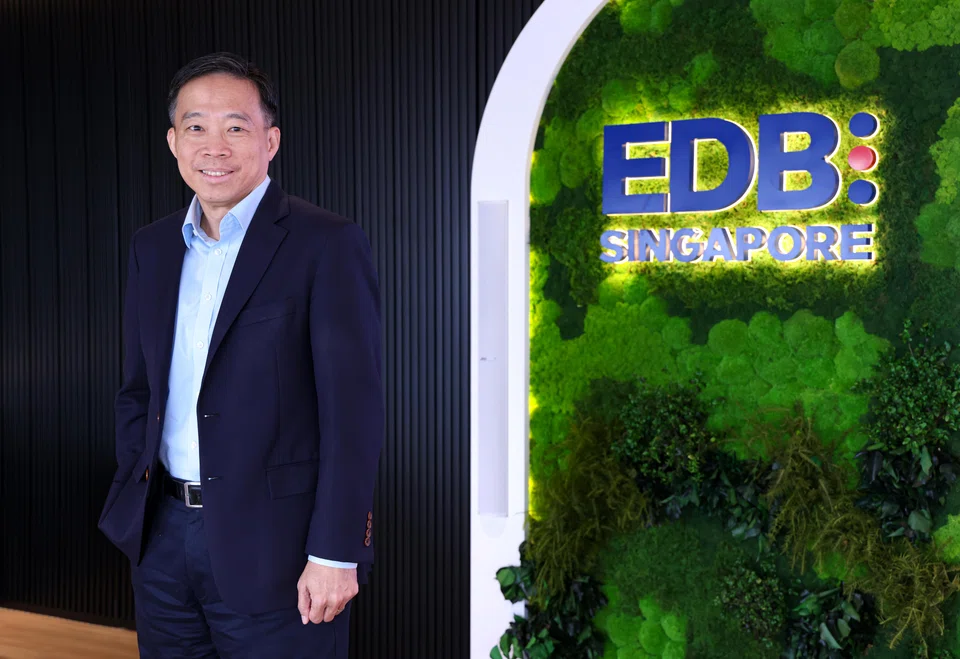
SINGAPORE’S existing tax incentives will stay relevant even after global tax changes kick in, as the adjustments will not affect the majority of multinational enterprises (MNEs), said Economic Development Board (EDB) chairman Png Cheong Boon in an interview with The Business Times.
Analysts have expressed concerns that current incentives would not be valid when the second pillar of the Base Erosion and Profit Shifting (BEPS) 2.0 framework is implemented in 2025. This imposes a minimum effective tax rate of 15 per cent on large MNEs with annual group revenues of at least 750 million euros (S$1.1 billion).
But “there are not that many” MNEs of this size, noted Png. In a 2021 parliamentary reply, the Ministry of Finance said that about 1,800 such groups in Singapore meet the revenue criteria.
“So our existing tax incentives, like the Development and Expansion Incentive (DEI)… are actually still very beneficial for the smaller companies,” he said. The DEI provides a concessionary tax rate of either 5 or 10 per cent on income derived from qualifying activities.
The new Refundable Investment Credit (RIC) for high-value economic activities is meant to fill the gap for the large MNEs that will lose these incentives, said Png.
Companies have told EDB that they welcome the scheme – but are awaiting further details, expected to come in the third quarter of this year. “How does this affect their investment decisions? My sense is that by and large, it will have a positive impact as before (the announcement), they may not have factored that into their consideration,” said Png.
“Now at least they know that they may be able to enjoy this (new) incentive.”
Decisions take time
As for the worry that Singapore may see a pause in investments before more details are released, Png said: “Our view is that it will not.”
Since 2023, EDB has been asking affected MNEs about their plans and how the government can support them in light of the upcoming tax changes.
In any case, the process of making investment decisions tends to be long, so a few additional months will not make a big difference to companies, he said.
He cited the example of biopharmaceutical manufacturer WuXi Biologics, which broke ground on a 13.5-hectare contract research, development and manufacturing centre in JTC’s Tuas Biomedical Park earlier this month.
WuXi Biologics had considered entering Singapore as early as 2018, with a small investment, but this did not materialise due to the Covid-19 pandemic.
“In 2022, they came back and said things have changed – their business has grown, and they decided to grow it from an S$80 million investment into a S$2 billion one,” said Png. Even so, the company only nailed down the specific investment parameters in 2023.
Therefore, only investment decisions with a near-term deadline – before RIC details are out – may be affected, he said.
BEPS 2.0 aims to tackle profit-shifting, where profits earned in high-tax jurisdictions are booked in lower or no-tax administrations. Implementing it could thus mean a loss of some “investment value” that was not generated by real activities here.
Asked about this, Png said: “It is okay for us not to have (these investments) because we are very clear that we are not a tax haven.”
The RIC’s design reinforces this, as the credits are tied to real economic activities, he added. “We welcome companies to generate profits in Singapore, but it must be tied to actual economic activities.”
A changing focus
Incentives are rarely the only consideration when companies make investment decisions, said Png. “When it comes to very critical projects, it is about whether they have the confidence to execute (their plans) in Singapore.”
That is why EDB is focused on attracting investments from key industries with significant opportunities and growth potential.
Such sectors – such as semiconductors, pharmaceuticals, and aerospace – must have critical activities which play to Singapore’s strengths, are difficult for other countries to replicate, and will stay relevant in the future, said Png.
This is unlike EDB’s strategy in the 1960s, noted Png. At the time, Singapore’s main concern was addressing high unemployment, so “we celebrated every single factory that opened”.
After unemployment was addressed, Singapore’s strategy shifted in the 1970s and 1980s to focus on attracting capital-intensive, high-value activities.
To keep up with the evolving economy, incumbent firms were asked to upgrade and improve their productivity. This same approach remains today, said Png.
Strategies for the future
He added: “The intention for us is to see how we can build on these strengths to grow each of the sectors, and then use those capabilities to look at other opportunities.”
For instance, within pharmaceuticals, one emerging area is cell and gene therapy. Singapore’s government has invested S$80 million to deepen the understanding of the safety and efficacy of cell therapy, as well as to develop technology to assess product quality during manufacturing.
Another strategy is to attract companies from each part of the supply chain to set up local facilities here. This helps to keep Singapore competitive by cutting transport costs, he said.
By figuring out where the opportunities are, then attracting or building capabilities in these areas, Singapore can “put together a convincing showcase” of why it is an ideal location for such investments.
As for how EDB spots emerging areas, Png said that the agency’s good relationship with businesses means that they are willing to share industry insights, future trends and the capabilities needed for these new areas.
EDB also scours reports from analysts and industry watchers to see what is next, he said. The startup community is another good way to identify emerging sectors.
“But for every growth area, there will be 10 that do not materialise because we think that they are not ready,” said Png.
This may be because Singapore does not have the right capabilities to support the industry, or the sector is not “big enough to get everybody excited”.
“We still welcome them, but it doesn’t mean that it’s going to be a major sector, or... that government intervention is needed,” he said.
TRENDING NOW

If Europe goes to war, the fallout will be felt in East Asia

Indonesia stocks suffer worst plunge in nearly 30 years as MSCI proposes standalone status

Keppel seeks US$1 billion for Vietnam investments as it joins country’s international financial centre

Philippines’ FDI slowdown exposes uneven investment prospects across S-E Asia

