


Hisaka emerges stronger from semiconductor roller coaster
Once listed on the Singapore Exchange, the automation solutions provider is diversifying into other industries
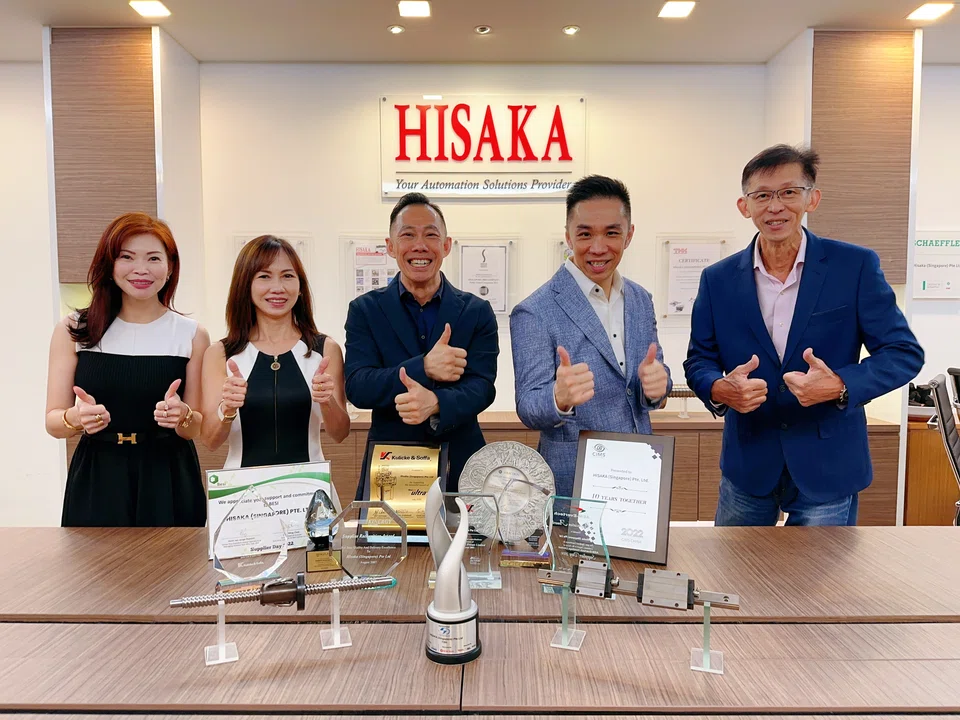
HAVING pulled through the global financial crisis and a troubled stint on the Singapore Exchange (SGX), automation solutions provider Hisaka (Singapore) continues to ride the semiconductor cycle.
But to reduce its reliance on the sector’s customers, it is also diversifying into other industries.
The company began in 1992 as a trading firm, set up by managing director Anthony Cheng to supply mechanical parts to Japanese and American multinational corporations in Singapore.
In the beginning, Hisaka focused on supplying replacement parts for the automation industry.
But as its reputation grew, it gained major semiconductor original equipment manufacturer (OEM) customers and grew its product range.
A stint on SGX
In 2008, even though it was a tough time for fundraising because of the global financial crisis, Hisaka’s holding company Hisaka Holdings successfully listed on the SGX mainboard.
However, just the next year, a slowdown in the semiconductor industry sent Hisaka’s revenue, profitability and stock price plunging.
Hisaka’s revenue and profitability picked up later. However, the company’s attempts at creating a new medical business proved futile, with losses amounting to millions of dollars.
After two financial years of slim net profits, Hisaka entered a reverse takeover deal with Malaysia property developer Regal International in 2014.

In the ensuing years, Regal International divested all of Hisaka’s subsidiaries and joint ventures to focus on its real estate business instead.
At the end of 2016, the founding members of Hisaka did a management buyout and took the business private.
The original management team still runs the business today: Cheng, who is managing director; director of business strategy Jackie Cheng; director of finance and IT Jessica Ong; director of office and administration Joanna Tan; and director of operations Andy Yong.
Semicon competition
Hisaka’s customer list extends beyond South-east Asia to China and the US, including many global blue-chip semiconductor companies.
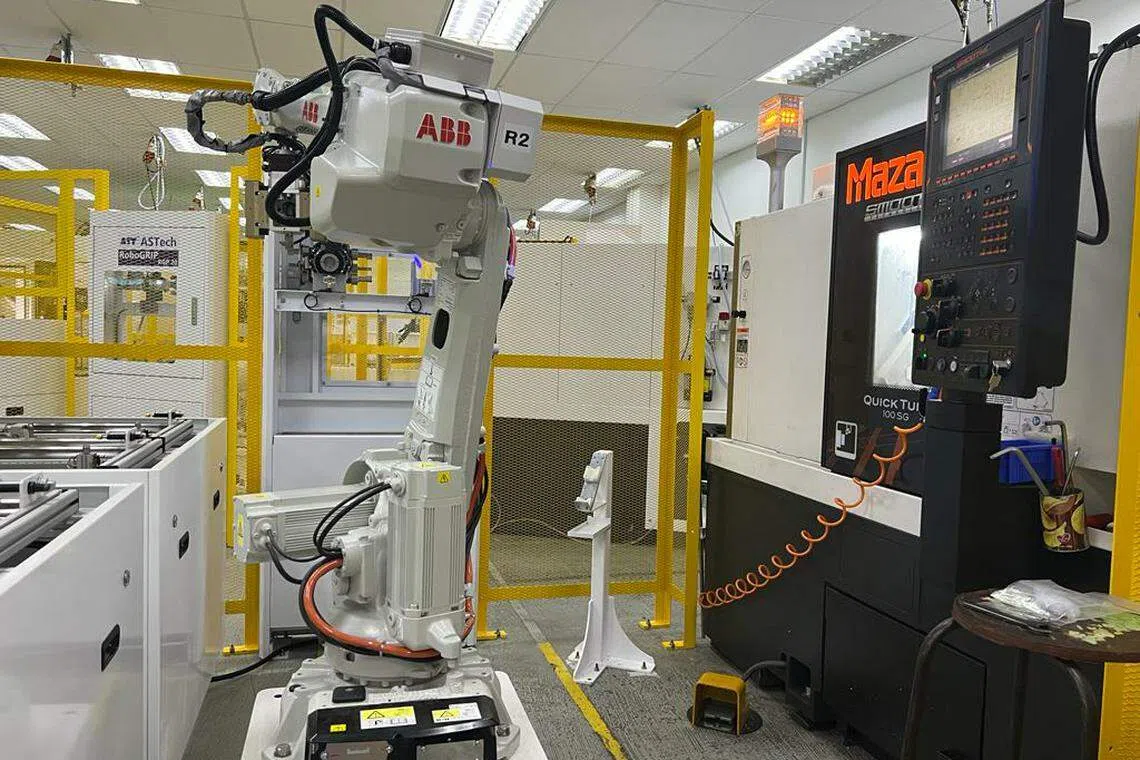
The company is a one-stop solutions provider, specialising in linear motion in automation. Simply put, linear motion refers to components and technology that can be used to move objects in straight lines during the manufacturing process.
Hisaka prides itself on its strong sourcing and purchasing capabilities, inventory and logistics management, and technical and after-sales support.
It also has an in-house fabrication and quality control facility, which it says is a key reason for being chosen by its semiconductor customers.
After all, the semiconductor automation market is a challenging one, with many competitors fighting for a finite pool of customers, said Cheng.
Among its top rivals – which Cheng declined to name directly – are a Taiwanese company that specialises in distributing and trading similar products, and a Japanese company that supplies similar products and has a well-established e-commerce portal.
Hisaka has been able to maintain its competitiveness by providing a comprehensive list of products and services at competitive prices, offering faster delivery lead times, and customising products with shorter manufacturing lead times, he added.
Ups and downs
With its considerable history, Hisaka is no stranger to the cyclical nature of the semiconductor industry.
Sudden surges and dips in demand may lead to build-ups of inventory that turn into excess stock. When it comes to customer demand, Hisaka often has visibility only into the quarter ahead.
The unpredictable nature of the global semiconductor industry remains Hisaka’s biggest challenge.
To manage this unpredictability, the company has been working to reduce its reliance on the semiconductor industry. It has diversified into the medical industry and explored other potential industries, even while looking for new OEM customers to grow its revenue.
The company has set itself an annual sales growth target of 10 to 15 per cent. In pursuit of this, it is expanding its product portfolio and investing in the creation of own-brand products.
This series is part of the Enterprise 50 Educational Project between the E50 partners and the NUS Business School. Hisaka (Singapore) was among the winners in 2022. The annual E50 ranking is co-organised by The Business Times and KPMG, sponsored by OCBC Bank, and supported by Enterprise Singapore, Singapore Exchange and Singapore Business Federation.
Decoding Asia newsletter: your guide to navigating Asia in a new global order. Sign up here to get Decoding Asia newsletter. Delivered to your inbox. Free.
Share with us your feedback on BT's products and services






