

JP Morgan Asset Management aims for US$1 trillion in active ETFs assets

Genevieve Cua
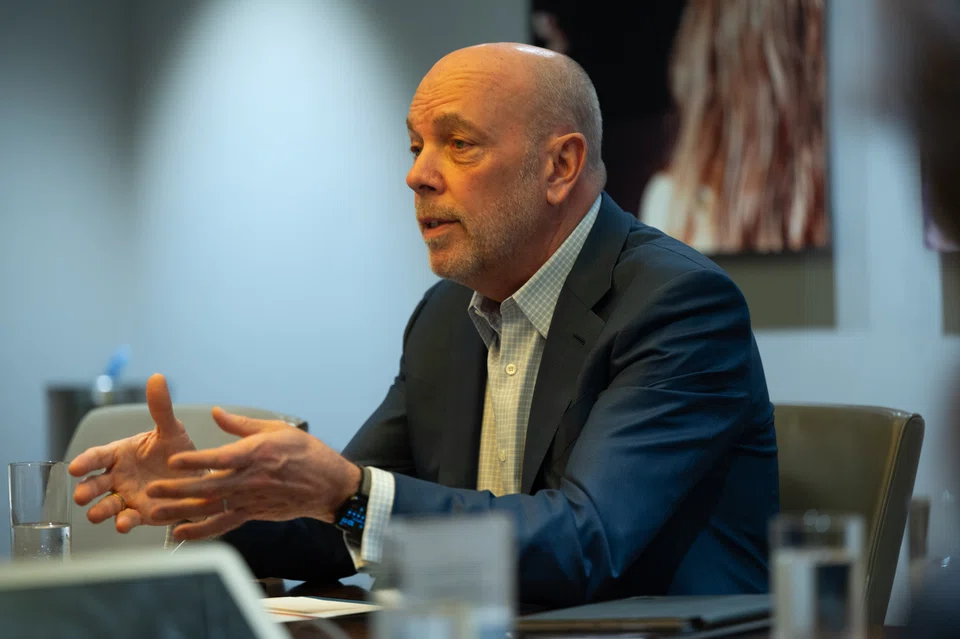
JP MORGAN Asset Management (JPMAM) chief executive George Gatch has set an ambitious target to expand assets in the group’s active exchange-traded funds (ETF) business by more than five times to US$1 trillion in five years, from the current US$164 billion.
Speaking at its international media conference in London last week, Gatch said the growth of actively managed ETFs, in a space dominated by passive index trackers, is “one of the most fundamental changes in the asset management market”.
“The vast bulk of ETFs are indexed passive strategies. But that has changed, now that managers like JP Morgan can take the best active capabilities and implement them in ETF structures,” he added.
“I think the death of active management has been greatly exaggerated. The (majority) of assets around the world of US$120 trillion is actively managed today. But I think to the extent that more investors move towards passive management, the greater the opportunity that provides for us to take advantage of valuations in the market.”
Gatch is particularly optimistic about the growth of active fixed income ETFs. Historically, the bulk of actively managed equity funds underperform their benchmarks, which is why investors have flocked to lower-cost passive ETFs. But in terms of performance, the reverse holds true in the fixed income space, where actively managed funds outperform indices.
Morningstar data shows that over periods of one to 10 years, various bond segments – such as short-term and multisector bond funds – handily outperformed their indices by wide margins. This is likely because fixed income indices give greater weight to more heavily indebted companies, which may not be rewarding for investors.
As JPMAM has written in a note, the Bloomberg US Aggregate Index (Agg) is seen to represent the US bond market, but it captures just 52 per cent of the US public bond market.
It said: “Today’s active fixed income managers have considerably more opportunities than the Agg – either by choosing bonds not represented in the index or excluding some that are. Active managers can establish deliberate sector weightings and navigate interest rate changes (duration), rather than just accepting the aggregate result of borrowers’ net issuance.”
There is currently a total of about US$12 trillion in ETFs globally, the bulk of which are equity funds. Fixed income ETFs account for about US$2 trillion, 90 per cent of which are passive.
JPMAM manages a total of US$3.4 trillion at end-2023. It rolled out its first US ETF platform in 2014; it now boasts 113 ETFs globally. Of these, 27 ETFs have crossed the US$1 billion asset threshold. The largest is the S&P EPI (Equity Premium Income) ETF, managed with an options strategy, with US$32.5 billion in assets.
Gatch believes active management will be key to outperformance. Equity returns in 2023 were buoyed by exposure to the Magnificent Seven stocks (Amazon, Alphabet, Apple, Meta Platforms, Microsoft, Nvidia and Tesla).
“When you look at the S&P 500, you see a huge amount of enthusiasm around artificial intelligence (AI), and generative AI and the earnings power of these companies, which is significant. I think there will continue to be enthusiasm towards these companies; some believe it’s overdone. I simply look at it from a valuation perspective,” he said.
“The Magnificent Seven are trading at almost 30 times earnings, while the remainder of the S&P 500 is trading at a slight historical discount. I think, as an active manager, there’s a huge opportunity to research deeply the technology and who will be the winners over the long term, and to identify opportunities under the covers of the S&P 500. That’s why I think active management has particular opportunities today, given the dispersion of valuations.”
He said JPMAM invests more than US$500 million a year on technology. That budget is expected to rise by 10 per cent this year. The investment, he added, “is going to have impact across every function within the asset management business”, and applies to proprietary analytics and trading capabilities, among others.
“We believe that there’s a huge advantage for our portfolio managers and research analysts to have a proprietary capability that’s tailored specifically to our investment processes. We’re also using that in the way we interface with clients.”
Globally, active ETFs are a growth spot. They account for just 6 per cent of the overall ETF market, but attracted 20 per cent of net flows in 2023. Active ETFs have grown at a compounded rate of 50 per cent a year since 2013, albeit from a low base, compared to the historical 20 per cent growth rate in the overall ETF market. In terms of numbers, active ETF launches surpassed passive launches since 2020. They offer the benefits of daily liquidity, transparency of trades and institutional-level fees.
In Singapore, the first active ETF was listed on the Singapore Exchange in January. The Lion-Nomura Japan Active ETF, with assets under management of S$37 million, is managed by Lion Global Investors and Nomura Asset Management Singapore.
Singapore’s ETF assets total around US$7 billion, with a growth rate of 11 per cent a year over the past five years. Based on JPMAM’s compilation, the largest ETF market in the Asia-Pacific is Japan with US$534 billion in assets, followed by the China onshore market with US$368 billion.
TRENDING NOW

South-east Asia has lost Nvidia’s best salesman

Higher rates, weaker spending: Is the Philippines entering stagflation?
Who is Leo KoGuan, the Singapore-based billionaire backing Nvidia’s Jensen Huang?

Demand, tech capabilities position Apac and AI as Skyscanner’s next growth frontiers: CEO Bryan Batista

