Embrace risk: Playing safe with fixed deposits can hurt in the long run
Lower-risk instruments offer capital protection but also raise the risks that you outlive your savings and lose purchasing power in the long run.

Leslie Yee
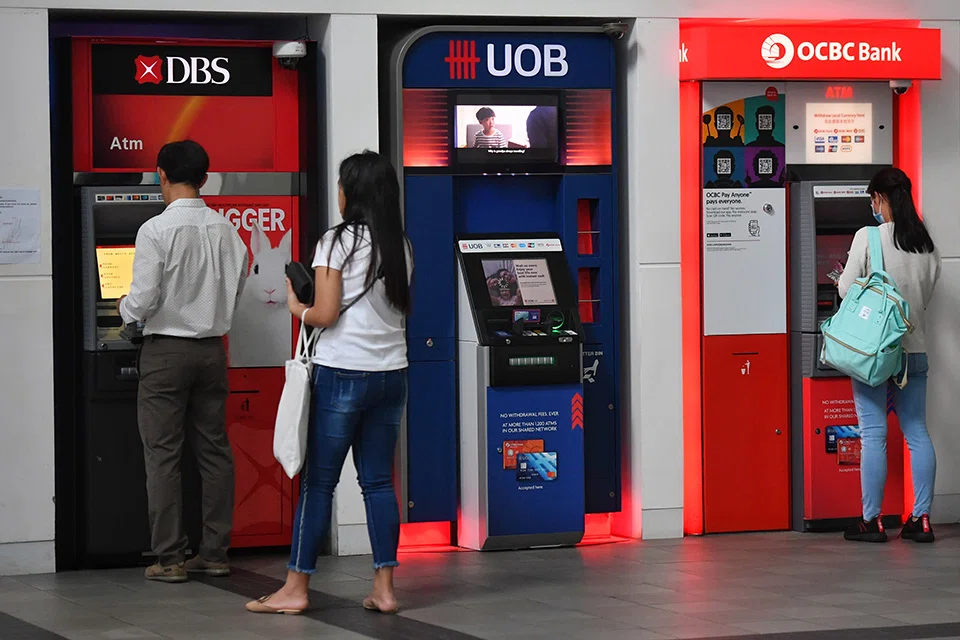
RISING interest rates hurt borrowers but benefit depositors. One can now get over 2 per cent per annum for Singapore dollar fixed deposits with tenures of 12 months or more. The latest issue of the Singapore Savings Bond (SSB) – which is open for application – offers an average annual return of 2.75 per cent if held for 10 years, versus 1.78 per cent for the SSB issued in January.
Instruments such as SSBs and Singapore dollar fixed deposits have appealing features. They are Singapore-dollar denominated, so there is no currency risk. Historically, the local currency has strengthened against many currencies, and it may appreciate more given Singapore’s stability and strong fiscal position.
Capital is protected, which is valuable in volatile times. Investing in the wrong stock, cryptocurrencies or private equity funds may lead to capital losses, while timing the market wrongly can be painful. For persons who are retired, recouping capital losses via working is not possible.
But putting money to work in SSBs is not that easy. Individuals can invest up to S$200,000 in SSBs. Recent issues have been popular, with the maximum allocation per individual capped at either S$13,000 or S$13,500 for the SSB issued on Sep 1. You may need to subscribe to around 15 issues of SSBs to deploy S$200,000.
With fixed deposits, you face fewer constraints when investing large sums of money. But you will need to shop around to find attractive rates. Also, upon maturity, you may need to move your funds to another bank or resign yourself to lower rates.
Singapore’s core inflation, which excludes accommodation and private transport costs, hit 4.8 per cent in July, driven mainly by stronger increases in the prices of food, electricity and gas. The headline inflation rate was 7 per cent in July.
High inflation may not persist. With populations ageing in many countries, the savings rate may grow, which could result in a generally low interest rate environment over the longer term, as abundant liquidity pursues scarce investment opportunities. If inflation slows, interest rates could fall, which would affect the return one can get from future issues of SSBs and placements of fixed deposits.
In the above scenario, you may want to take advantage of the current period when SSBs pay fairly attractive rates to place as much money as possible in SSBs. With fixed deposits, there is a risk that your funds may be rolled over into unappealing rates after a year or two.
Should inflation stay elevated and the current rates paid on SSBs and fixed deposits persist, concern arises over erosion of the value of money. An annual return of 2 to 3 per cent is insufficient to keep pace with inflation.
Embracing risk
Psychologically, many investors find it hard to stomach losses. By investing in a stock index or a particular stock, you could suffer an immediate loss due to intra-day movements. In a volatile market, your holding of even blue-chip stocks could be down by a substantial amount over a few days.
Many equity markets have been under pressure in 2022. High-quality companies may get sold off amid heightened risk aversion by investors due to hawkish moves by the US Federal Reserve or a spike in geopolitical tension. Value can emerge in good names, but what is cheap can get cheaper, which may frighten many investors.
But reliance on capital protected instruments such as SSBs and fixed deposits incurs challenges particularly with longer life expectancy. In Singapore, each generation may expect to live longer than the previous one. But with such lower-risk instruments, there is no chance of capital appreciation.
Capital gains
For someone who is aged 42, which is the median age of Singapore residents, embracing time as a friend makes sense when investing in instruments with potential for capital gains such as equities and physical property. Equity and property markets have cycles but tend to rise over the long term, especially if one invests in quality assets.
As it is, there are listed companies and real estate investment trusts that offer higher dividend yields than SSBs or Sing-dollar fixed deposits. Based on closing prices as at Sep 9, 2022, and annualising the dividend declared to date for the current financial year, large-cap stocks such as DBS and Ascendas Reit offer yields of 4.3 per cent and 5.4 per cent, respectively.
If one earns the same recurring amount from an instrument that sees zero capital growth versus one where capital growth averages 2 per cent per annum, the value of the original principal in the latter can grow by 49 per cent, 81 per cent and 121 per cent after 20, 30 and 40 years, respectively.
Some people may not be bothered with capital growth, so long as the passive income generated can fund one’s needs when one stops working. After all, one may have no interest in leaving a large inheritance upon death. But, achieving capital growth over time gives you a greater capacity to deal with unexpected events. Capital that is built up can be unlocked for use on a rainy day.
A person who is aged 42 may have his hands full pursuing career advancement and tending to family commitments. Finding time to do research on equities may be difficult, and investing in equities may add undue stress. Also, some people may feel that it does not pay to take on more risk by buying equities or property, versus putting monies in SSBs or fixed deposits, which now pay much higher interest rates today than some months back.
But choosing to play safe with instruments that preserve capital is also risky. A dollar today may be worth far less in several years’ time. While being cautious is good, it may be wise to embrace some risk by buying instruments that offer the chance of capital gains. Risk should be manageable if one invests in instruments that play on Singapore’s growth, such as Singapore equities or property, as Singapore’s safe haven premium may grow amid an ever more chaotic world.