Putin’s Silk Road around sanctions
There is transhipment of Western goods to Russia from countries such as Armenia, Georgia and Kyrgyzstan
FOR about 1,500 years, high-value goods were moved from China, and perhaps other parts of Asia, to Europe and the Middle East via the Silk Road. The precise route varied over time, but it always ran through and involved local traders in parts of what we now call Central Asia.
Today, trade through Central Asia is bustling again, with the Caucasus also getting in on the act. But now the boom is in goods moving from the US, Japan, Western Europe and China to Russia, via countries such as Armenia, Georgia and Kyrgyzstan.
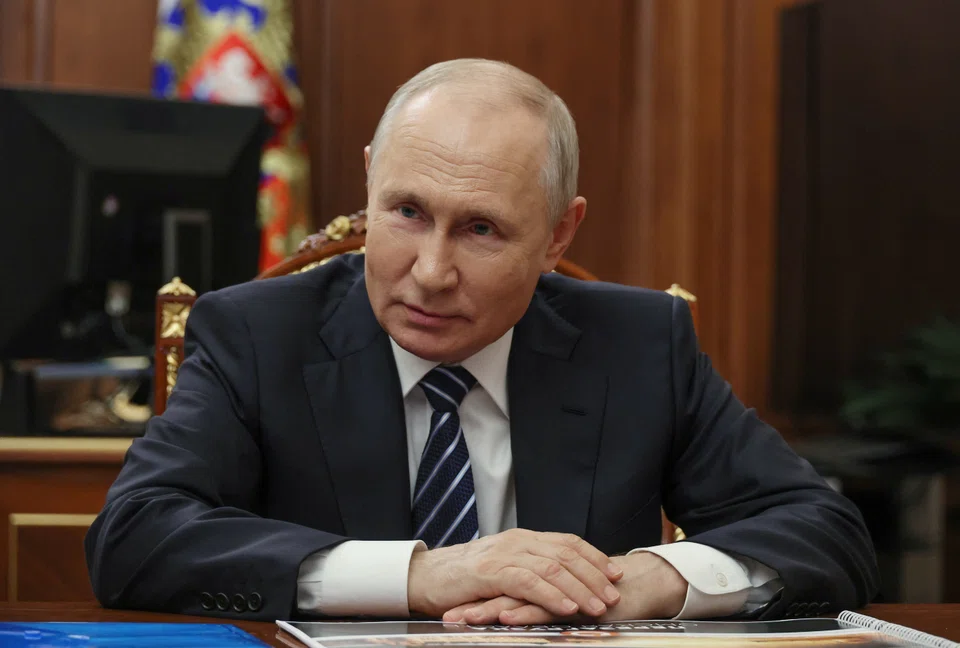
The Group of Seven (G7) democracies are well aware that this trade bolsters Russian President Vladimir Putin’s regime and makes it easier for him to sustain his brutal war of aggression in Ukraine. But their governments are doing little to stop it for fear of upsetting domestic industrial interests.
As a result, the world’s leading democracies – aided and abetted by intermediary countries – are effectively supporting Russia’s ability to kill Ukrainians. The G7 and the European Union need to strengthen their export controls and ensure meaningful enforcement.
On the surface, export controls have worked well. US exports of goods to Russia fell to US$600 million in 2023, down from a pre-Covid equilibrium of US$5.8 billion in 2019 (data cited is from national sources downloaded via Haver Analytics).
That’s a 90 per cent drop, which signifies that direct trade between the US and Russia has all but ceased. It’s the same for other important economies in the West. Japan’s exports to Russia fell 60 per cent over the same period, while Germany recorded a 70 per cent drop.
But something doesn’t add up, because Russia’s imports of goods rose 20 per cent over the same period, from US$254 billion in 2019 to US$304 billion in 2023, according to data from Russia’s central bank.
There are two reasons for this. First, China has substantially increased its exports to Russia. China’s exports to Russia rose to US$110 billion in 2023, up from US$50 billion in 2019. That’s an increase of 120 per cent – and by itself more than offsets the drop in goods from the West. Second, to put it politely, Western export controls are “leaky”, with goods going to Russia via third countries.
This is reflected in US exports to Central Asia and the Caucasus, which increased from US$2.6 billion in 2019 to US$4.1 billion in 2023. That 60 per cent rise occurred in the immediate aftermath of Russia’s invasion, a telltale sign that these goods were circumventing sanctions.
Exports from Japan to Central Asia and the Caucasus were up 67 per cent over the same period, while exports from Germany were up 72 per cent. This is happening across all countries in the West, and all countries in Central Asia and the Caucasus are involved.
When you add it all up, the numbers are highly significant. For example, direct exports from the EU to Russia fell around US$4 billion per month (from US$8 billion to US$4 billion) right after the invasion.
But EU exports to Central Asia and the Caucasus rose from US$1.5 billion to US$2.5 billion per month, implying that “leakage” is around 25 per cent (US$1 billion divided by US$4 billion). A similar leakage rate – around 30 per cent – appears to be true for German exports of cars and car parts.
It is entirely possible that this leakage involves the goods that Russia needs most desperately – dual-use goods such as cars and vehicle parts that may be finding their way onto the battlefield in Ukraine. Even if that is not the case, Western goods enable the reorientation of Russia’s economy to war production, which is almost as bad.
In the West, the main contributors to this leakage are in the EU. Germany, Italy, Poland, the Czech Republic and the Baltics stand out. In Central Asia and the Caucasus, re-export of Western goods is especially rampant in Armenia, Georgia and Kyrgyzstan.
But Kazakhstan is an interesting outlier in the region. Like everyone else, it saw this kind of trade explode right after the invasion. But by the middle of 2023, exports from Kazakhstan to Russia had fallen to previous levels. Clearly, a decision was taken in Astana to get out of the transhipment racket.
Nothing about any of this is inevitable. Governments in the region obviously know what is going on. But Kazakhstan is the exception. In most cases, this trade continues, with the blessing of local leaders.
Meanwhile, the war in Ukraine is taking a terrible toll in terms of lives lost or shattered by trauma. The overriding imperative for the West must be to make this war as costly as possible for Russia. Western export controls are needed to deprive Russia of critical technology and make life harder for its people, and are an essential complement to Western financial sanctions and the G7 oil price cap.
The West can and must close Putin’s Silk Road. That will require extending Western sanctions to prevent re-export from Central Asia and the Caucasus to Russia. PROJECT SYNDICATE
Robin Brooks is a former chief FX strategist at Goldman Sachs. Simon Johnson is a professor at the MIT Sloan School of Management.