Year of elections: How should you invest?
In anticipation of changes in political leadership, investors may need to recalibrate expectations on domestic and external policies, and geopolitical alignment
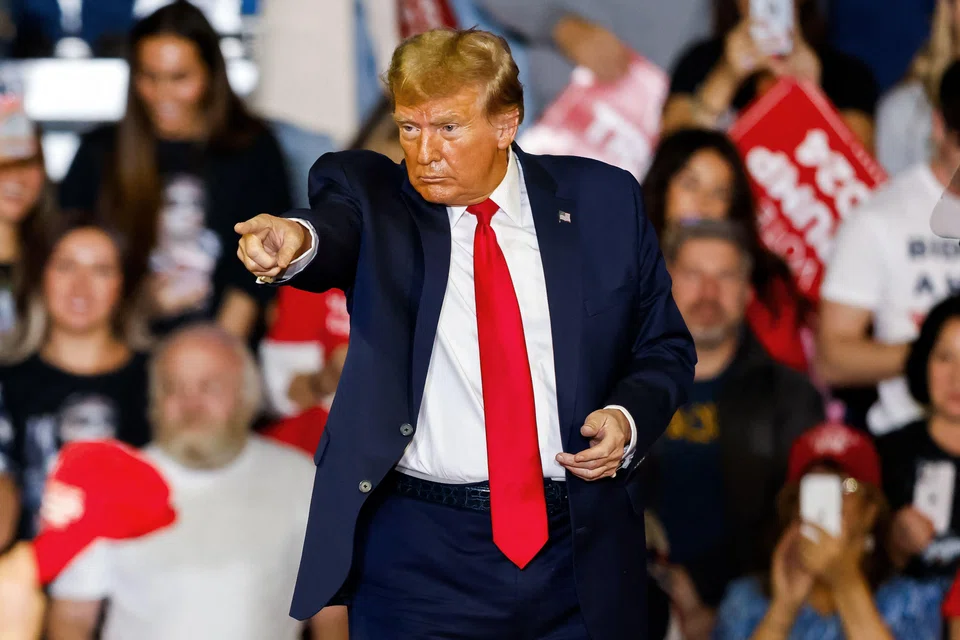
AS 2024 shapes up to be the year of elections, with over 40 national polls globally, representing more than 40 per cent of the world’s population and 40 per cent of global GDP, voters and investors are bracing themselves for geopolitical uncertainty and potential national leadership changes.
Where incumbents stay in control, we can expect continuity in macroeconomic outlook, international relations stance, as well as in-flight structural projects.
But where a change of guard is afoot, investors will need to prepare for alternate outcomes and the ensuing uncertainties. This is particularly acute against a backdrop of shifting international and regional realignments in a multipolar world.
Campaign narratives are typically dominated by domestic issues, such as housing, immigration, decarbonisation, fiscal spending or taxation, while some political candidates may also invoke national security issues as part of their campaigns.
In anticipation of potential changes in political leadership, global investors may need to recalibrate expectations for potential adjustments to:
- Domestic policies – fiscal policy (taxation and priorities for government spending) and monetary policy (depending on respective central bank mandates);
- External policies – tariffs for imports, subsidies and trade policies; and
- Geopolitical alignment – such as relations with US, China or with trade blocs or non-aligned countries.
On Wednesday (Feb 14), Indonesia is set for a presidential change of guard, as Indonesians elect a new president to replace two-term incumbent President Joko Widodo, whose presidential tenure is ending. In India, the world’s largest democracy, incumbent Prime Minister Narendra Modi and the ruling Bharatiya Janata Party (BJP) are campaigning for re-election for a third five-year term.
In recent years, both nations have enjoyed economic-friendly regimes, with improved market access for foreign investors, rising international stature, domestic reforms and a focus on physical infrastructure.
US elections: gearing up for Biden 2.0 vs Trump 2.0
The most consequential election for global investors is in the US, given the implications on economic outcomes for the US and key foreign policy topics.
Even as the US’ legislative efforts to further “de-risk” from China may step up closer to the November polls, the election is widely touted to feature a rematch between incumbent President Joseph Biden and former president Donald Trump.
We focus on a few key areas of investment risks from a potential Trump win, following his victory in recent Republican primaries in Iowa and New Hampshire.
Trump’s proposal for a 10 per cent tariff on all goods imports would spark inflation, reduce the Federal Reserve’s propensity to cut interest rates and put upward pressure on the US dollar while hitting major exporters’ currencies: the euro, yuan and yen.
A replay of his first term’s corporate tax cuts could spur corporate profitability and equities, but a larger budget deficit and spiking US Treasury yields would be significant risks. His recent comments also suggest the independence of the Fed may be threatened.
There are also questions regarding the threat to Biden’s hallmark fiscal policies, such as the US$370 billion Inflation Reduction Act for climate-related initiatives, in the event of a Trump win and/or a divided Congress.
Lastly, market sentiment could be hurt by uncertainty over the rule of law if Trump targets opponents at home, and the global order if the US pulls out of international agencies. Financial market volatility may increase sharply until the range of outcomes become clearer in the run-up to the polls.
Other geopolitical flash points with economic impact cannot be ruled out in 2024.
Geopolitical concerns in the Central and Eastern Europe, Middle East and Africa (Ceemea) region have been top of mind in recent years, starting with Russia-Ukraine and followed by Israel-Gaza conflicts.
Last month, we saw disruptions to shipping routes via the Red Sea in relation to US and UK air strikes in response to the Houthi attacks. As major shipping routes are redirected from the Suez Canal to the African continent and the Cape of Good Hope, the increased voyage duration, insurance and fuel costs could increase goods inflation.
Though major oil producers in the Gulf Cooperation Council are supported by strong fiscal and current account balances, a wider risk premium for the region prompts us to remain neutral on the Middle East and the enlarged Ceemea region in our fixed-income strategy.
We look for range-bound oil prices as elevated spare capacity and robust non-Opec+ supplies limit the price upside, while responsive Opec+ supply and opportunistic US Strategic Petroleum Reserve purchases limit the downside.
What does this mean for investors?
- Diversification and risk management are key for investment portfolios in a year when idiosyncratic factors can pose upward and downside risks for global markets.
- In equities, we remain moderately overweight globally. This is expressed primarily through our overweight position in Japanese equities, which will continue to benefit from broadly accommodative Bank of Japan policies and constructive corporate reforms underway. We remain neutral on US, Europe and Asia ex-Japan equities. Changes in the perceived odds of success by either political camp in the US election could cause bifurcation in sector performance. Historically, biotech, industrial, and healthcare sectors tend to be favoured under the Democrats, while pharmaceuticals and airlines tend to outperform when Republicans are elected.
- An election year tends to bode well for equity markets. From 1928 to 2020, the fourth year of the US presidential election cycle (2024 in this cycle) is the second-strongest year of the cycle for the S&P 500 Index, with average and median returns of about 7 and 11 per cent, respectively.
- In fixed income, we remain overweight developed markets’ investment-grade (IG) bonds and US Treasuries, and neutral on emerging markets’ IG and high-yield bonds. Treasuries and developed markets’ IG bonds should benefit, as duration will likely be an important driver of performance in the run-up to the US presidential election in November.
- Gold looks compelling as a reliable diversifier against a potential increase in geopolitical risk and uncertainties from electoral outcomes.
The writer is global chief investment officer, Bank of Singapore