Can a retiree afford to keep his pricey home in the era of rising annual values?

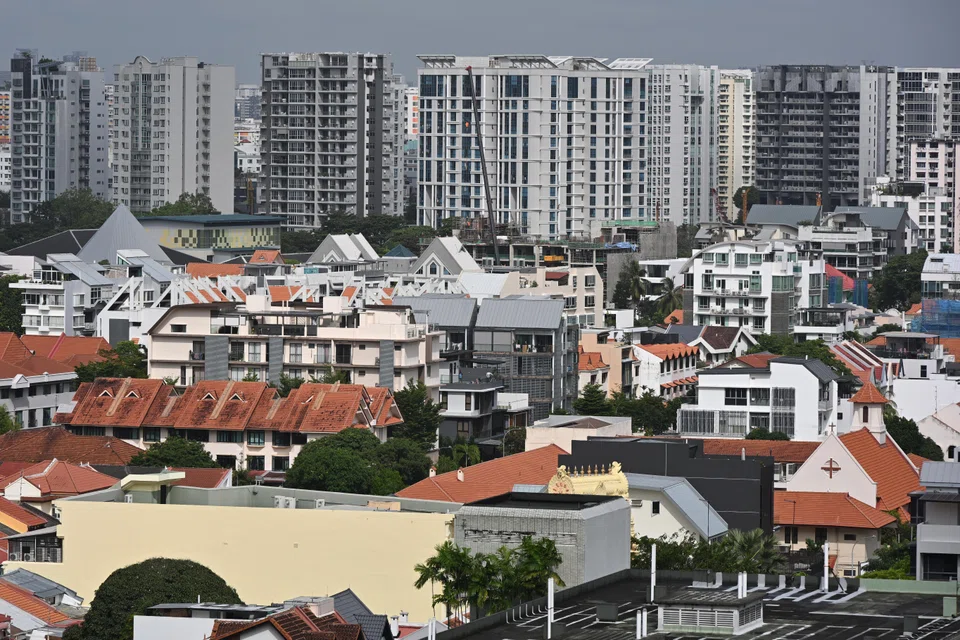
PRIVATE home rentals are moderating. They fell by 2.1 per cent quarter on quarter in Q4 2023, based on data from the Urban Redevelopment Authority.
Still, residential landlords here have had a good run. Private home rentals rose 8.7 per cent in 2023, after jumping 29.7 per cent in 2022.
However, the cheer felt by residential landlords has been dampened by higher property taxes.
The non-owner-occupier residential tax rate spiked from 10 to 20 per cent of Annual Value (AV) in 2022, to 12 to 36 per cent of AV in 2024.
Property taxes for homes are progressive with higher tax rates applying to properties with higher AVs.
The AV of buildings is the estimated gross annual rent of the property if it were to be rented out, excluding furniture, furnishings and maintenance fees.
Last November, the Ministry of Finance told The Business Times that about 80 per cent of private homes see a 15 to 25 per cent increase in AV in 2024, with some rising by over 25 per cent.
Typically, higher property tax is payable when a home’s AV rises.
Residential landlords, who have outstanding housing loans, should pay heed to being saddled with the instalment on a home loan, property tax and maintenance costs, when a home is vacant and non-income generating.
Also, a retiree landlord with no outstanding home loan, will need to find funds to pay the property tax and maintenance costs on a vacant unit.
Owner occupiers
On the other hand, residential owner-occupiers enjoy more favourable property tax treatment.
Owner-occupier tax rates are lower than non-owner-occupier tax rates for homes. Also, owner-occupiers of homes will receive a one-off property tax rebate in 2024. Private home owner-occupiers get a 15 per cent rebate, capped at S$1,000.
Budget 2024 contained good news for many home owner-occupiers. Effective Jan 1, 2025, the AV bands for owner-occupier residential property tax rates will be raised. Thus, many homeowners will see their property tax reduced.
Still, owner-occupiers of pricier private homes might be feeling plenty of pain.
The owner-occupier tax rate on homes has risen from 0 to 16 per cent of AV in 2022, to 0 to 32 per cent of AV in 2024. Higher tax rates apply to pricier homes.
Take an owner-occupier of a prime condominium unit whose AV rose by a third from S$70,000 in 2022 to S$93,300 in 2024. In 2022, annual property tax payable by the above homeowner was S$2,780.
Assuming the home’s AV in 2025 is unchanged from 2024, the above homeowner’s annual property tax in 2025 falls by about 29 per cent to S$7,280 due to the change in AV bands.
Still, the said homeowner’s property tax in 2025 will be about 162 per cent higher than in 2022.
Retirement
For people who have been working for years, becoming debt free is a joy, after paying off a multi-year home loan. Living in a fully paid-up home allows one to retire with a greater piece of mind. However, higher property taxes could prevent retirees from being able to live their golden years in an owner-occupied private home.
Take a couple comprising partners who turn 55 this year. Assume this couple puts aside the prevailing Enhanced Retirement Sum of S$308,700 each in their CPF Retirement Accounts.
The said couple could receive an estimated combined fixed monthly payout of S$4,730 from the national annuity CPF Life scheme for the rest of their lives upon turning 65.
If the couple lives in an owner-occupied private home with AV of S$70,000 in 2025, their annual property tax excluding any rebates is S$3,720 or about S$310 per month in 2025, which works out to under 7 per cent of their future monthly payout under CPF Life.
Should the couple’s property tax increase by 4 per cent annually due to, say, rising AV of the home, the property tax will be about S$1,005 per month or over 21 per cent of the monthly payout under CPF Life in 30 years time.
Could higher property taxes become unsustainable for retiree private home owner-occupiers in their later years?
The government sees property tax as a key source of taxing wealth. Property tax is effective as it is hard to avoid. Taxing wealth is vital in fighting inequality, and fair, because those with greater means contribute more.
Looking ahead, home owner-occupiers may not be left unscathed by any potential future hike in residential property tax rates. Over time, retiree private home owner-occupiers could struggle to service property taxes.
Sure, a retiree owning a private home can trade his private unit for a Housing and Development Board (HDB) flat.
Funds could be freed up in the process. Also, taxes and other ownership-related costs are generally much lower for owner-occupiers of HDB flats versus those of private homes.
Still, one incurs expenses when moving from one owner-occupied home to another. Crucially, the stress of moving home when one has to downgrade due to financial considerations in one’s 70s or 80s can exert a huge toll.
Elderly folk may find difficulty adjusting to a new environment. A new home could take an elderly person away from his routine, with adverse consequences for mental well-being.
As life expectancy rises and homeowners risk bearing higher taxes, assessing whether one can afford to hang on to an owner-occupied private home is crucial in retirement planning.
Moving from a private home to an HDB flat can be painless. There are numerous HDB flats which are spacious and well-located. Many HDB towns have good transport connectivity and comprehensive amenities, including healthcare and recreational facilities.
Perhaps the optimal time to shift from a private unit to an HDB home is when one has the energy to handle the strain of moving homes and is able to embrace what a new living environment offers.
On the other hand, if one aims to stay in an owner-occupied private home as one ages, being in paid employment for longer might be the best way to hedge against rising costs, including potentially higher property taxes.
After all, in an ageing society, employers may be more willing to hire older workers, as well as tailor jobs to suit them.